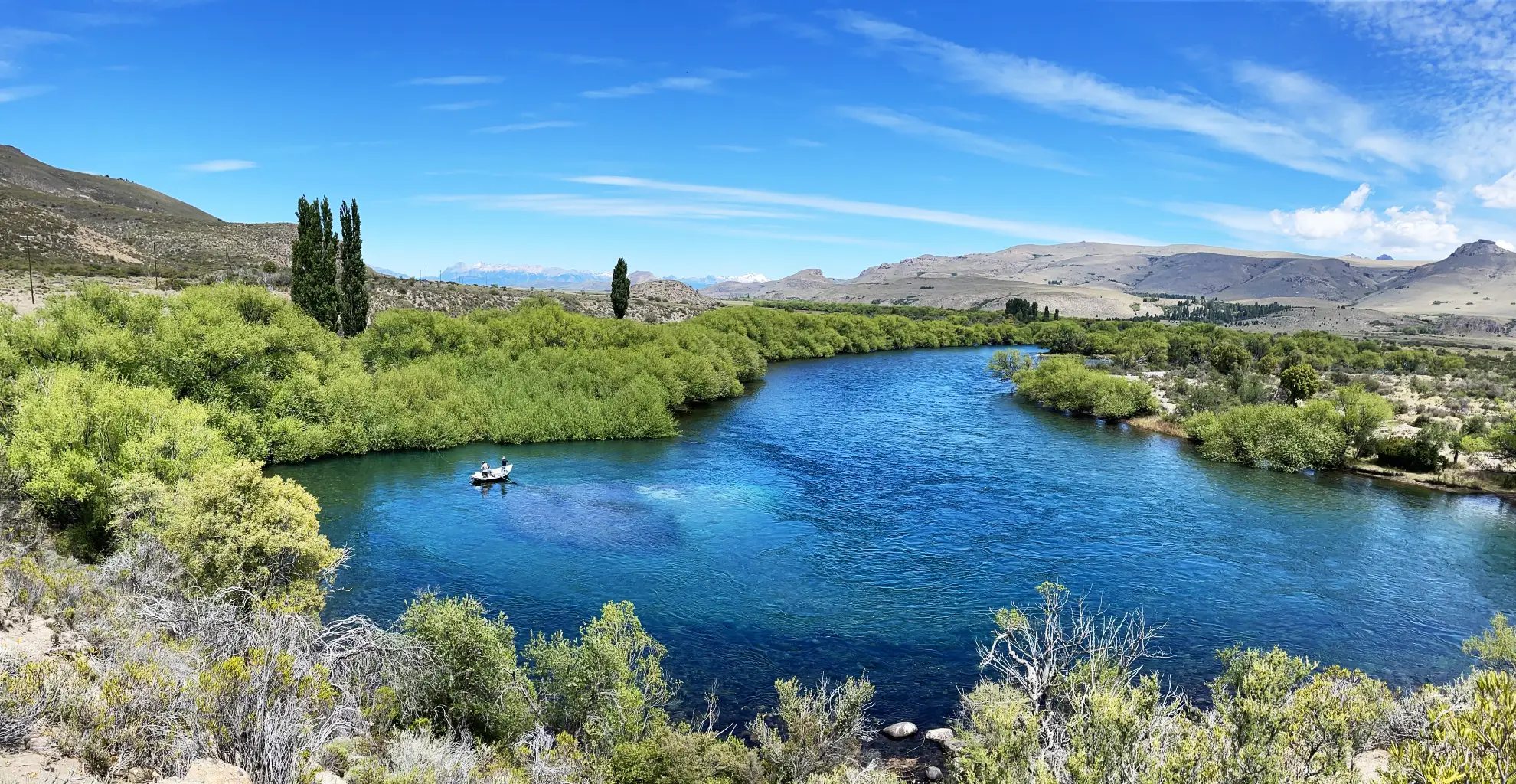
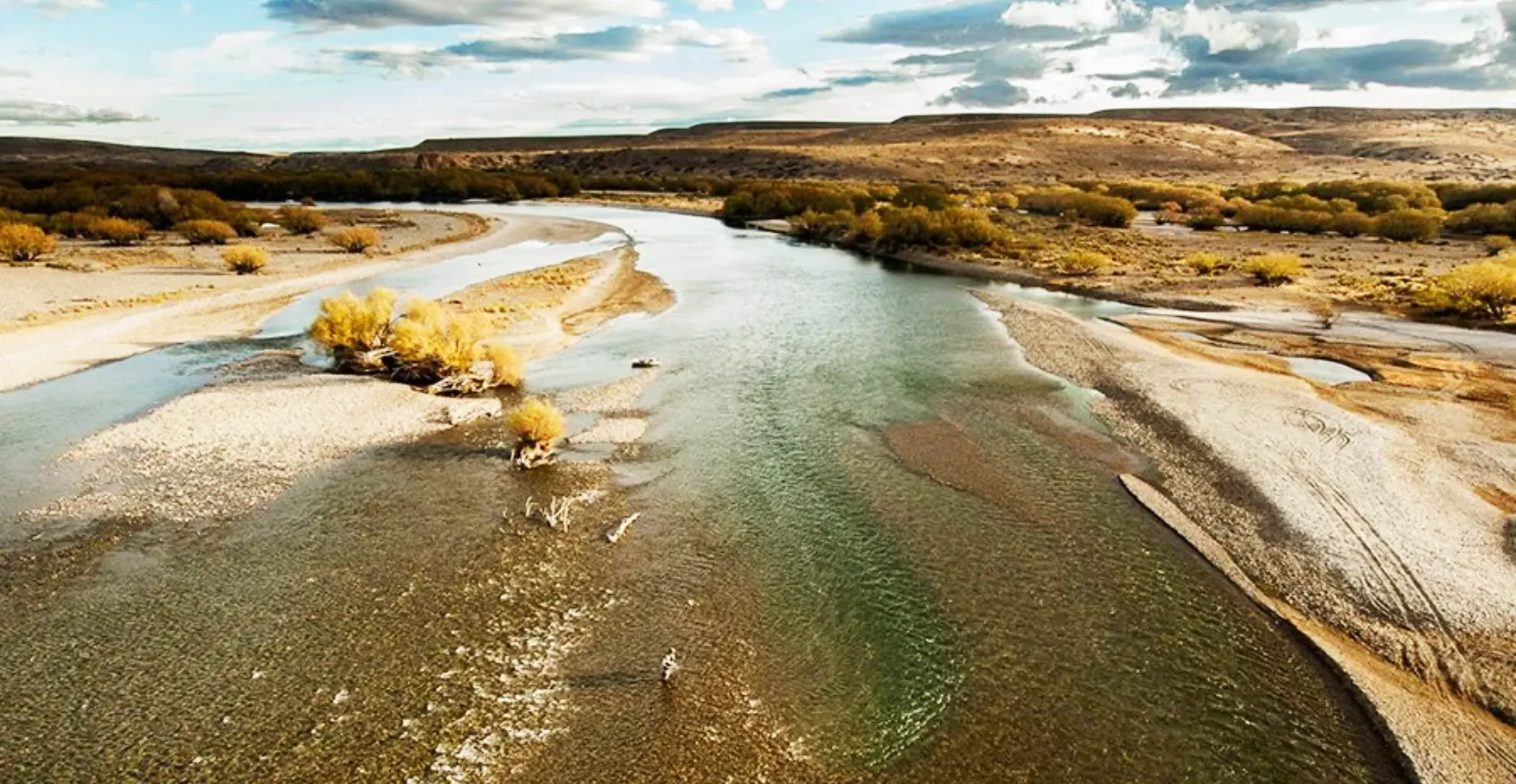
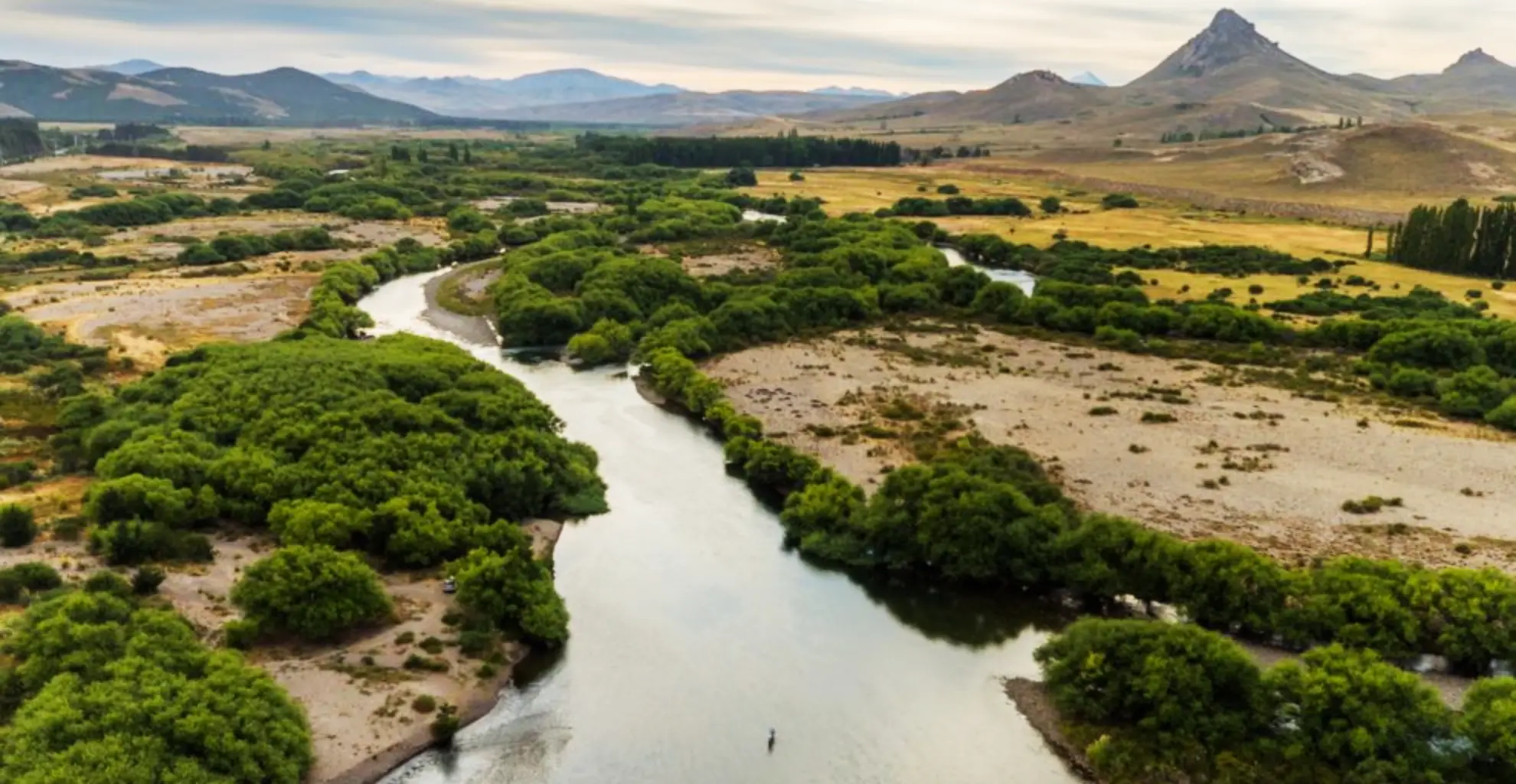
The Pichi Leufú—whose name comes from the Mapuche language, where Pichi means small and Leufú means river—is a typical steppe river, small in size yet biologically very productive. It stretches for about 43 miles and lies just under an hour’s drive from Bariloche, in the Patagonian Steppe. This is a semi-desert region, strikingly different from the lush forests closer to the Andes. Here, volcanic rock formations and narrow canyons carved by spring-fed streams dominate the landscape.
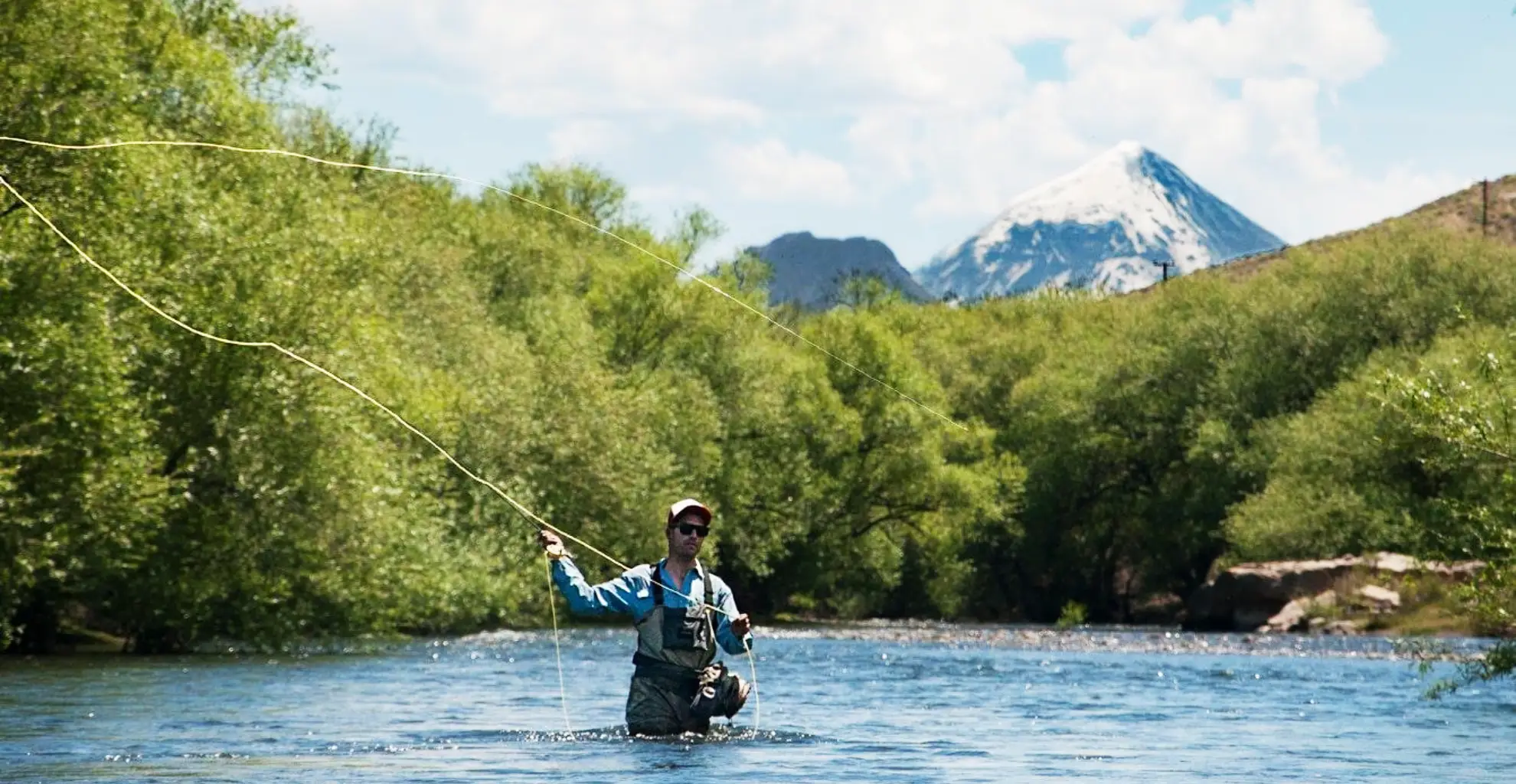
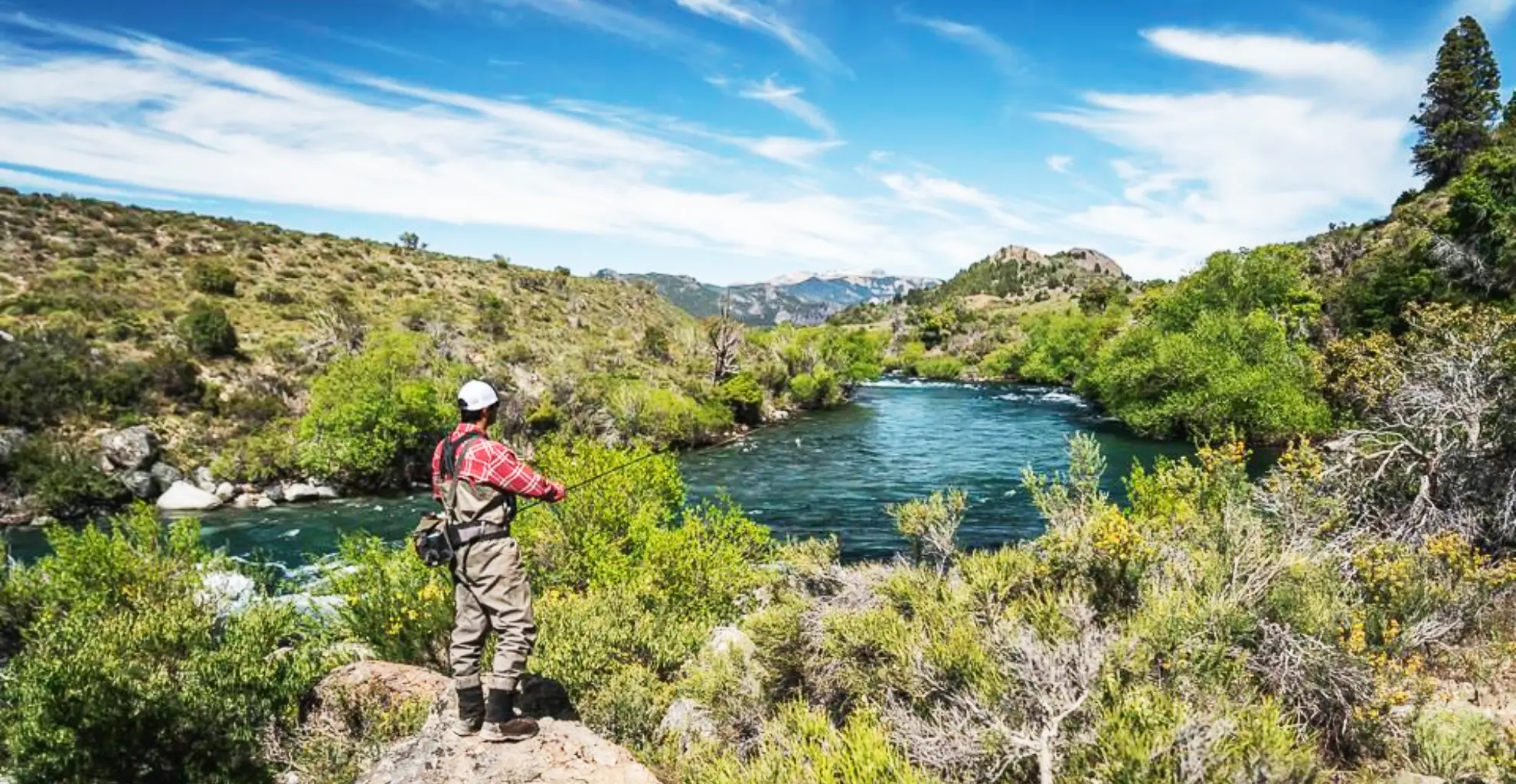
It is the smallest river we fish in the area, making it ideal for wading—often in shorts and sandals. Light equipment, such as a 4- or 5-weight rod, is recommended. The best time to visit this beautiful river is November and December, when conditions are at their finest.
Landscape and Characteristics
Fed by wetlands and snowmelt, and without a headwater lake to filter its flow, the Pichi Leufú carries a distinctive greenish tint and experiences wide daily temperature swings. Its varied morphology, easy wading, mostly vegetation-free banks, and abundant trout population make it a perfect place for refining techniques, experimenting with floating lines, and working through a dry-fly box.
The river is usually divided into two sections: Upper Pichi Leufú and Lower Pichi Leufú, with the Pilcaniyeu bridge as the common boundary. A more precise division extends the upper stretch about 9 miles below the bridge, almost to the Neumayen cooperative area.
- Upper Pichi Leufú: A gentler gradient, more riverside vegetation, and greater variety in structure, with long grassy banks, broad pools, and more widely spaced riffles.
- Lower Pichi Leufú: A steeper river, flowing through more arid surroundings. Here, riffles are more frequent, gravel and boulders dominate, and the river often runs through rocky canyons that make both access and fishing more challenging.
Fishing Throughout the Season
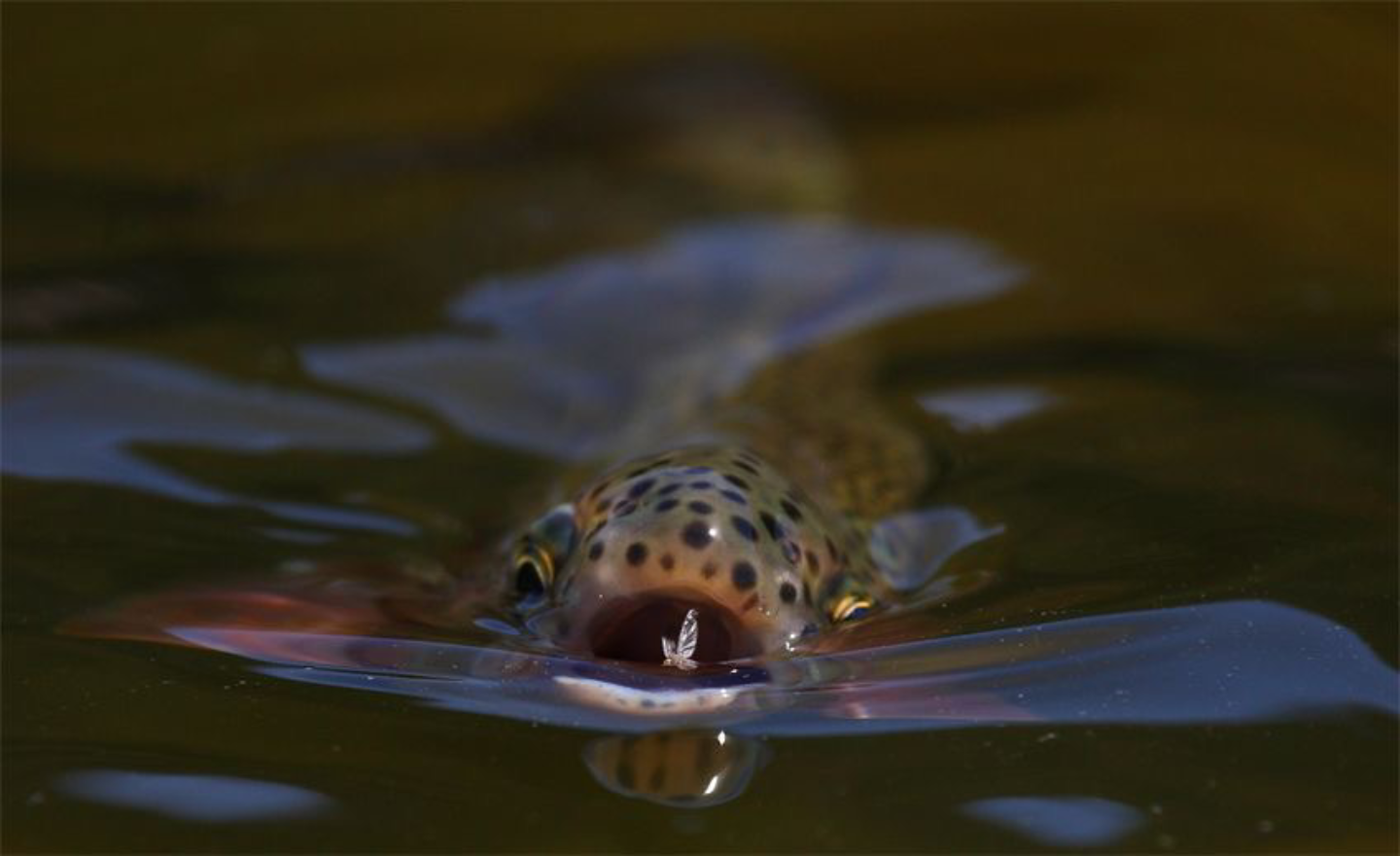
Success on the Pichi Leufú lies in targeting deeper pools or vegetated edges, where the larger fish hold. Resident trout typically range between 1 and 2 pounds, with the chance of encountering browns up to 4 pounds. The odds of finding these bigger fish improve in March and April, when spawners move upstream from the Piedra del Águila reservoir. Rainbows dominate the population, outnumbering browns about four to one.
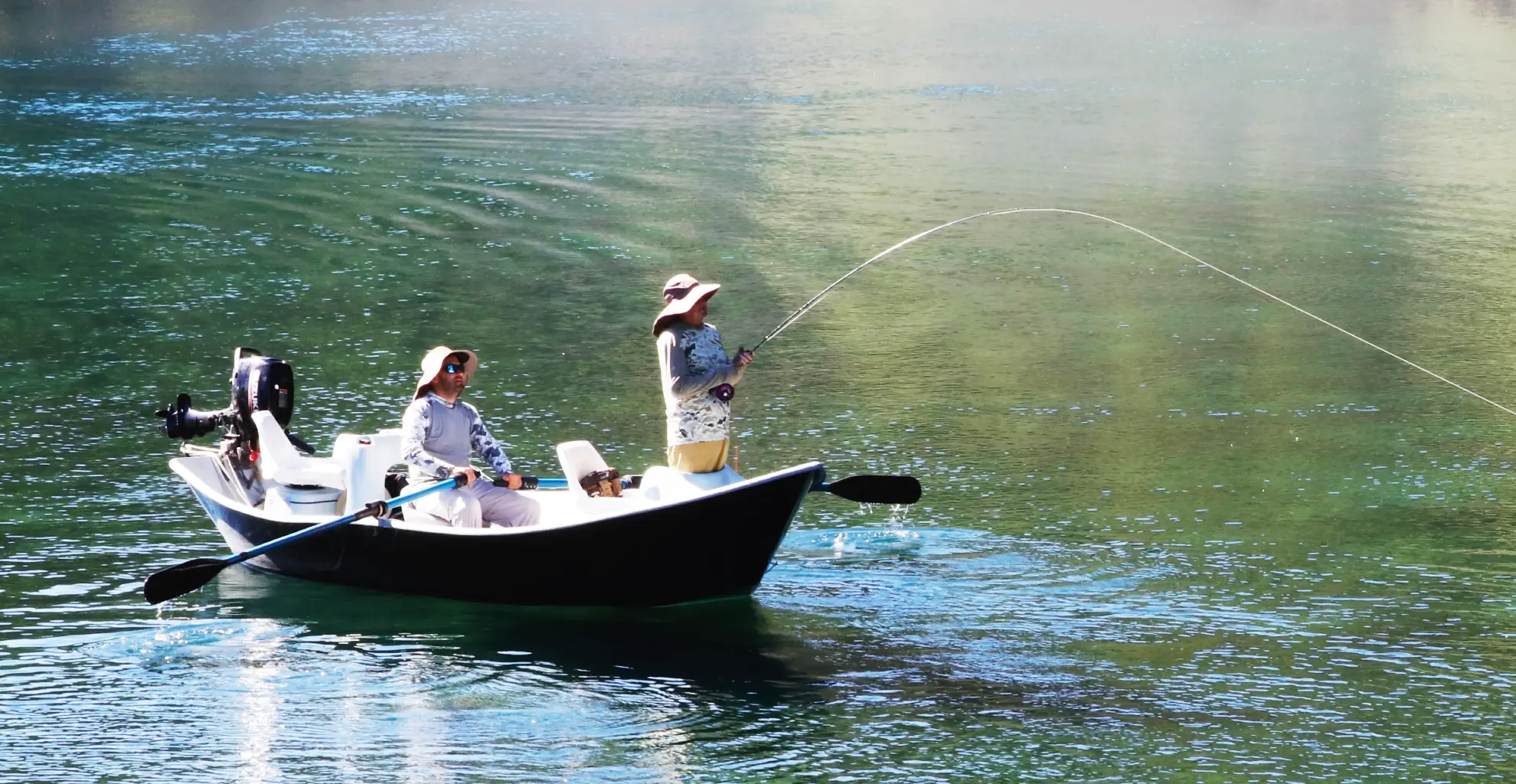
In November and December, fishing is at its best. On sunny days, a well-placed grasshopper imitation dropped under the cliffs can tempt the largest browns in the river. Casting big rubber terrestrials and twitching the rod tip will often bring aggressive takes. It’s also an ideal river for practicing dry-fly fishing with light tackle—both fun and technical.
During the hotter summer months, fishing slows down, but staying until evening often pays off. Around 7 p.m., short-lived caddis hatches can spark an intense half-hour of surface activity.
The river is easily accessible from Bariloche by multiple routes:
- Via National Route 237, turning onto National Route 23 toward the Pichi Leufú bridge (10 + 22 miles). From there, a rural road follows the right bank.
- Or via Route 237 toward the airport, then onto Provincial Route 80, leading to the upper section known as La Pilila (24 miles).
With its easy wading, varied structure, rewarding fishing, and cultural significance, the Pichi Leufú stands out as one of Patagonia’s most distinctive steppe rivers—perfect both for learning and for pursuing unforgettable catches.