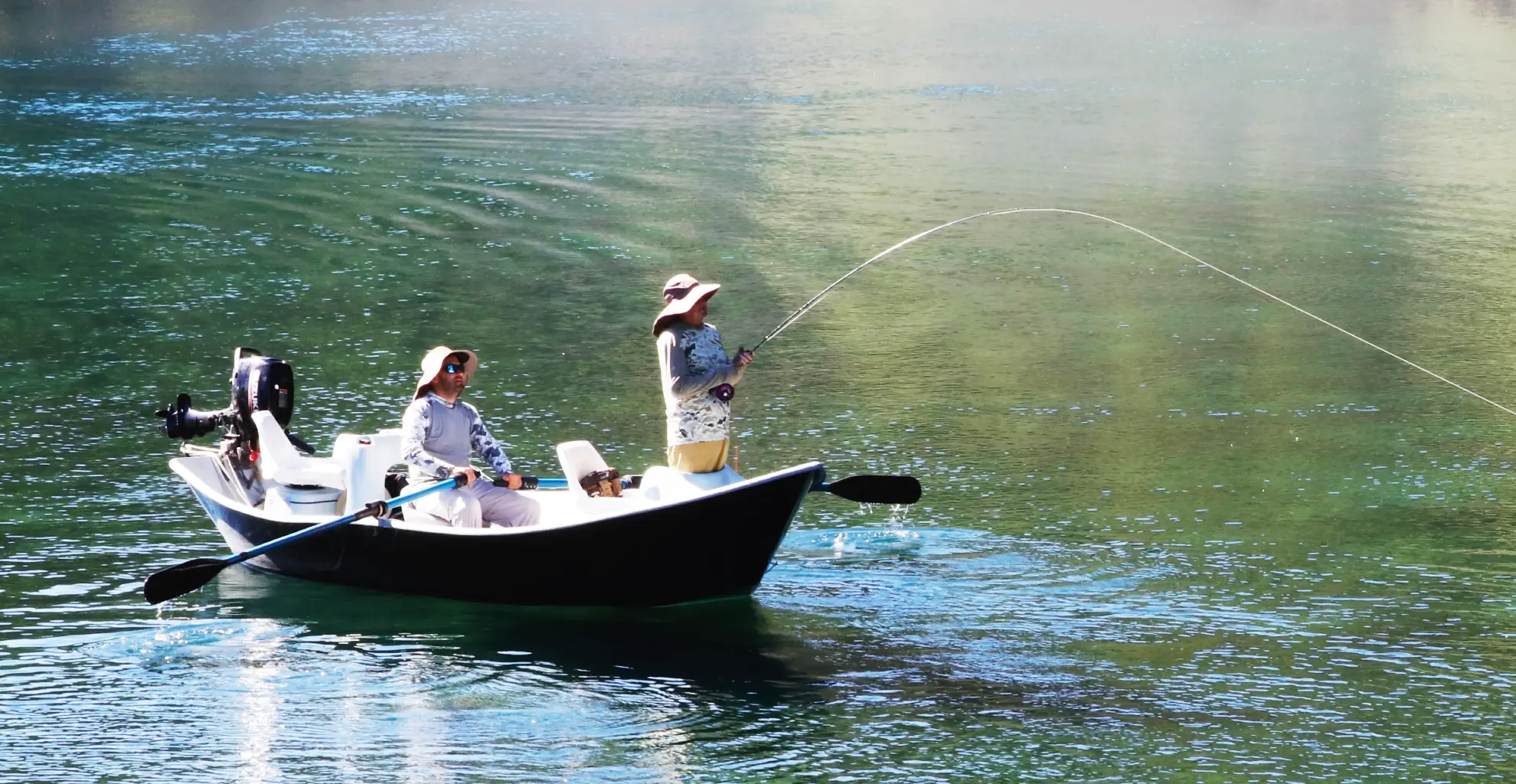
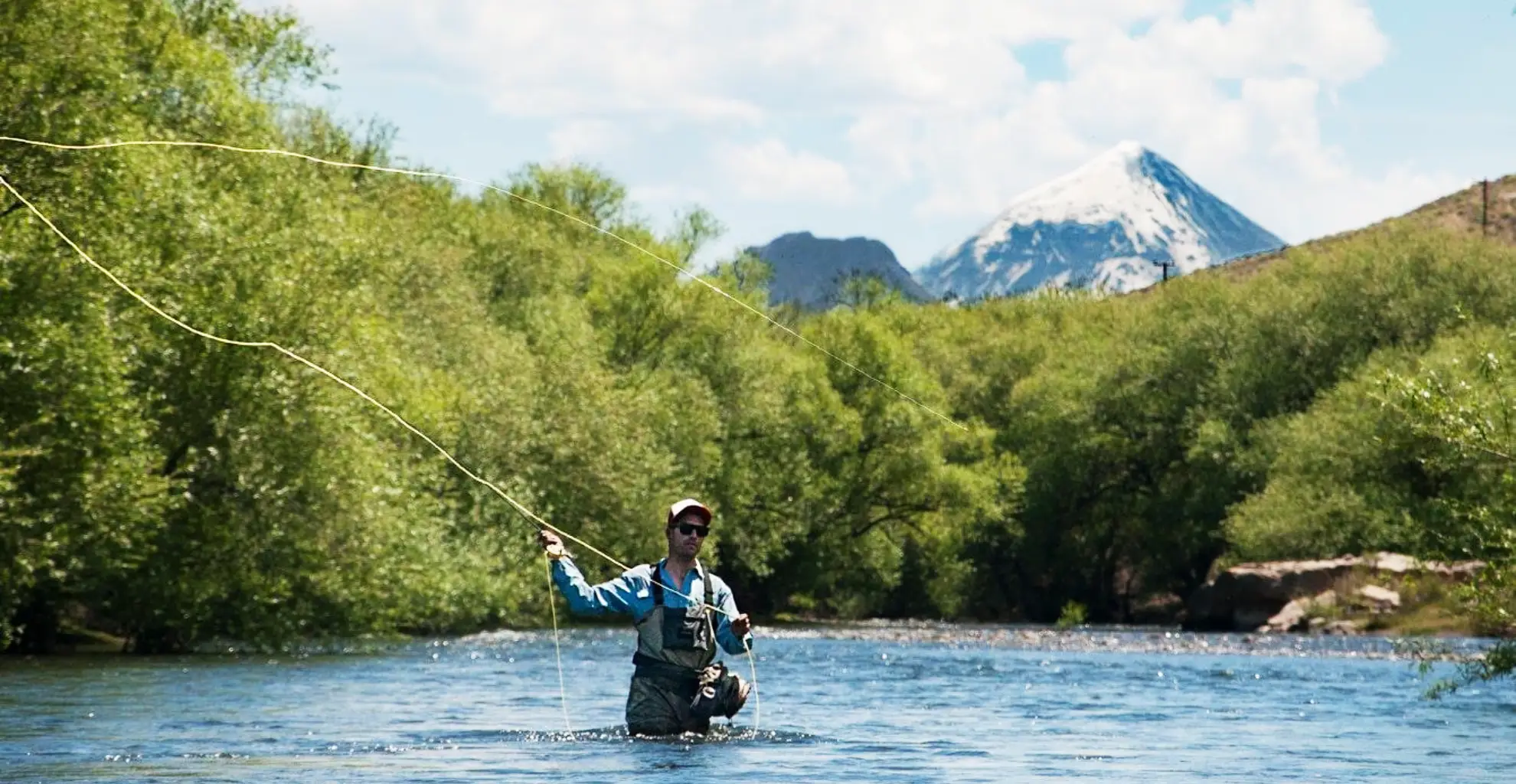
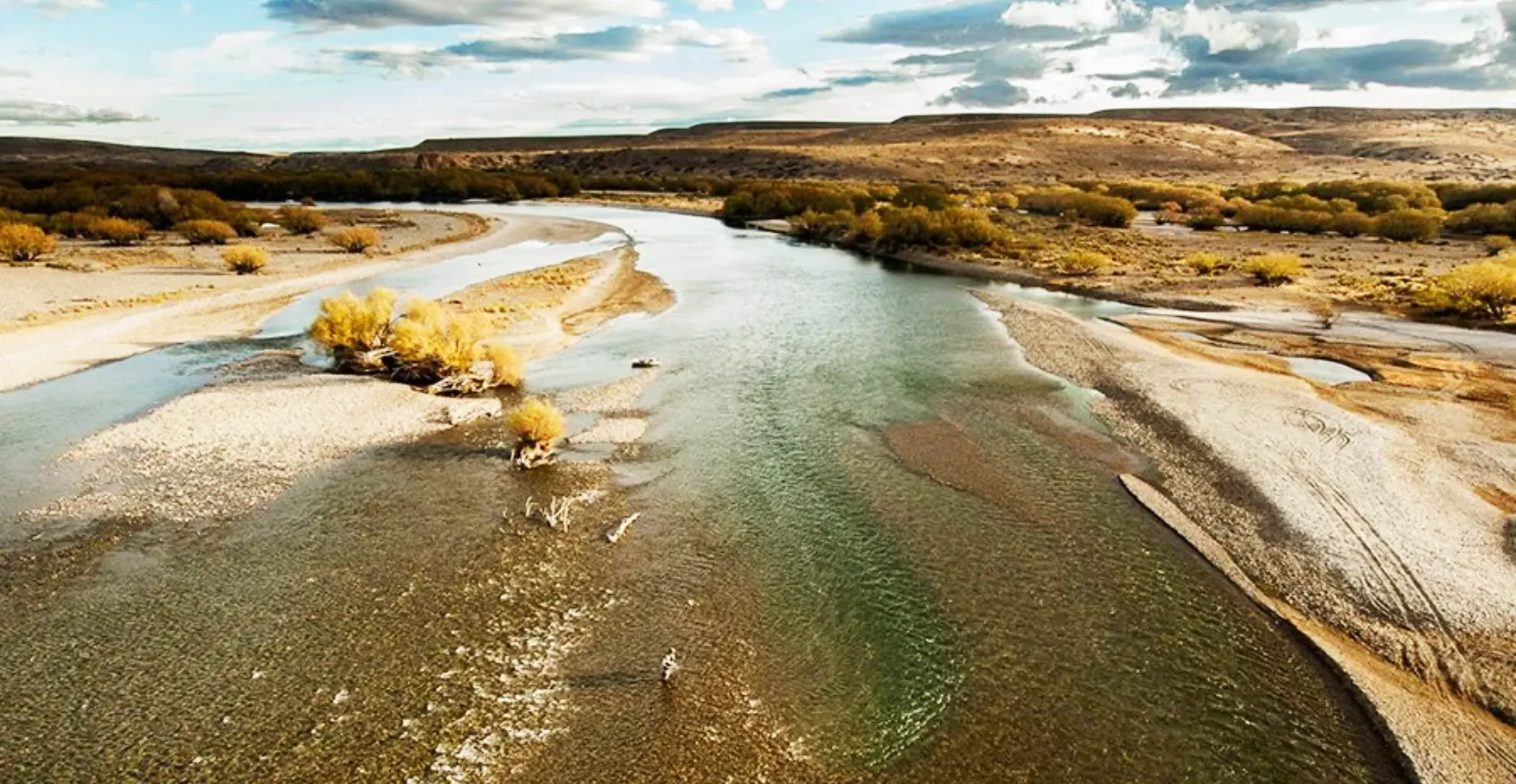
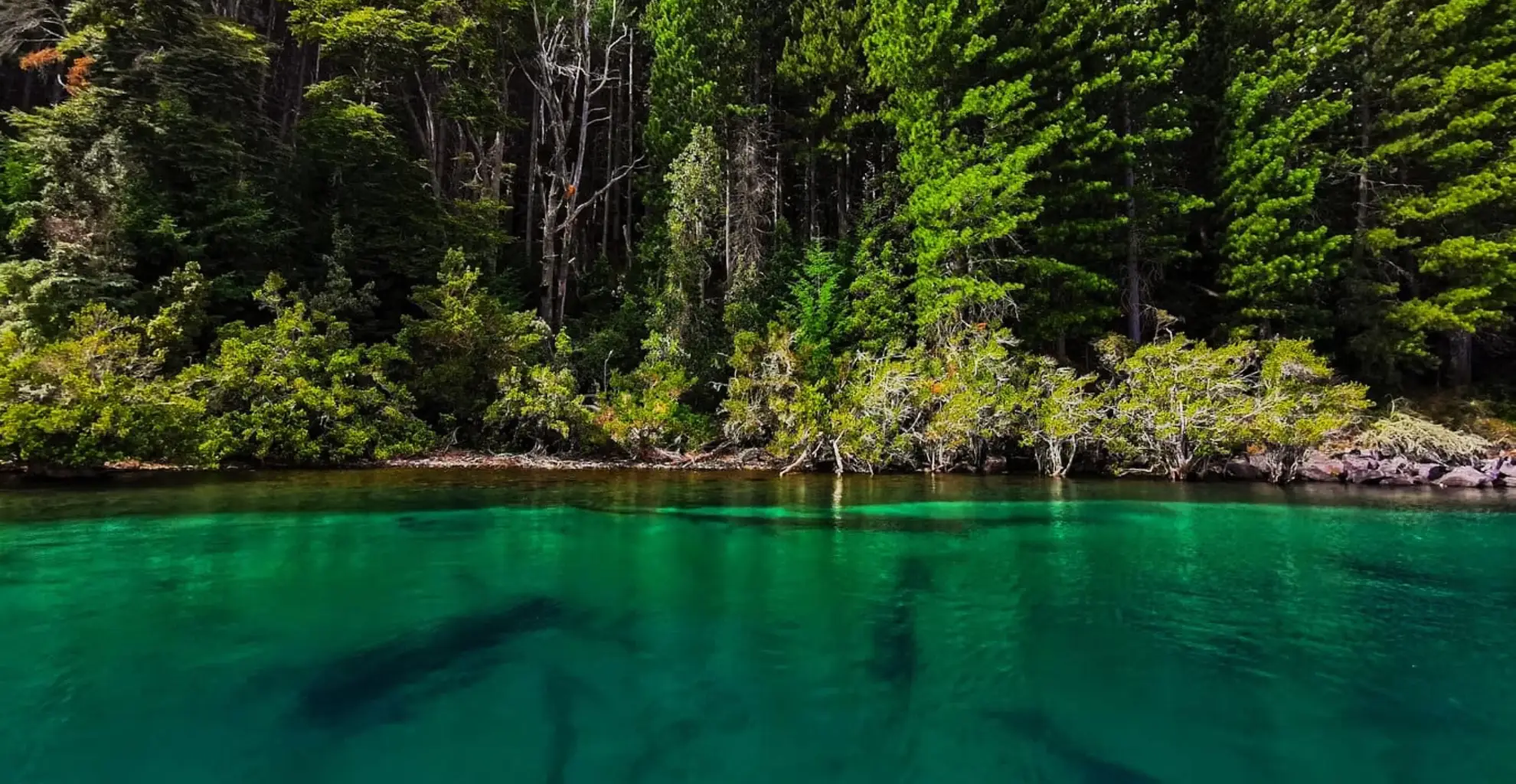
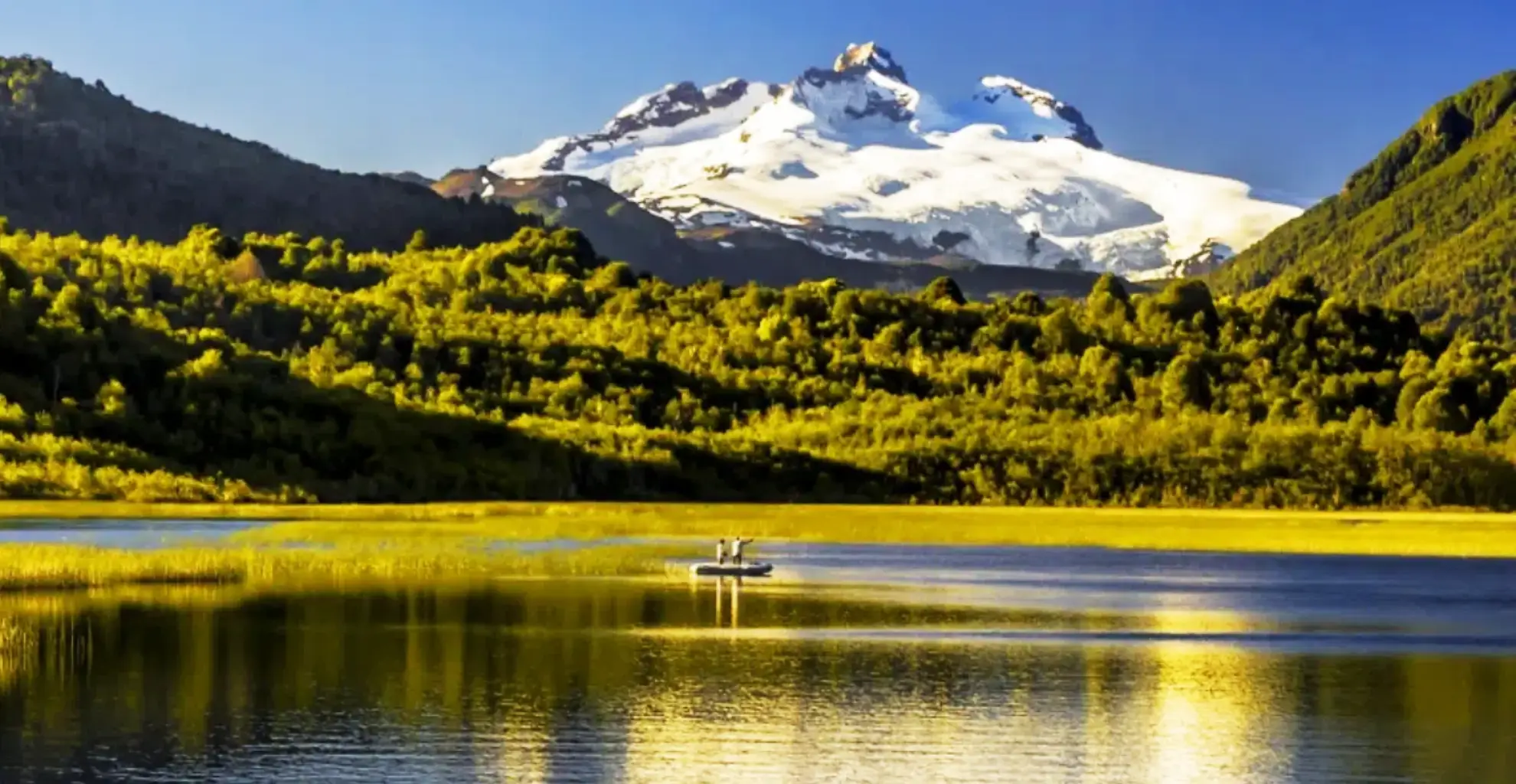
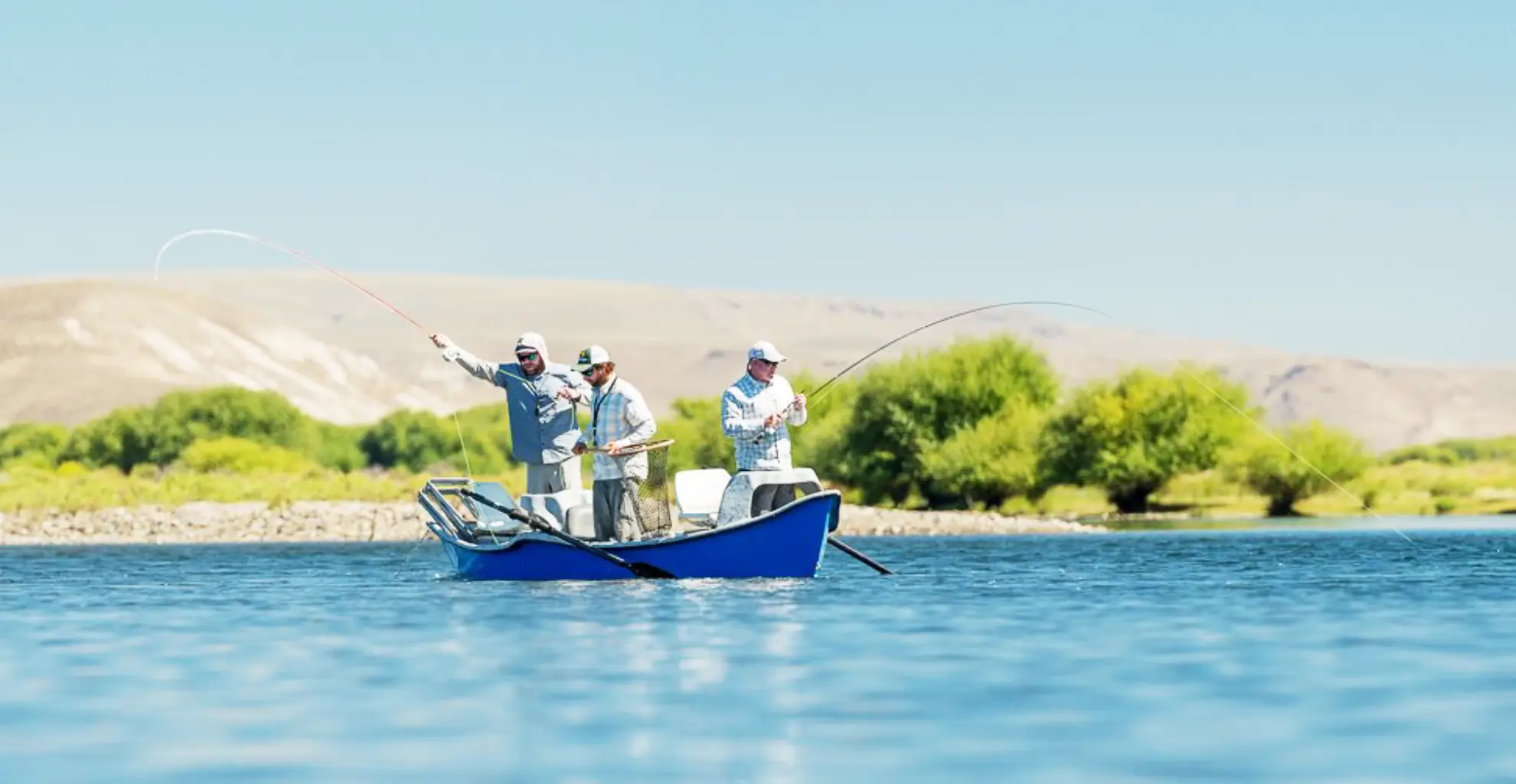
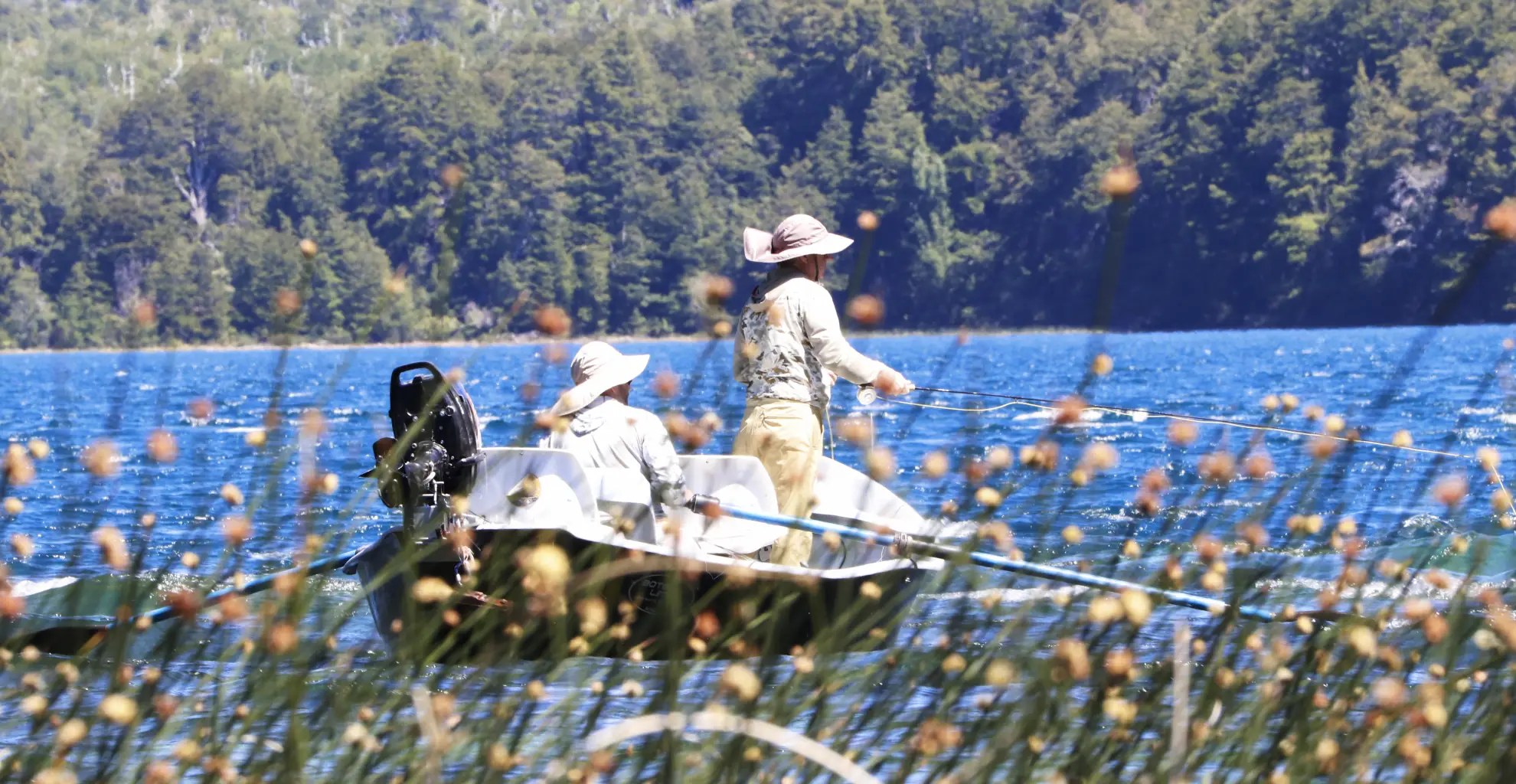
Our All Inclusive package is Bariloche Fishing Trips at its most complete: we take care of absolutely everything, so all you have to do is fish. Built around your preferences, trips run anywhere from 2 to 7 days and can combine day trips, camp expeditions on the Manso River or the waters of southern Neuquén, and stays at carefully selected hotels in Bariloche — a fully personalized itinerary, thought out down to the last detail.
National fishing permit, Private/local permission, Requires qualified guide
The Manso River originates at the Manso Glacier on Mount Tronador (at about 11.500 feet, the highest point of the National Park) and flows through three distinct sections before crossing into Chile and emptying into the Pacific Ocean, forming the Pacific Basin of Nahuel Huapi National Park. Its southernmost stretch also serves as the park’s southern boundary.
Landscape and Characteristics
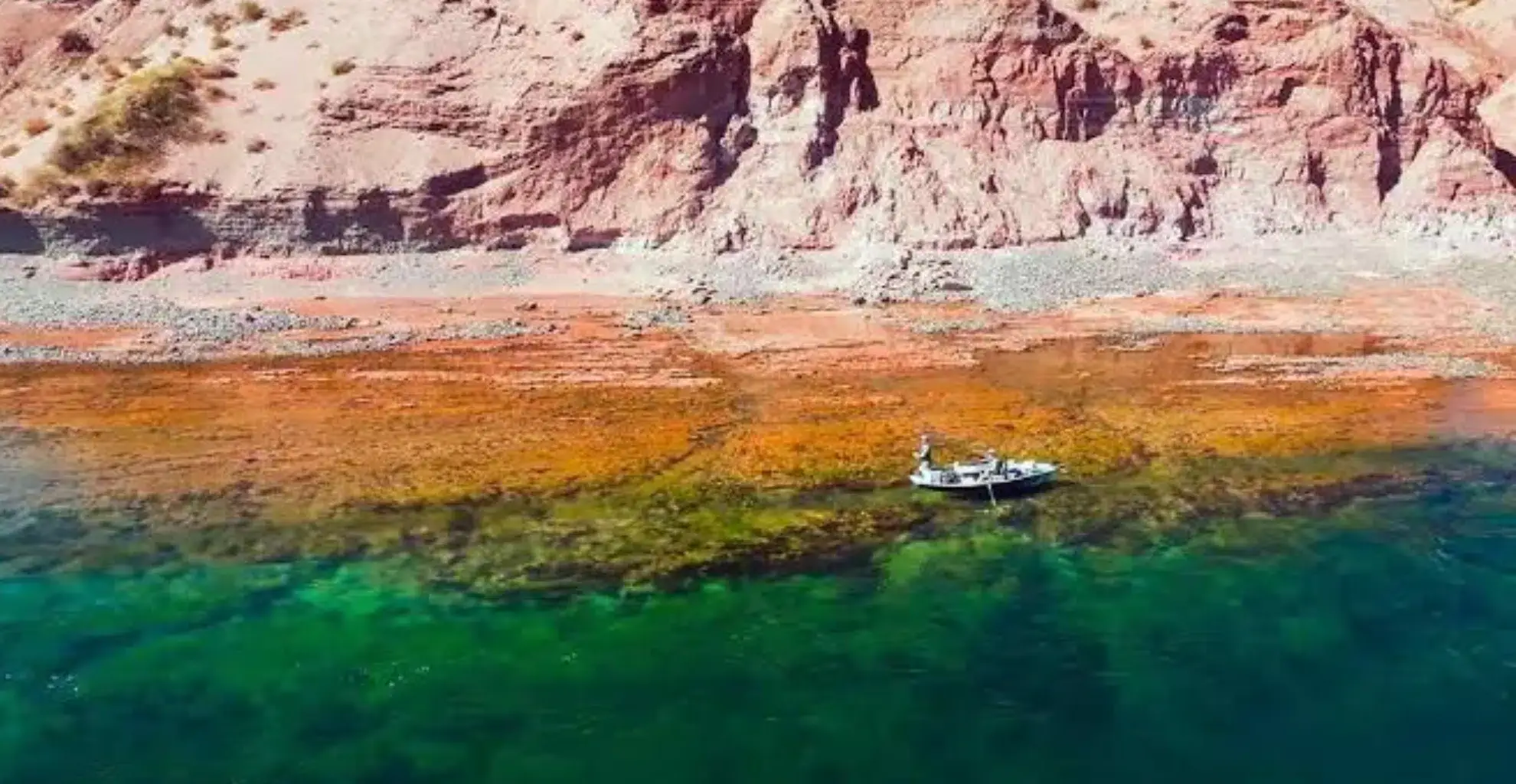
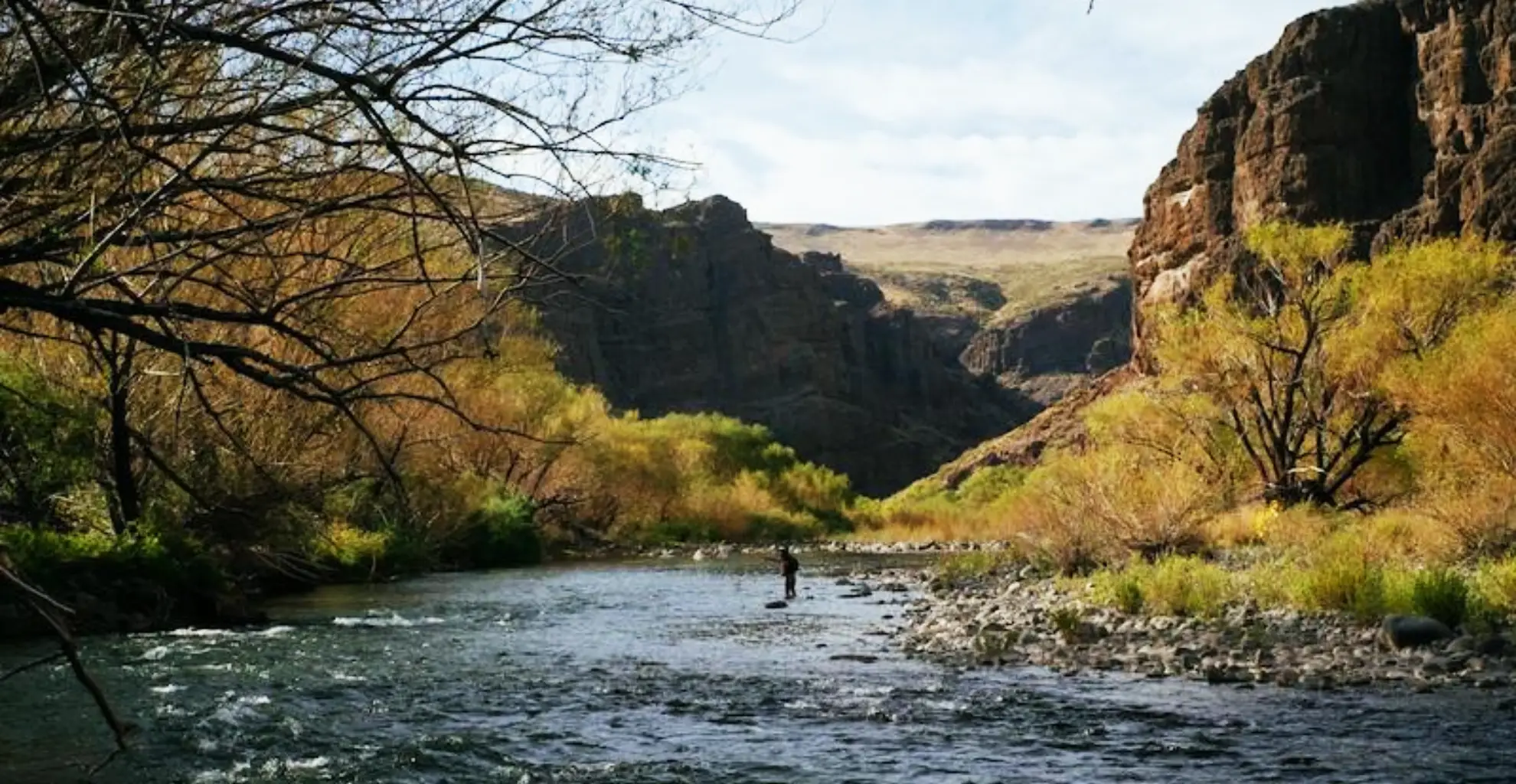
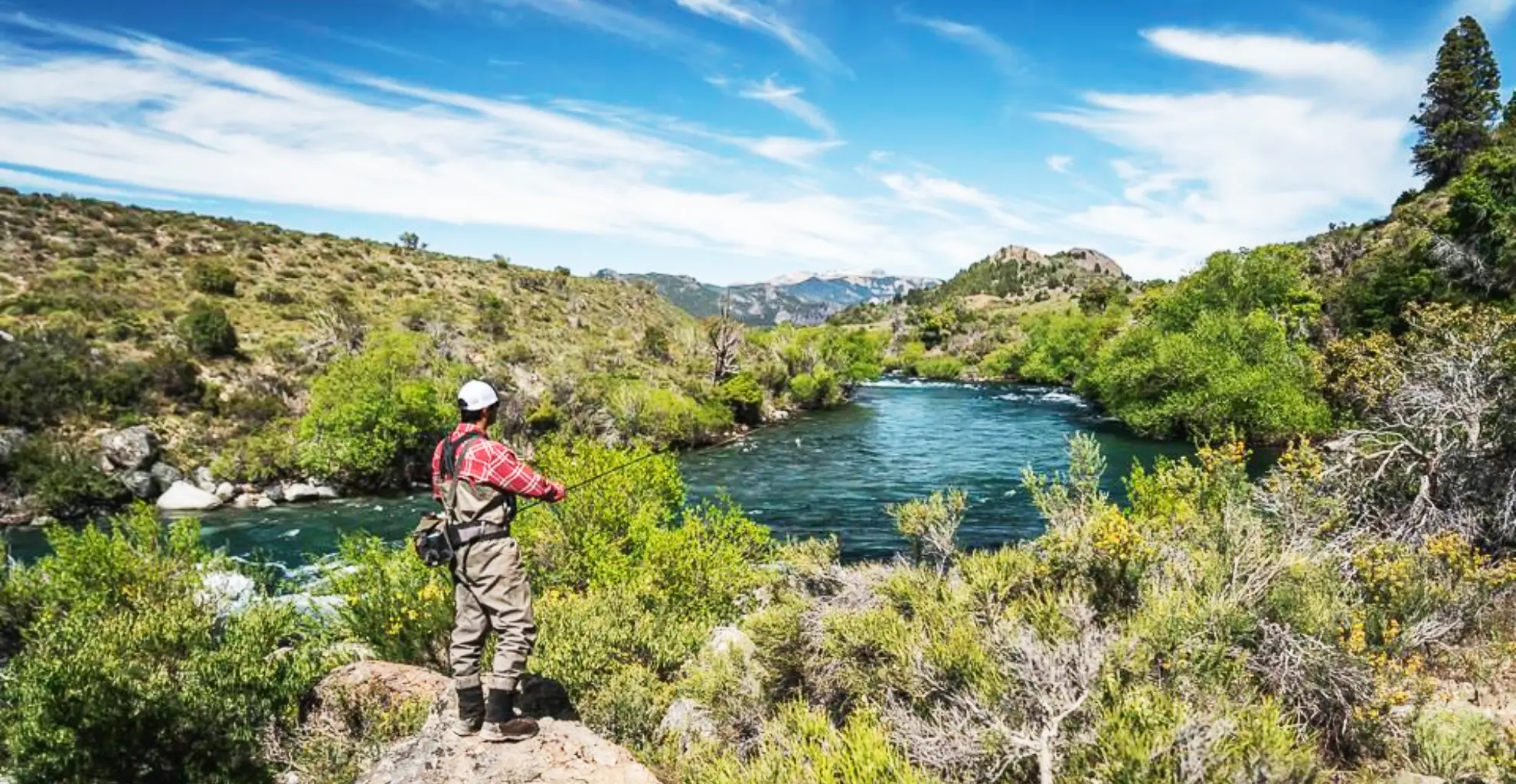
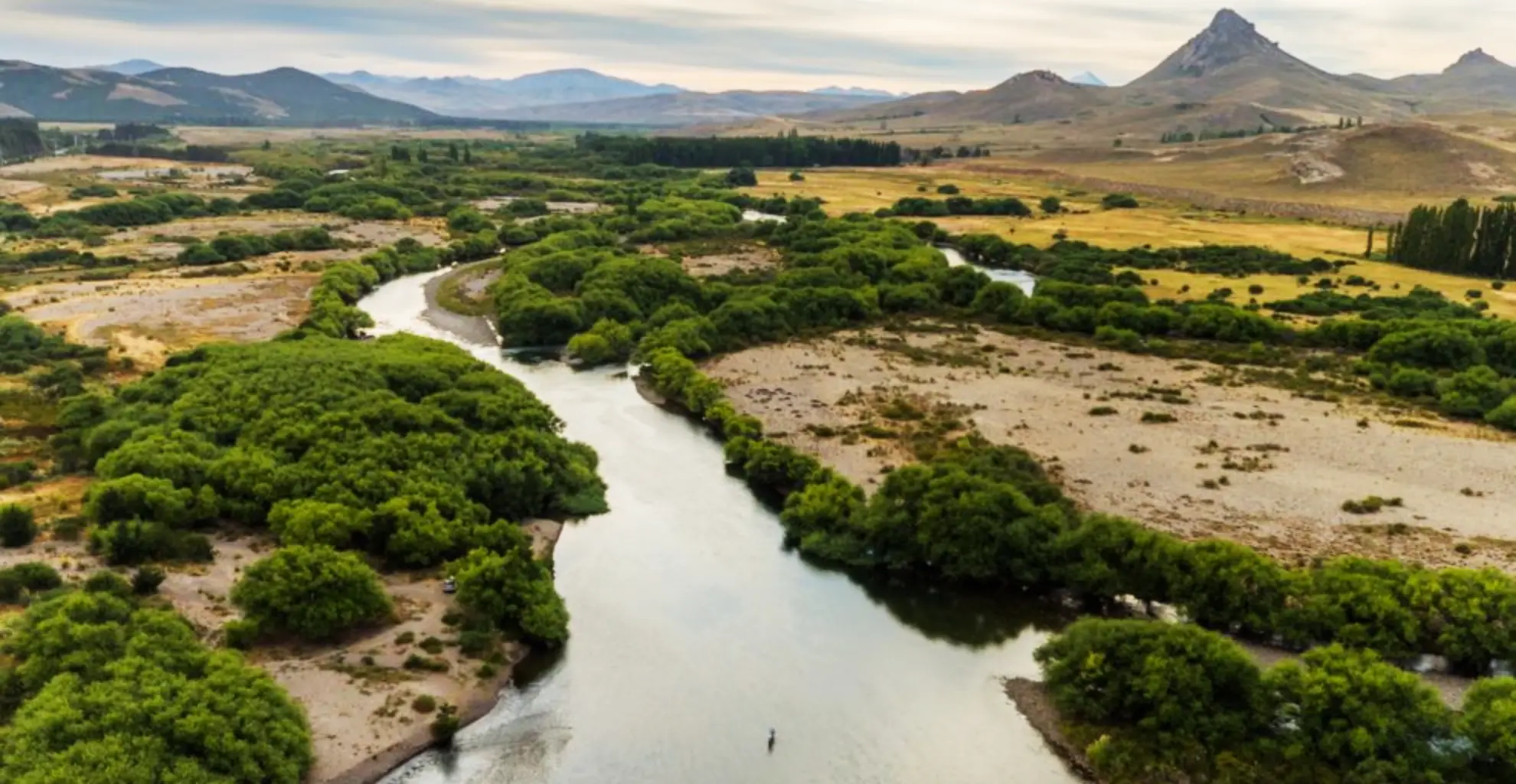
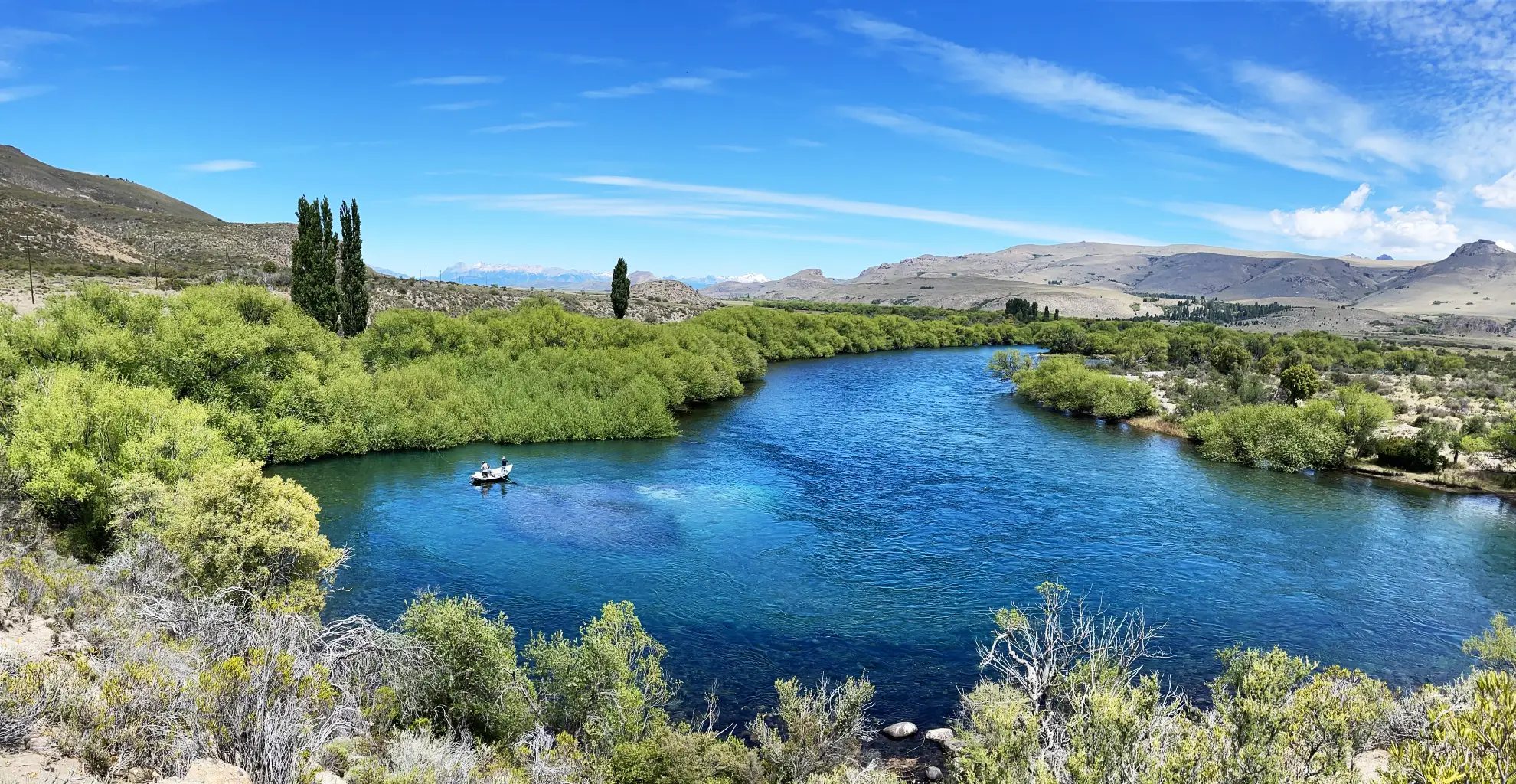
Renowned for their crystal-clear waters and breathtaking scenery, the rivers and lakes of the Manso Basin provide one of Patagonia’s finest fisheries, home to brown, brook, and rainbow trout. Few basins in the region offer such a perfect combination of rivers and lakes, making the Manso truly unique.
The river is divided into three main sections:
Upper Manso – Born at the Manso Glacier, this section flows into the northwest shore of Mascardi Lake. Its waters are glacial, cold, and sediment-rich. Fishing is not permitted here, but the delta where it meets Mascardi is a well-known hotspot.
Middle Manso – Running from the southwest shore of Mascardi Lake to Steffen Lake’s western edge, this section passes through Moscos and Hess Lakes, and features several dramatic cascades, including the iconic Los Alerces Waterfall, just 3 miles south of Hess Lake.
Lower Manso – Emerging from the eastern shore of Steffen Lake, the river winds its way toward the Chilean border, where it continues its journey to the Pacific.
Map of the Basin
Below you’ll find a map showcasing the most renowned spots of the Manso Basin. Explore freely and don’t hesitate to ask questions—we love sharing stories about this extraordinary river system.
Fishing the Manso River
November – Season Opening
At the start of the fishing season, water levels are high and temperatures remain low in both rivers and lakes. Trout—especially rainbows—are recovering from spawning and feeding aggressively. This is the time for streamers and nymphs on sinking lines, which match the high-water conditions perfectly.
December / January – Crème de la Crème
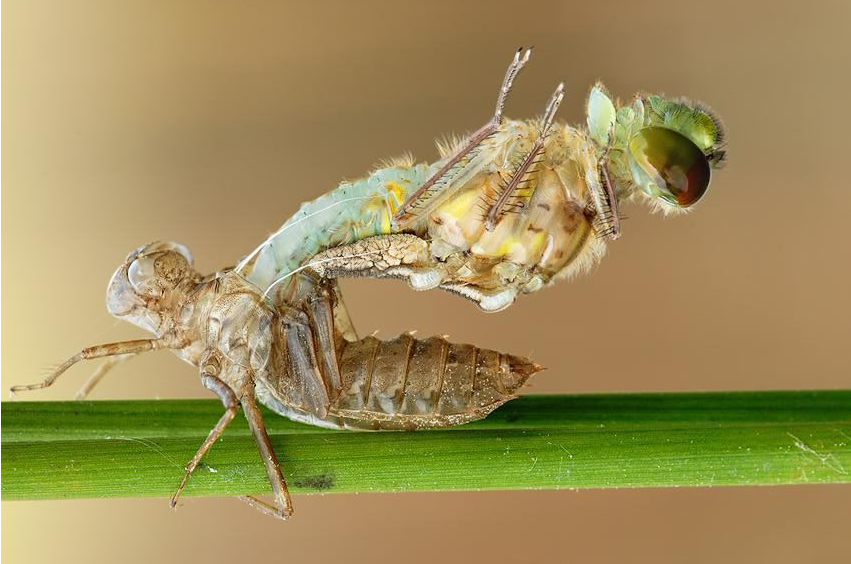
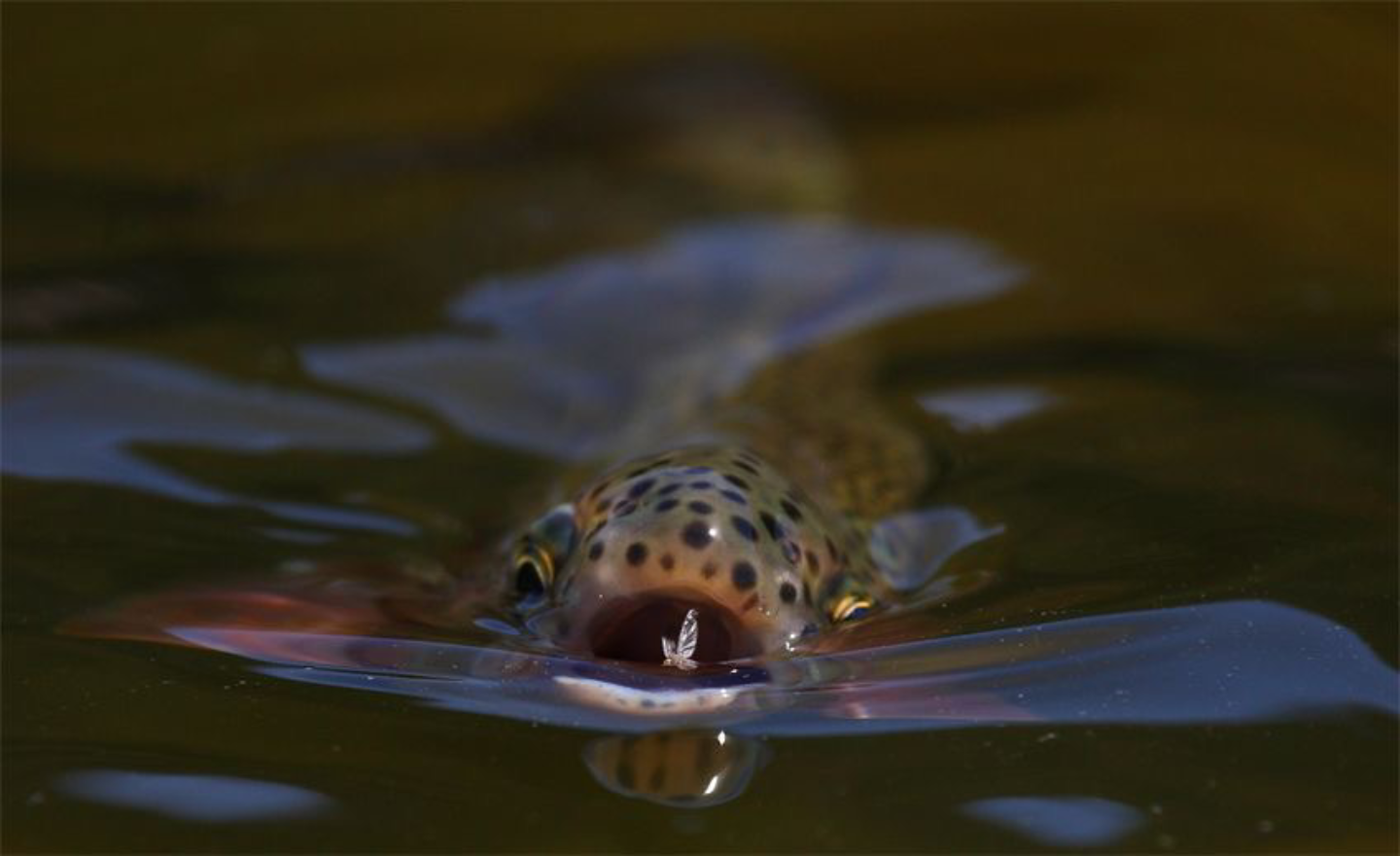
With summer’s arrival, warmer weather triggers aquatic life, and fish feed more actively near the surface. By late December, the famous dragonfly hatch begins—one of the most thrilling fishing experiences in Nahuel Huapi National Park. Big foam flies bring explosive strikes, offering unforgettable action. Early January continues in much the same way. These months are also ideal for our camps: perfect weather and world-class fishing—simply unmissable.
Late January / February – Patience Pays Off
As the season moves into late January and February, lower water levels and rising temperatures make fishing more technical. Anglers often switch to fast-sinking lines and small streamers, while evening caddis hatches still bring rewarding dry-fly opportunities. Here, patience and precision are the keys to success.
March / April – A Strong Finish
As autumn approaches, conditions stabilize, and fishing once again improves. This is a versatile period where all techniques—dries, nymphs, and streamers—can produce excellent results, closing the season on a high note.