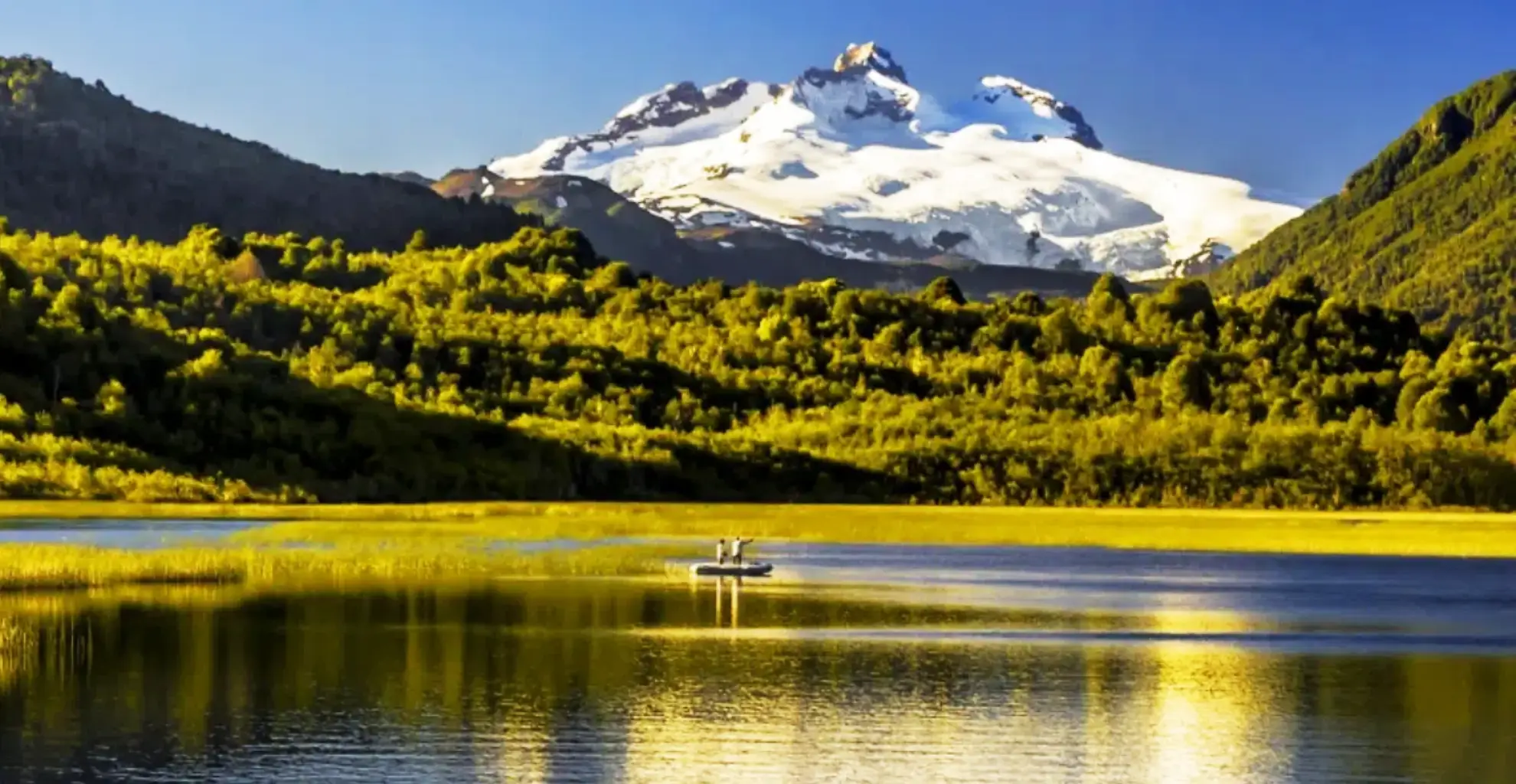
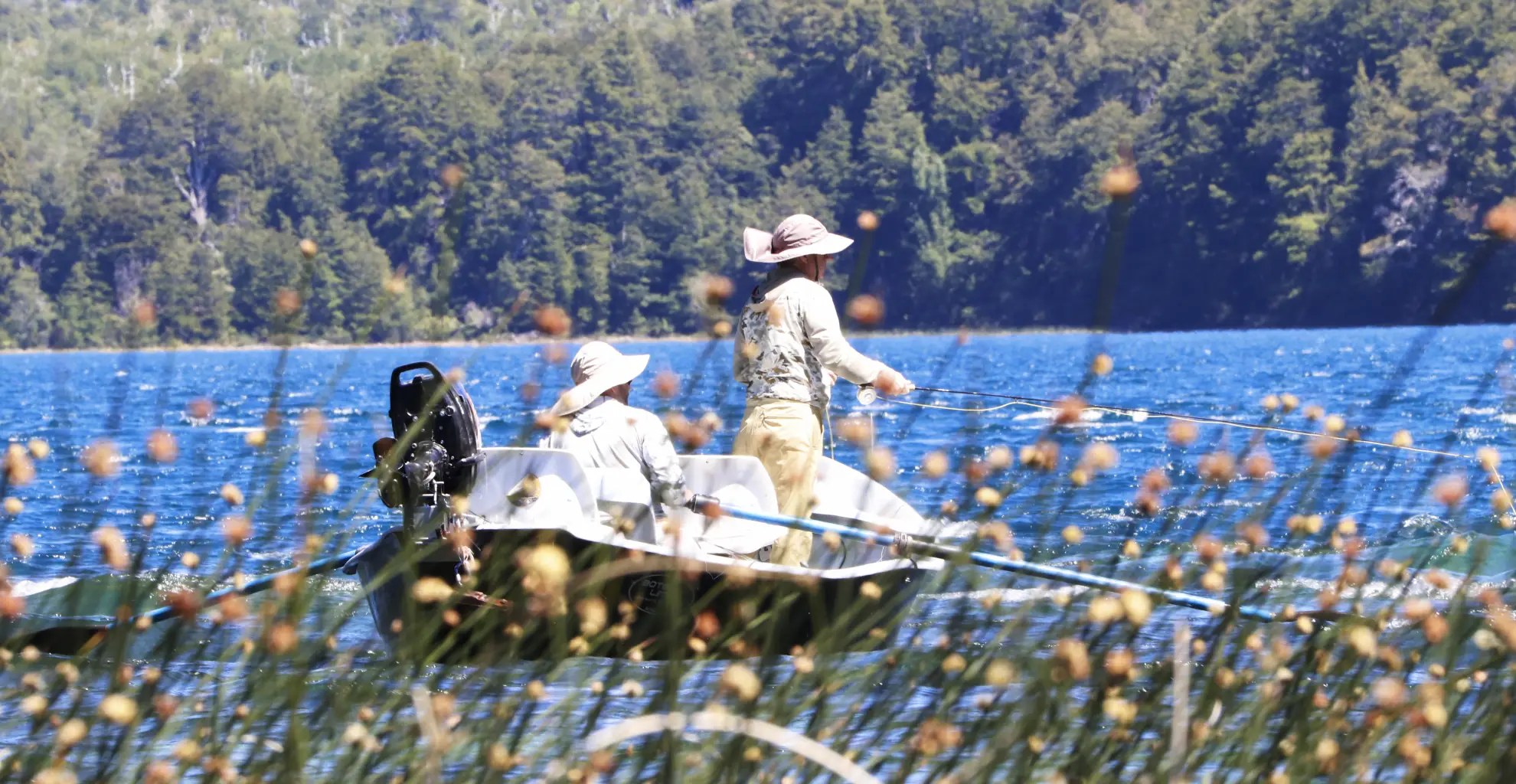
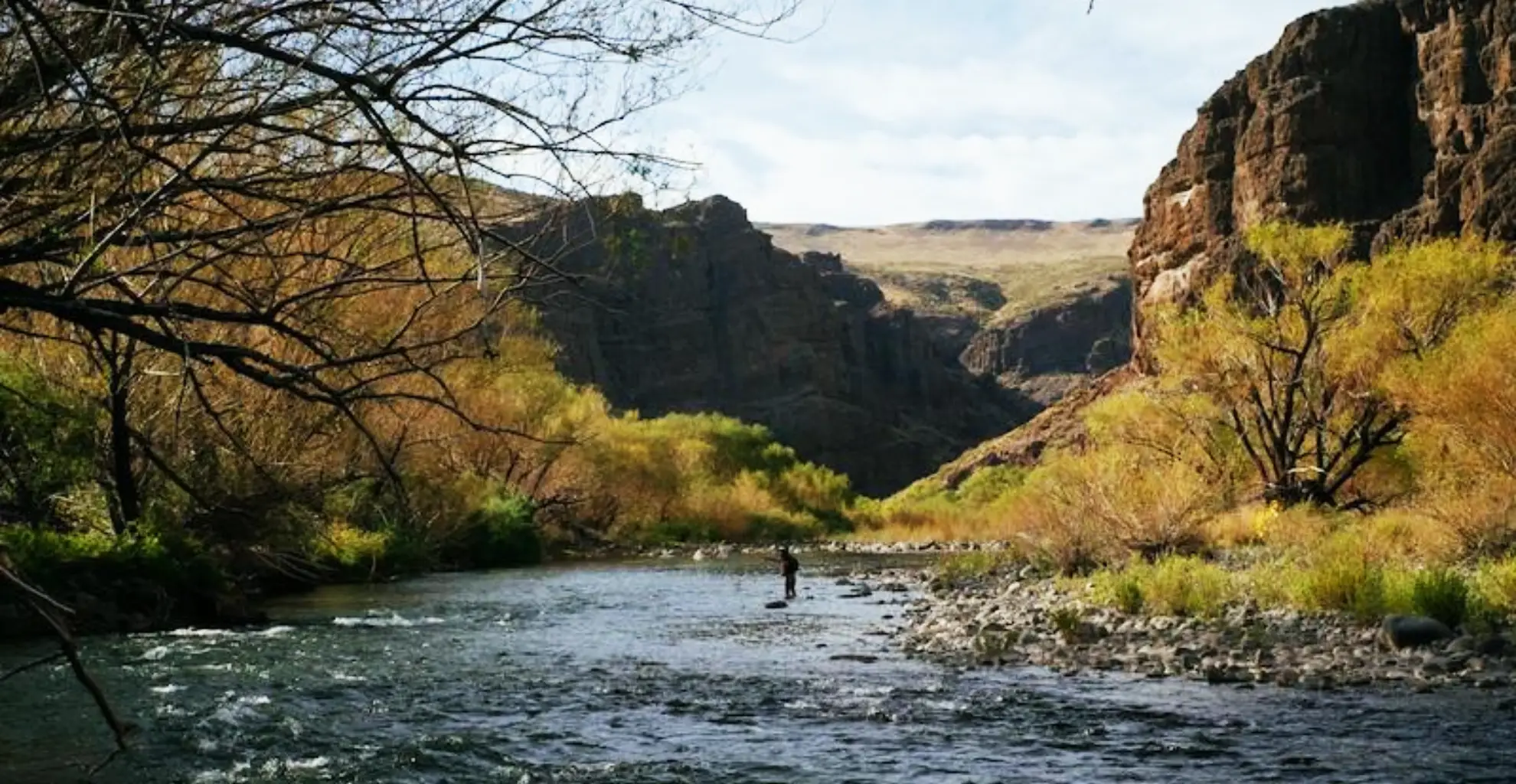
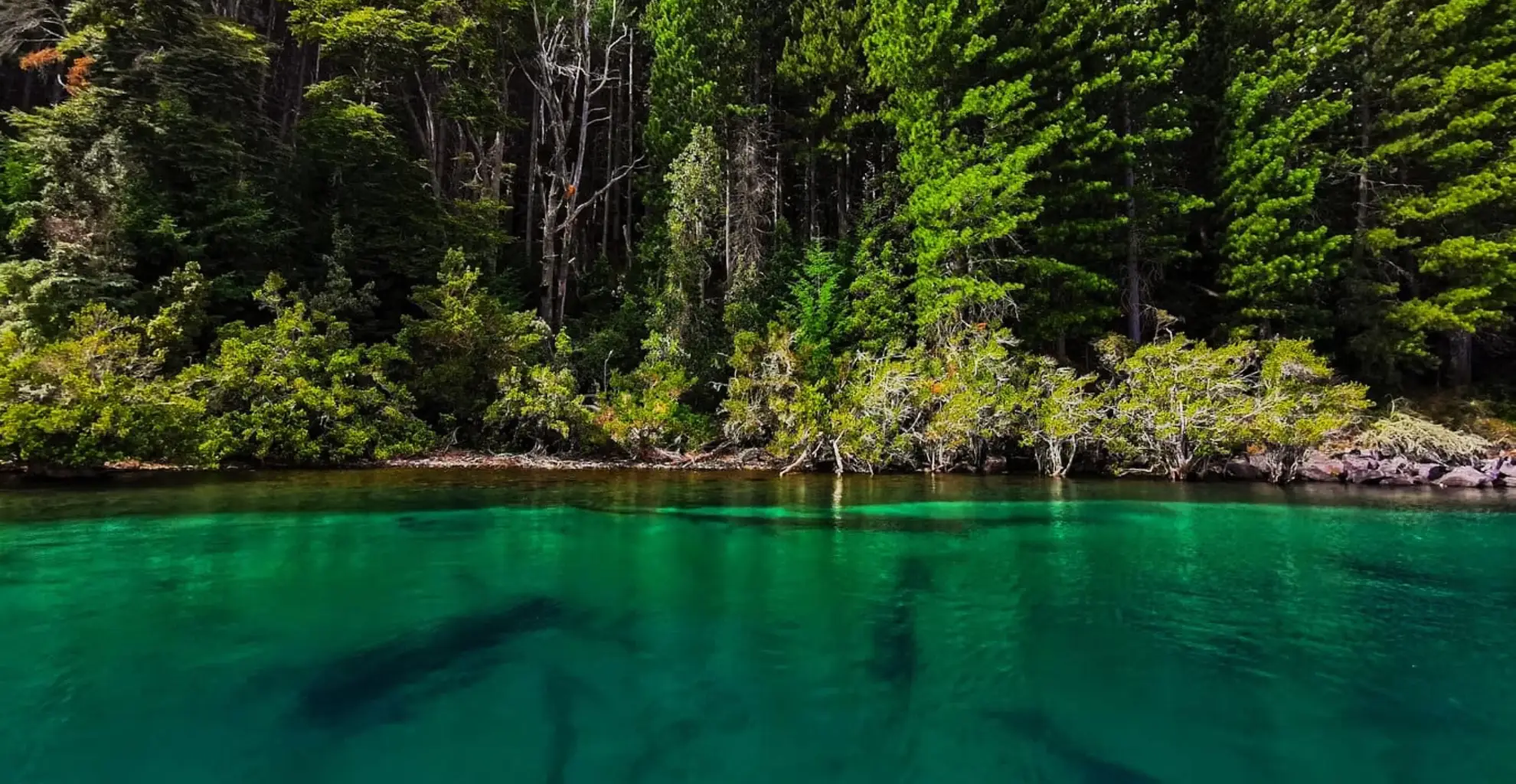
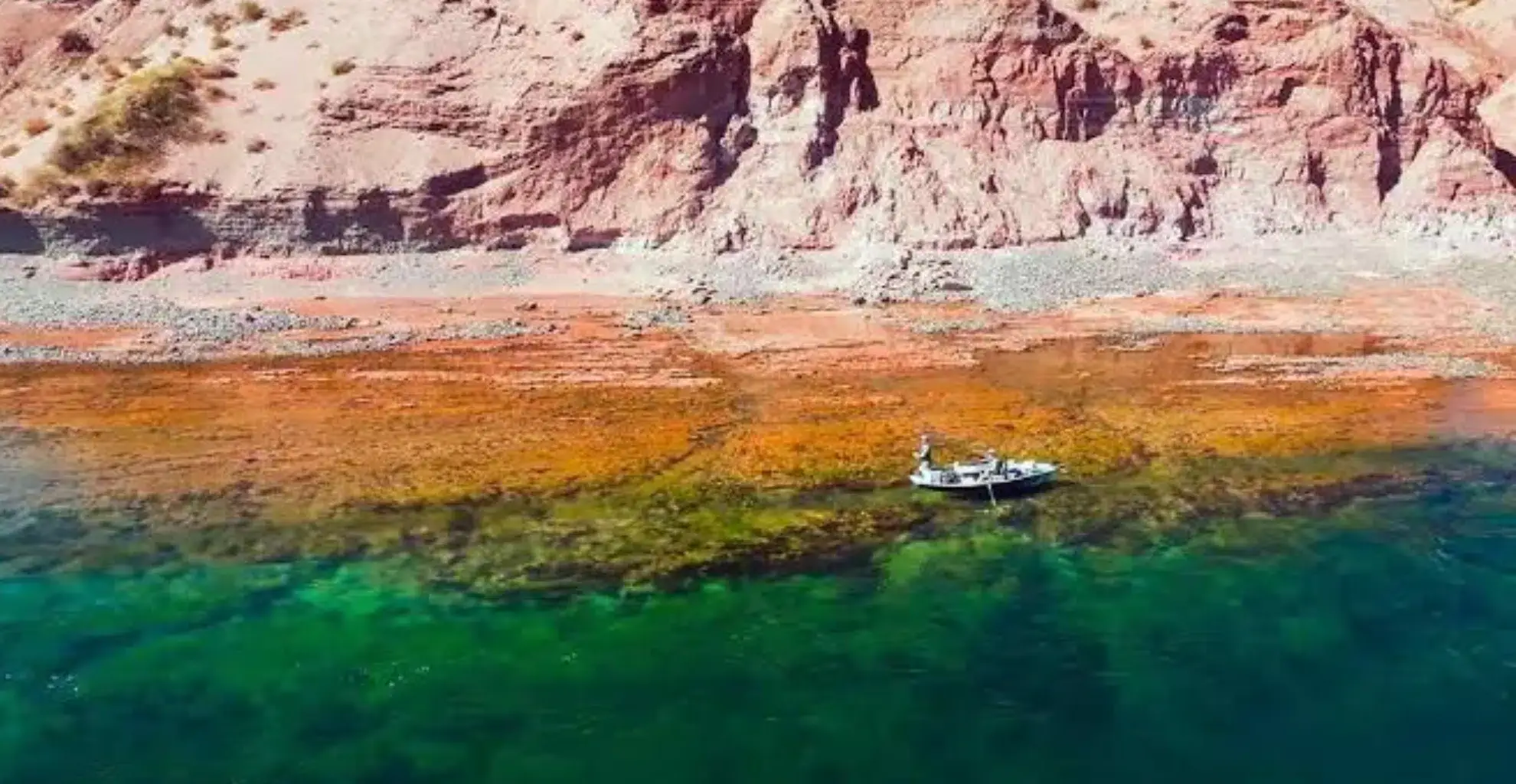
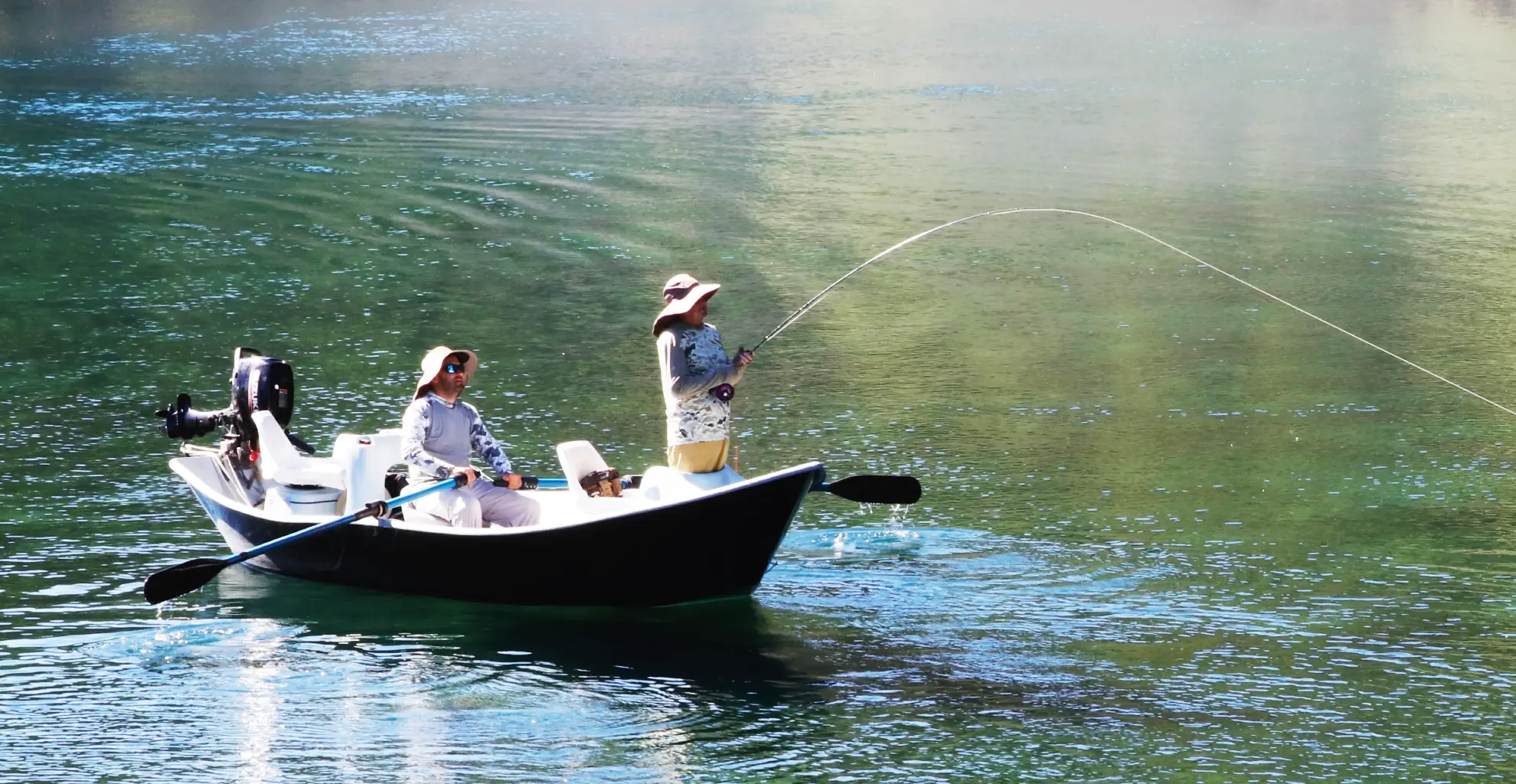
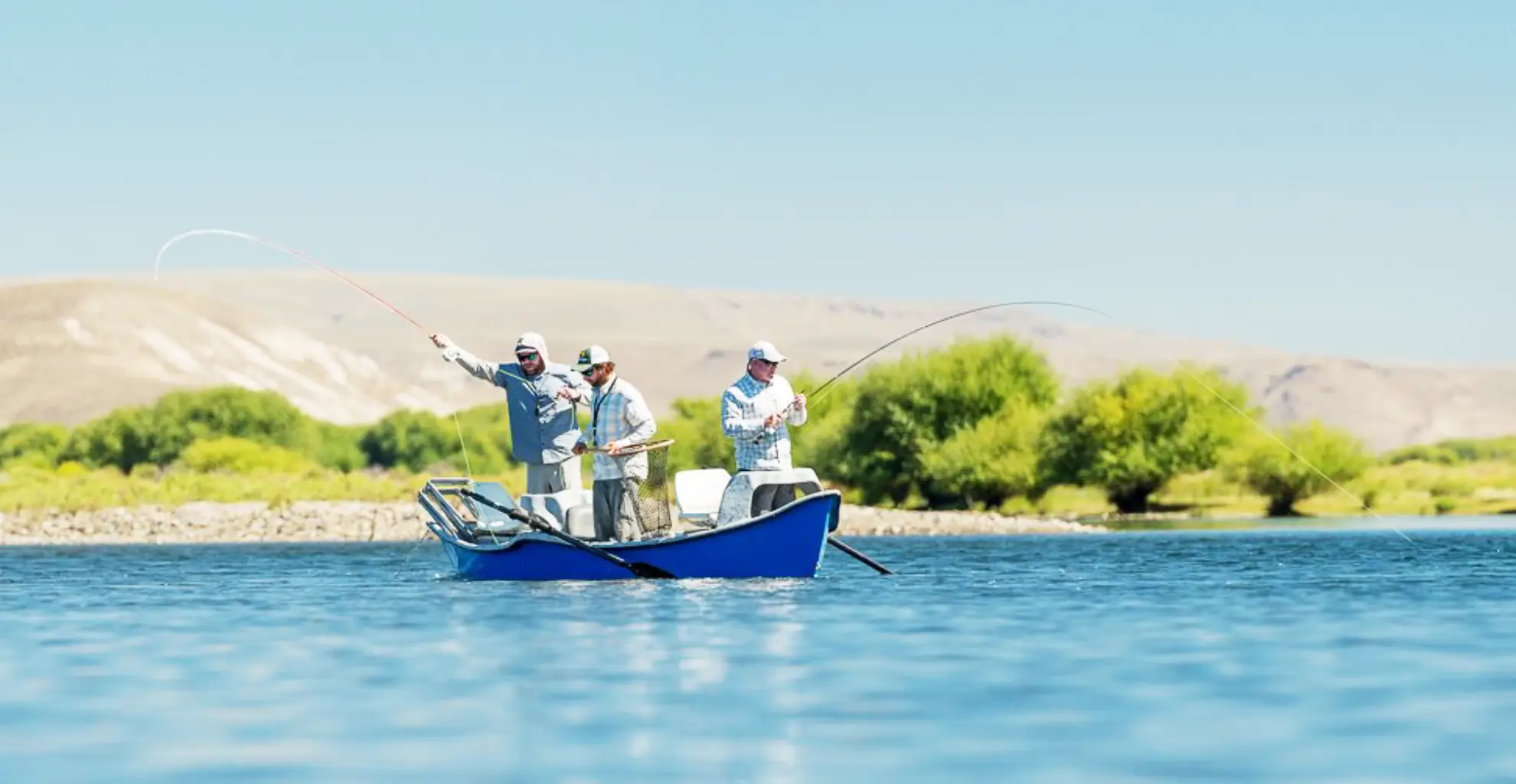
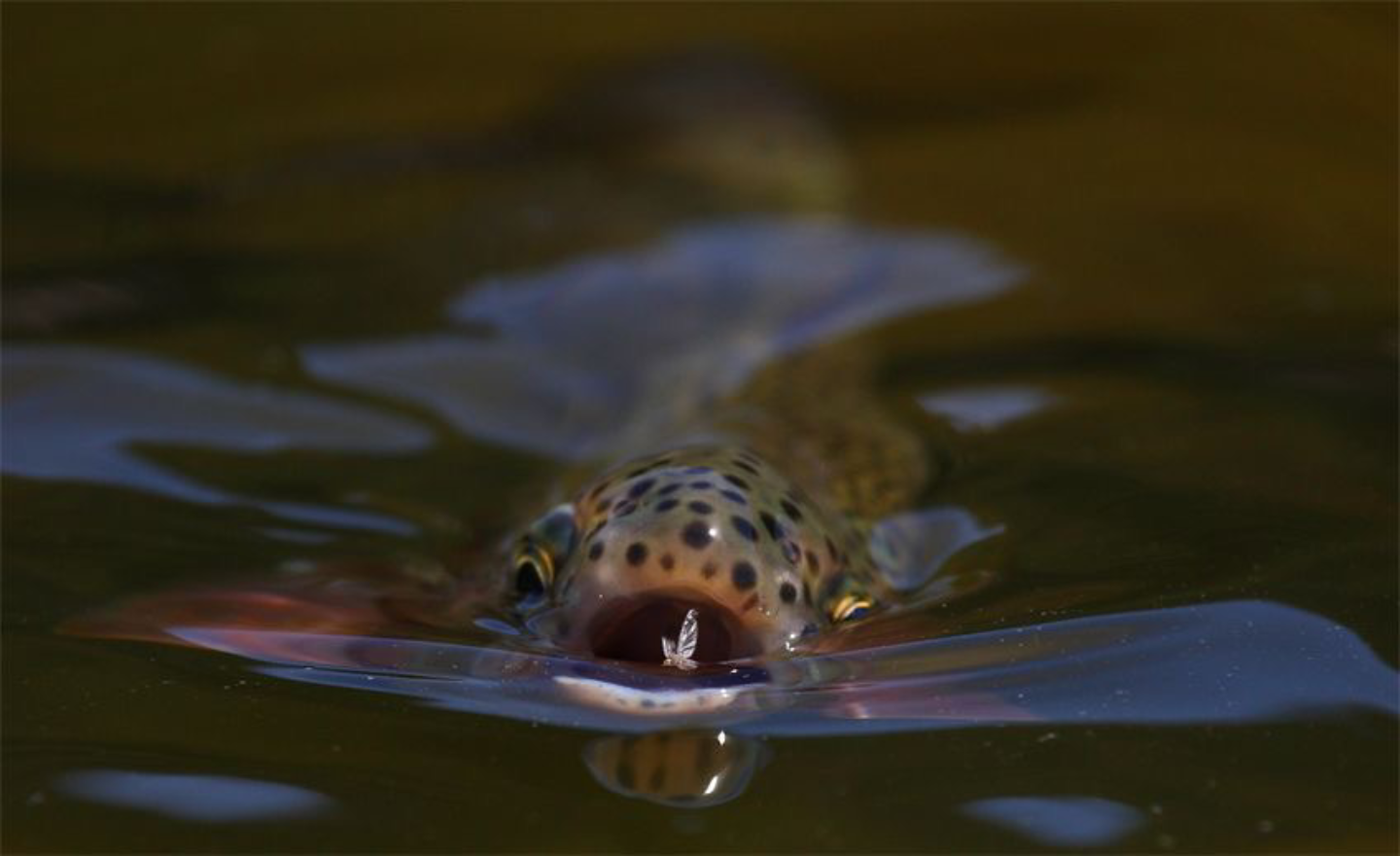
The Caleufú begins at the junction of the Meliquina and Filo Hua-Hum Rivers, flowing through the northern reaches of Neuquén Province before emptying into the Piedra del Águila reservoir. It’s widely regarded as one of the most beautiful rivers in the region: it begins as a mountain stream running through a canyon with unique rock formations, gradually giving way to an open valley in a desert-like landscape. Notably, the Caleufú is probably the only river in the region that holds more browns than rainbows, with fish over 20 inches caught regularly along its banks. Each day, we float a stretch of this exceptional water, fishing prime times from sunrise to sunset. Because camp relocates as we work our way downriver, a dedicated team of cargo boys handles the logistics — breaking down camp each morning and having it fully set up again at the next site by the time you arrive off the water. After a full day on the river, you’ll arrive at camp to enjoy fine wines, cocktails, and a hearty dinner, by the fire if weather conditions allow for it.
Landscape and Characteristics
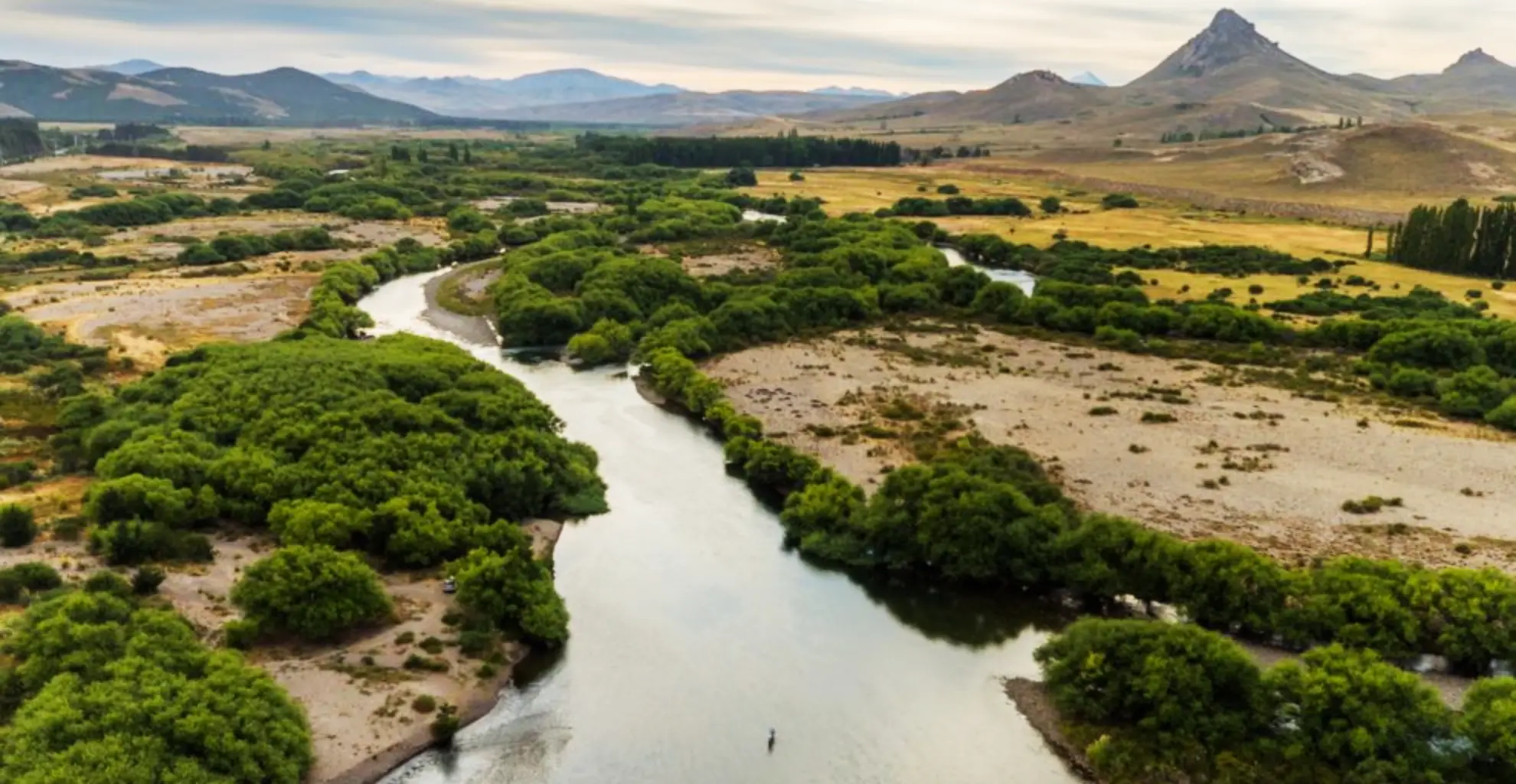
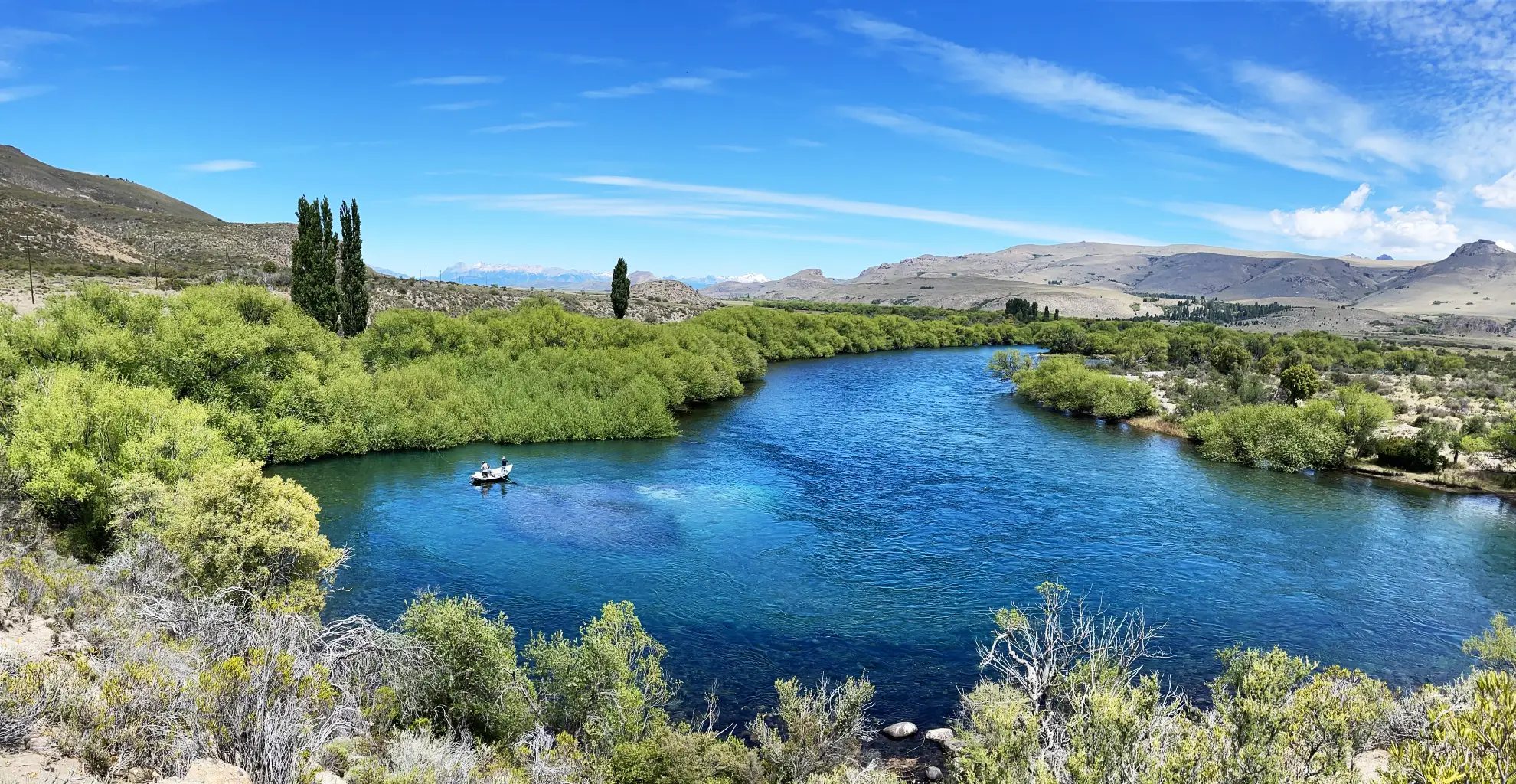
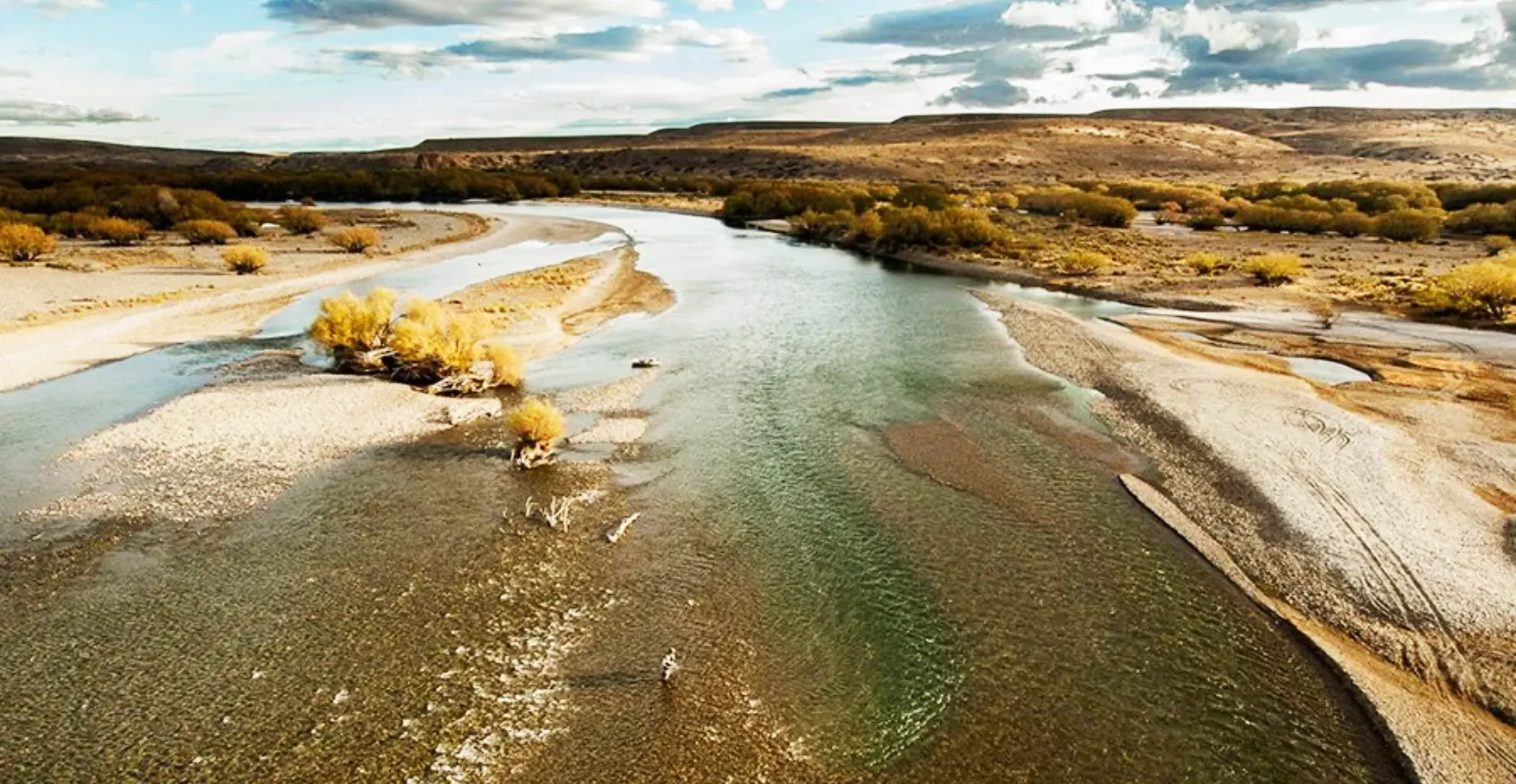
The Caleufú is a medium-sized freestone river with a personality that shifts dramatically along its length. Its upper section runs as a canyon river with real gradient, hemmed in by large and oddly shaped rock formations, before the mountains lose elevation and the river settles into a classic steppe character, winding through arid, semi-desert terrain.
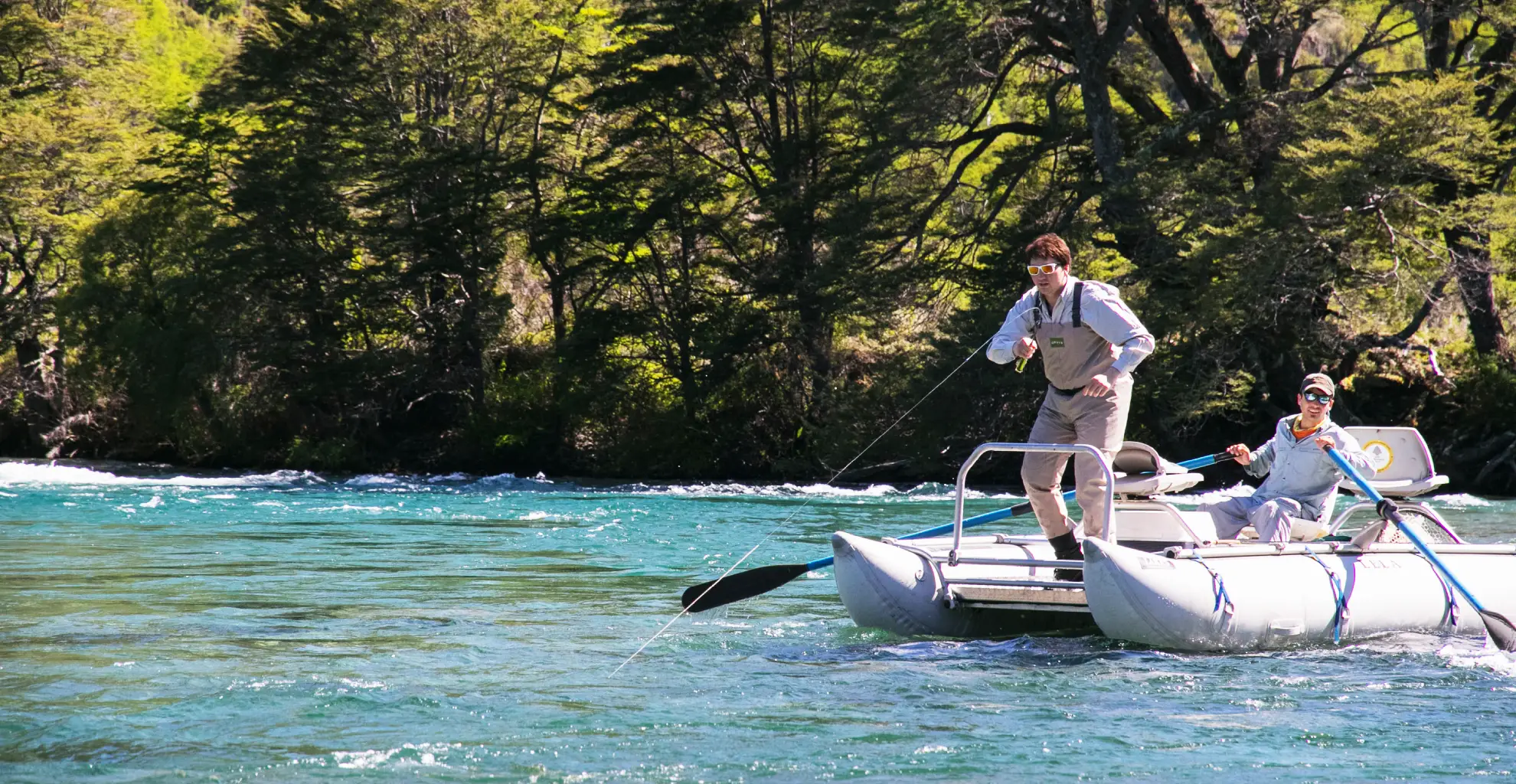
Because so much of the river runs through remote and difficult-to-reach terrain, the only practical way to fish the Caleufú in its entirety is by multi-day float, camping along the banks between days on the water. That remoteness keeps fishing pressure minimal and the trout population healthy.
Fly Fishing on the Caleufú
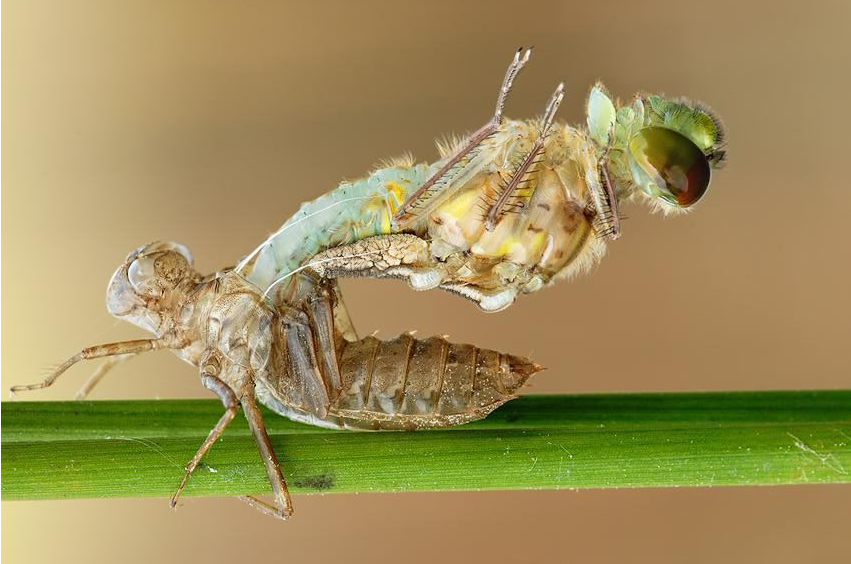
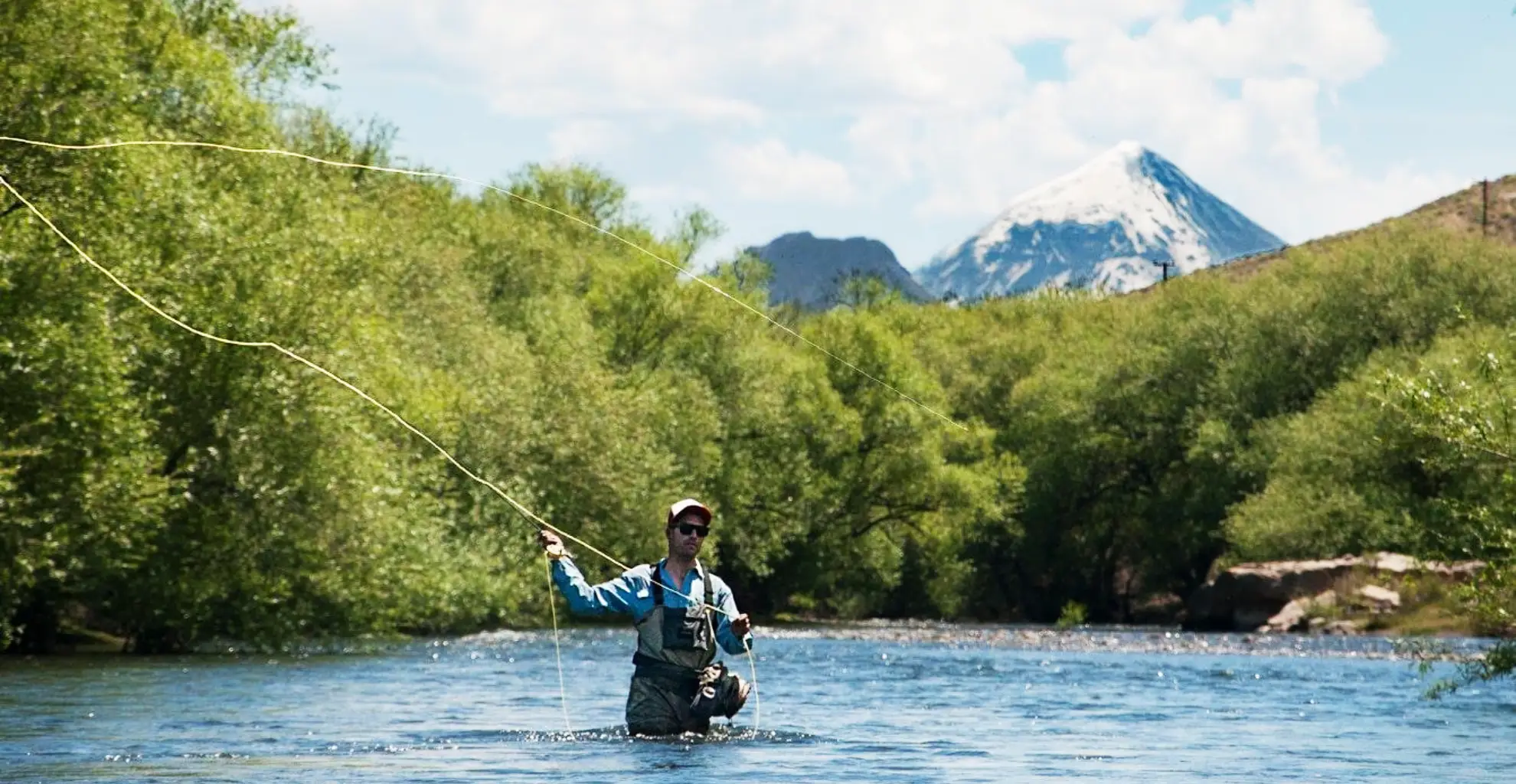
The Caleufú holds strong populations of both brown and rainbow trout, and its rainbows in particular are known for being unusually stout and hard-fighting compared to other Patagonian rivers. Big dry flies are the go-to approach here, with trout willing to eat everything from large attractors to dragonfly imitations.
Early Season (November – December)
As the float season opens, water levels are at their highest and the river’s canyon section fishes well with big, buoyant dry flies fished tight to the rock structure. Fish are aggressive early, and streamers along undercut banks also produce well.
Midseason (December – Mid-January)
As the float continues downstream into the steppe section, fishing typically improves, with larger fish showing up as the days progress. Big dry-fly patterns remain the most effective and most entertaining way to fish the Caleufú, with trout regularly measuring over 20 inches by the later stages of a multi-day trip.
Late Season
Because water levels drop significantly as the Patagonian summer wears on, the Caleufú’s float season is a narrow one, typically limited to the window between the season’s November opening and mid- to late January. Once flows fall too low, the river becomes impractical to float, closing the window until the following season.