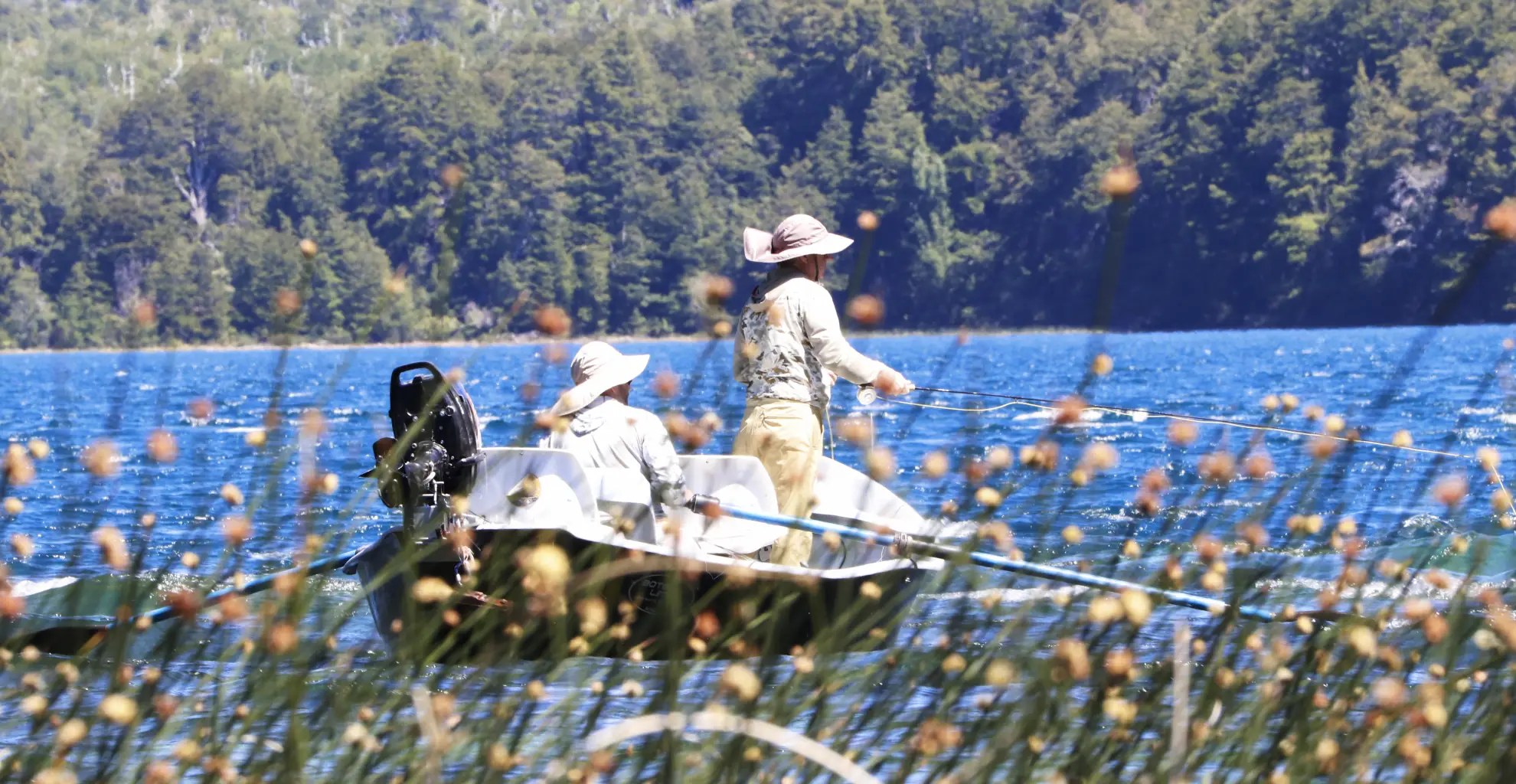
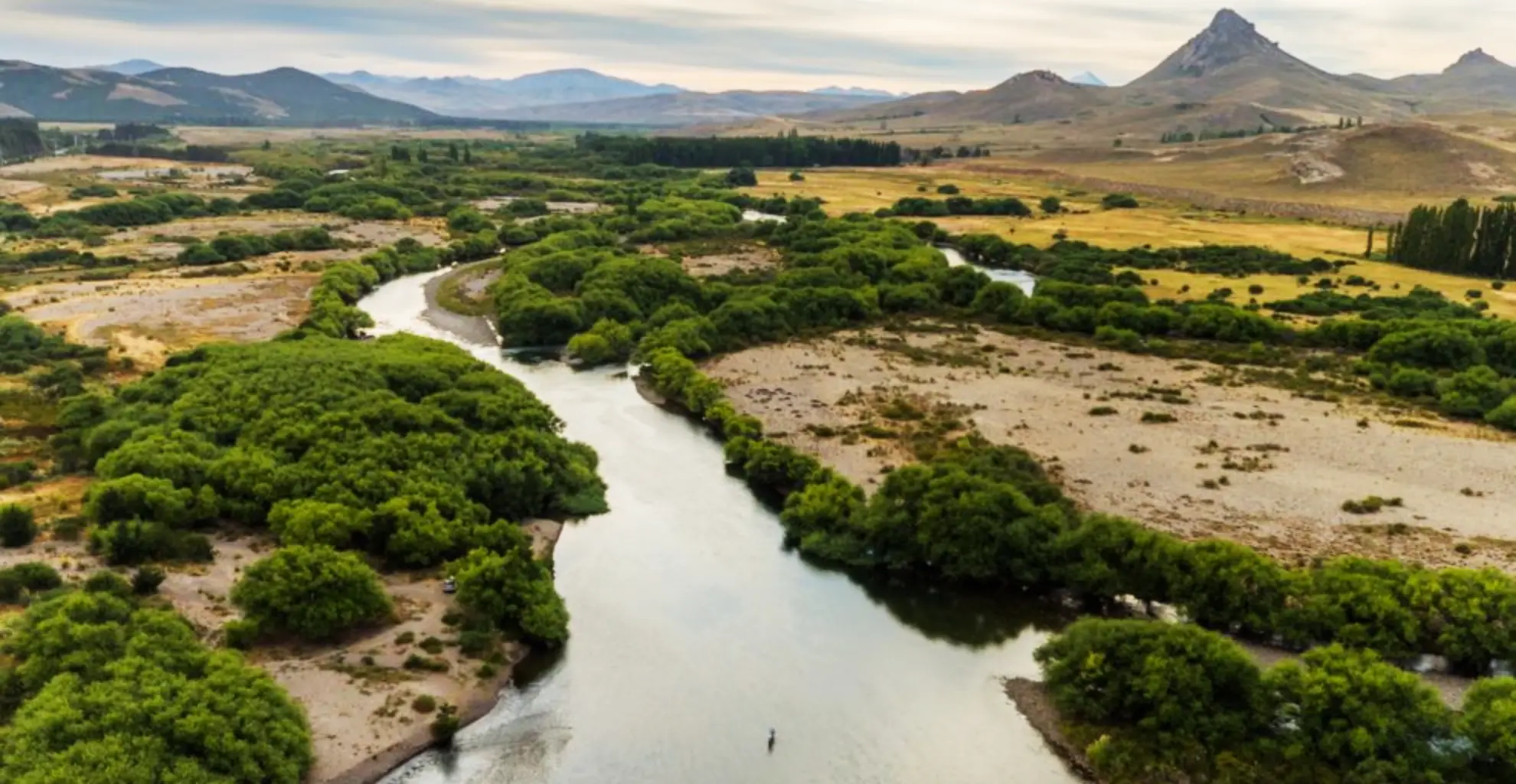
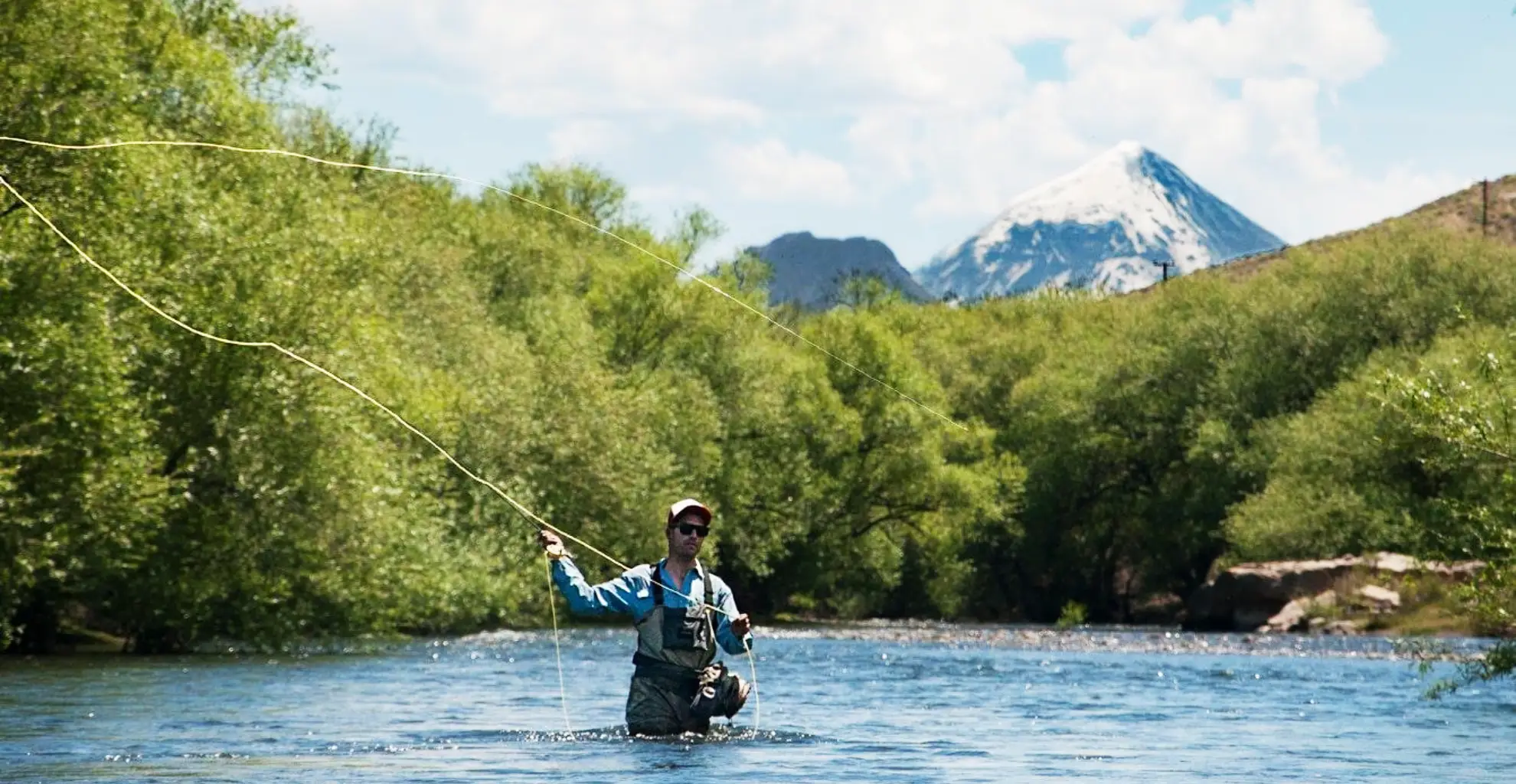
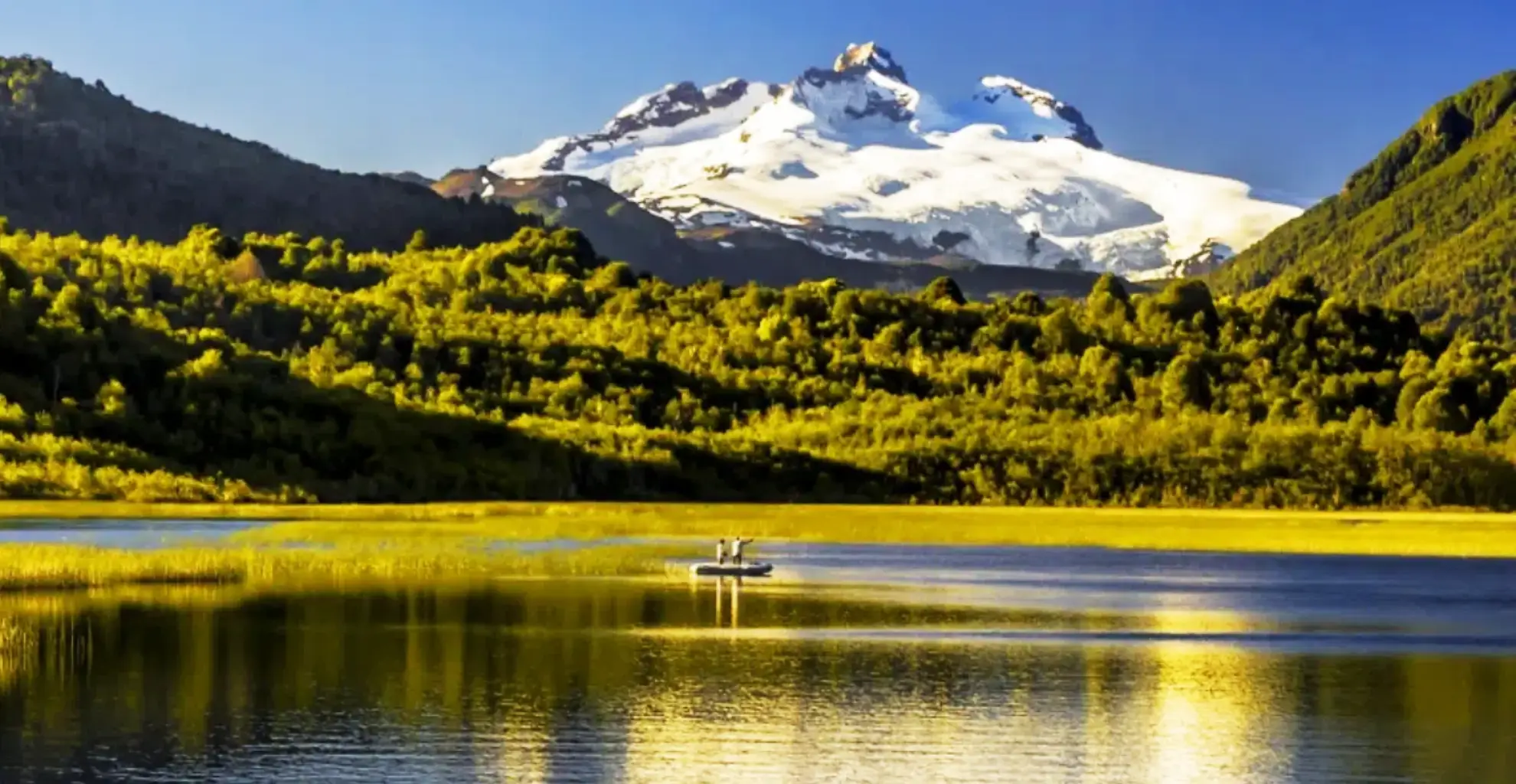
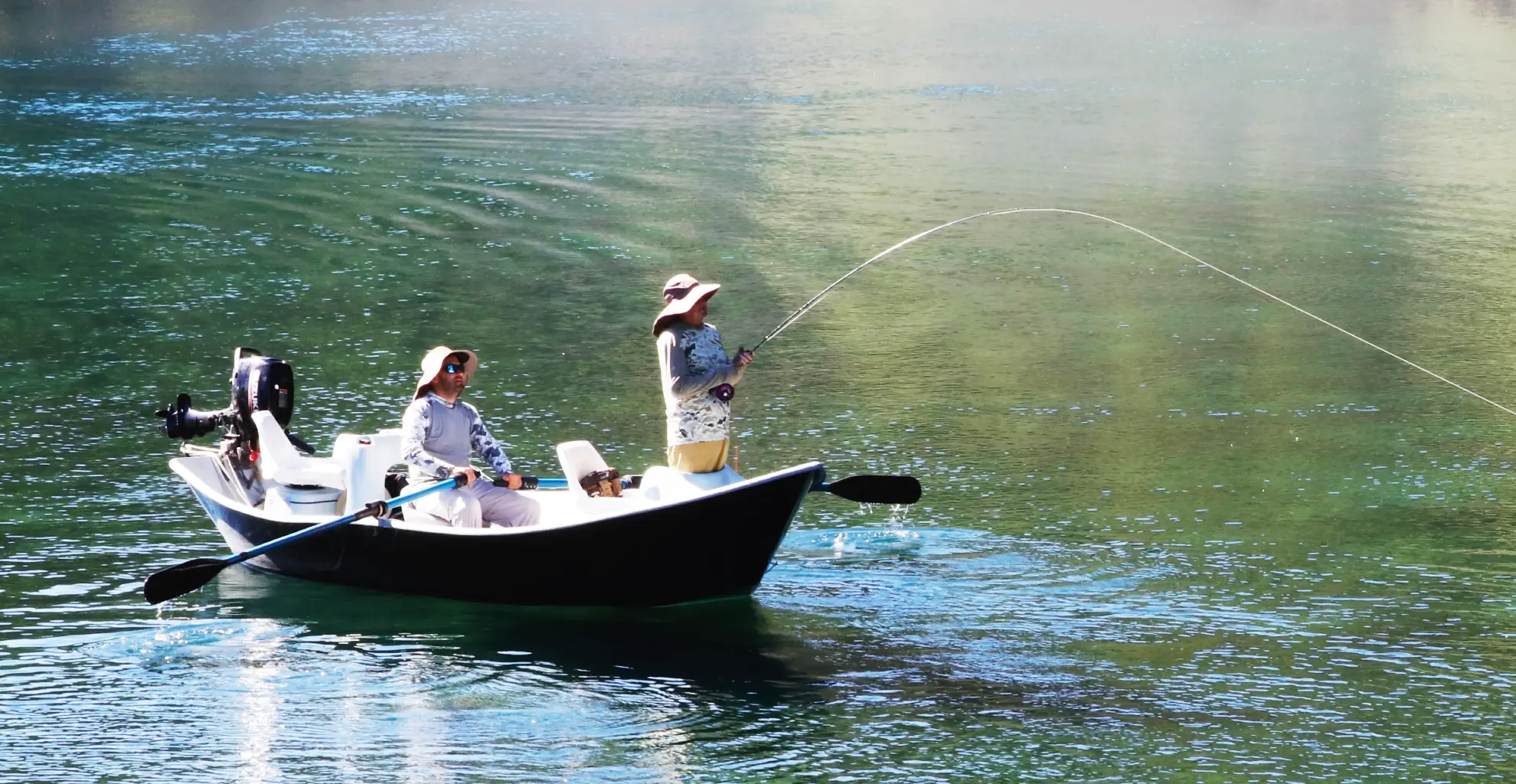
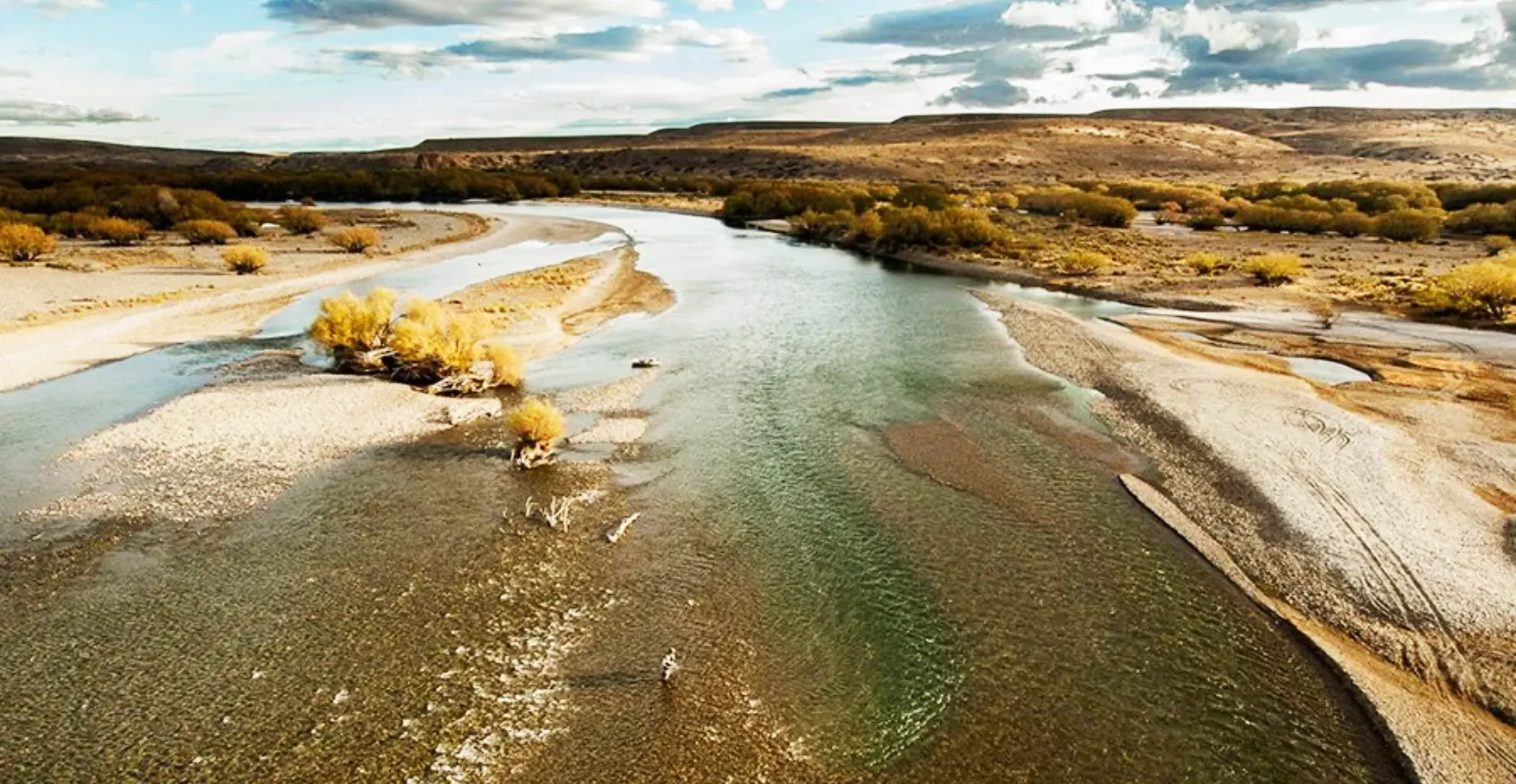
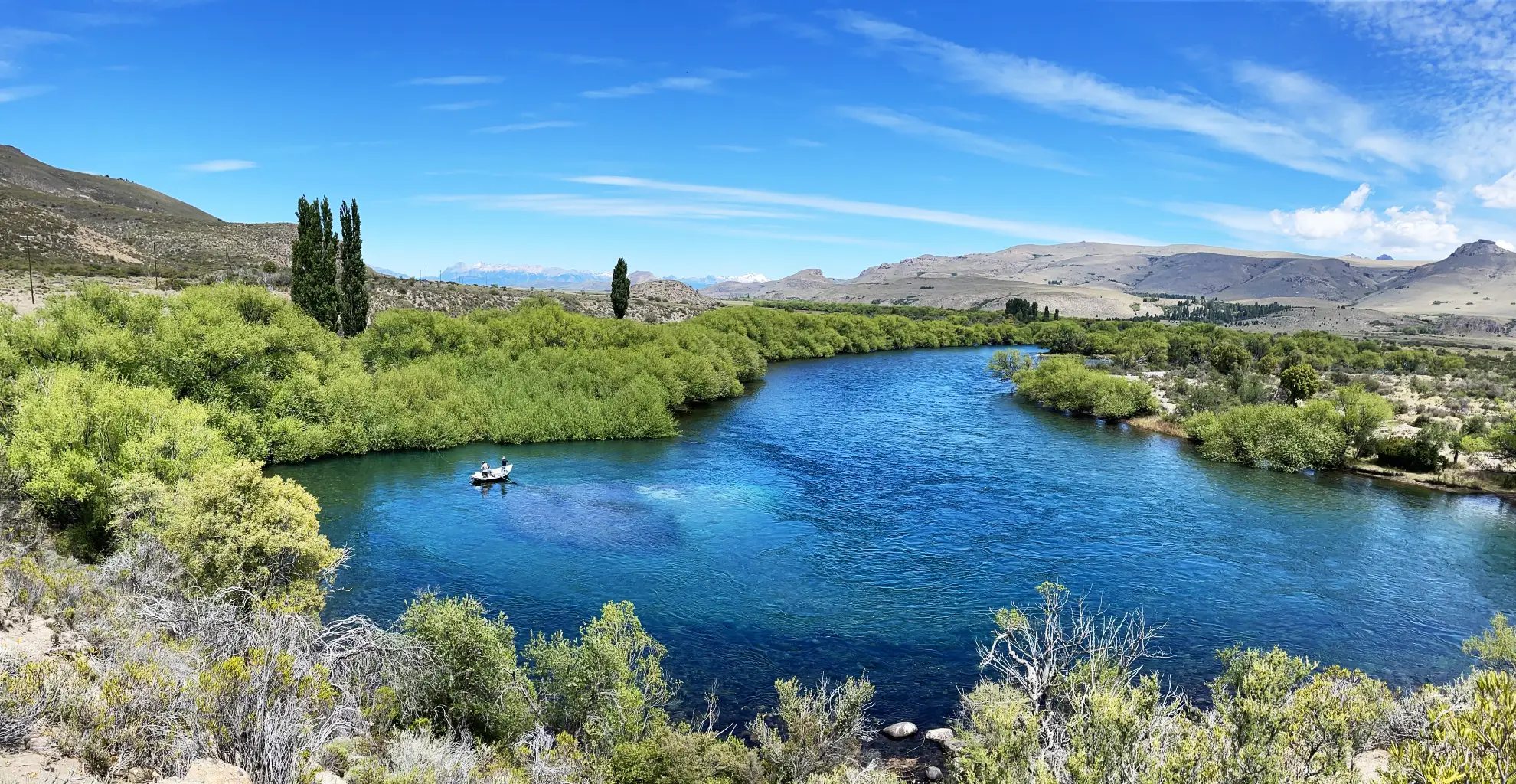
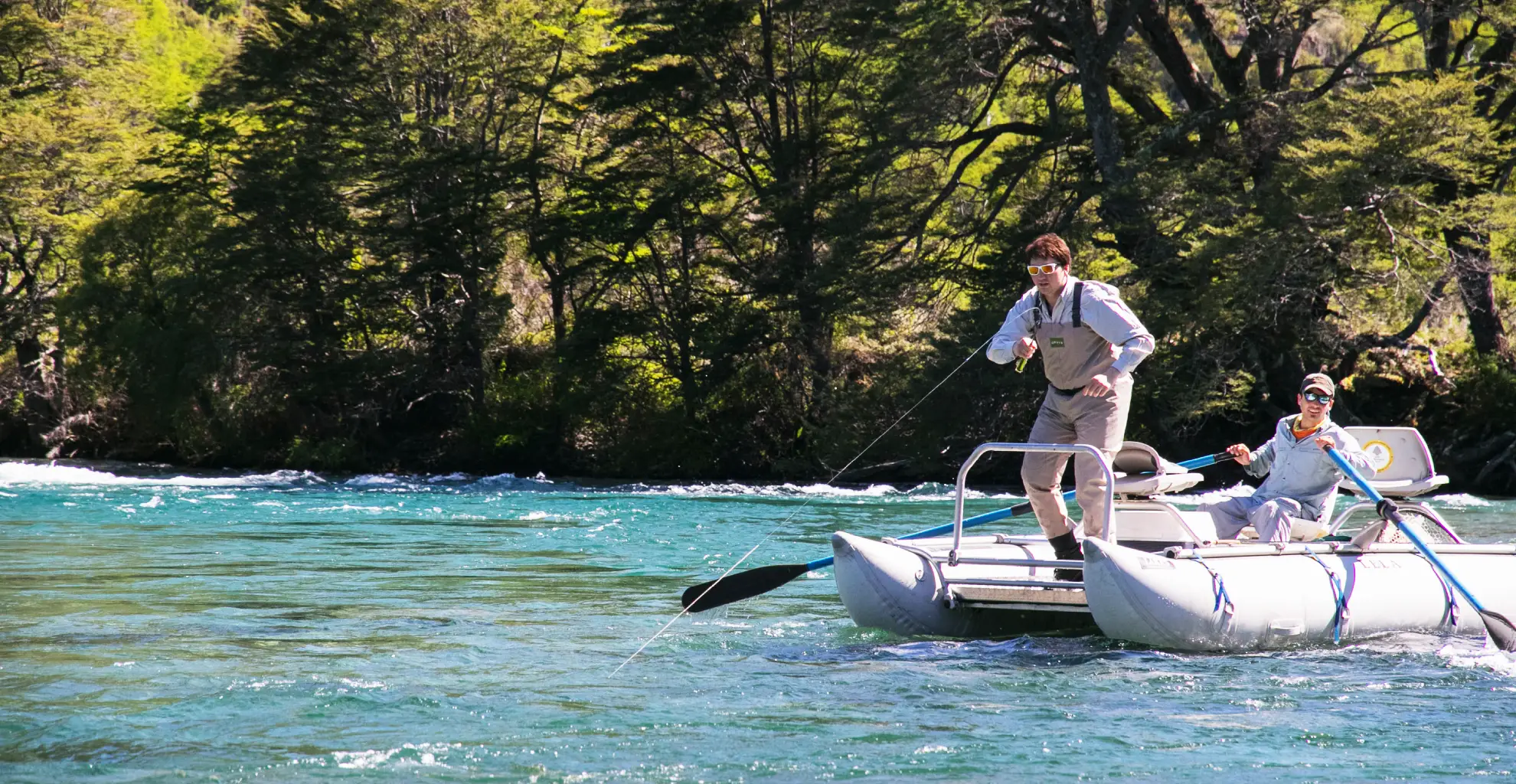
The Collón Curá is born at the confluence of the Aluminé and Catán Lil Rivers, with the Chimehuín joining shortly downstream as one of its main tributaries. From there it flows south through a broad desert steppe valley before emptying into the Piedra del Águila reservoir. It’s one of the biggest rivers in the region — a wide, powerful freestone river with willow-lined banks, sand cliffs, rolling hills, and a maze of braided channels and side arms that recall rivers of the American West. The Collón Curá is famous for its trophy browns and hard-fighting rainbows, with plenty of fish testing the double digits. Each day, we float a stretch of this exceptional water, fishing prime times from sunrise to sunset. Because camp relocates as we work our way downriver, a dedicated team of cargo boys handles the logistics — breaking down camp each morning and having it fully set up again at the next site by the time you arrive off the water. After a full day on the river, you’ll arrive at camp to enjoy fine wines, cocktails, and a hearty dinner, by the fire if weather conditions allow for it.
Landscape and Characteristics
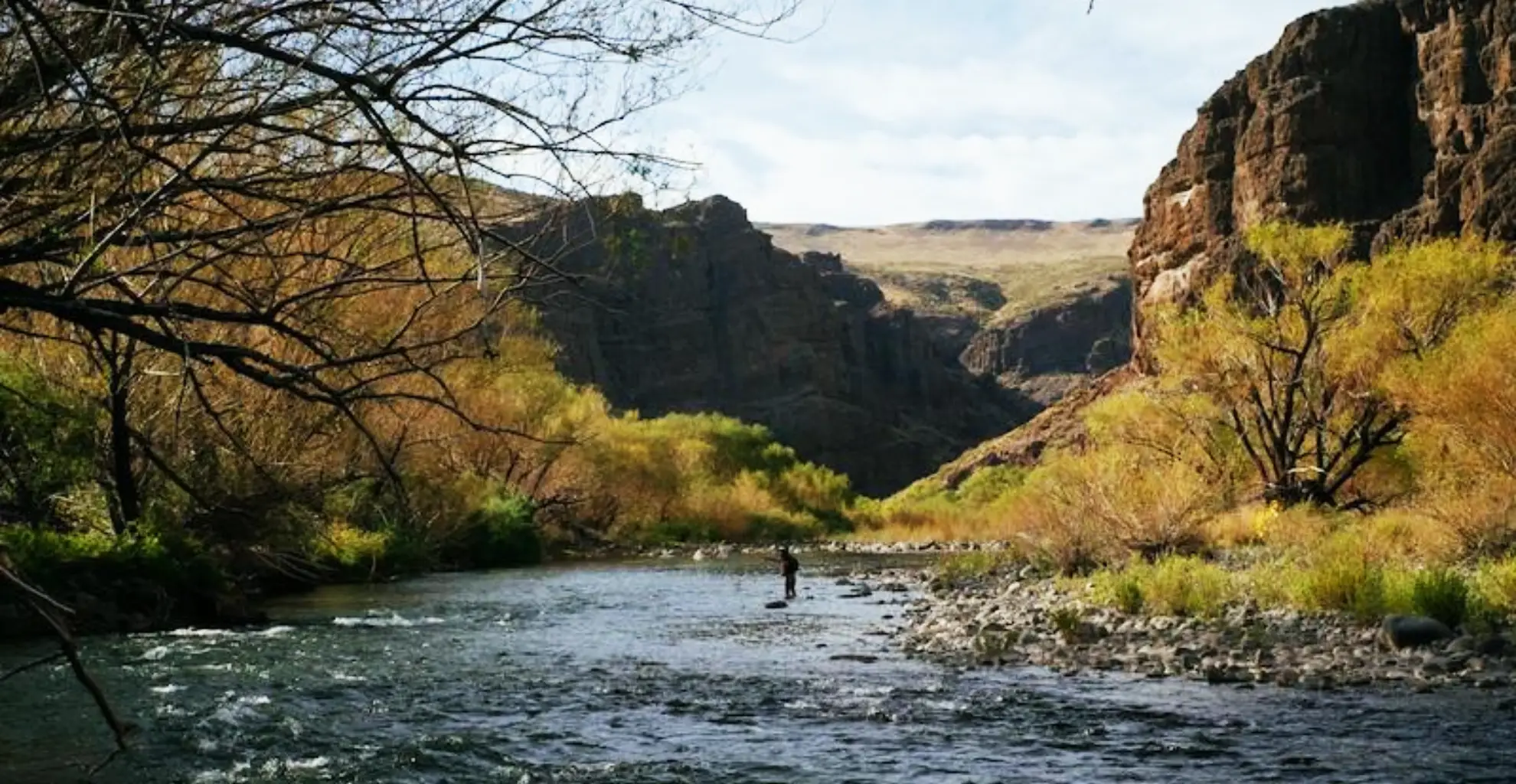
The Collón Curá is a big river, often 75 yards or more across, with a mild gradient that gives it a broad, unhurried character. Willow-lined banks, dramatic sand cliffs, rolling hills, and braided channels give it a feel that many anglers compare to the great rivers of the American West.
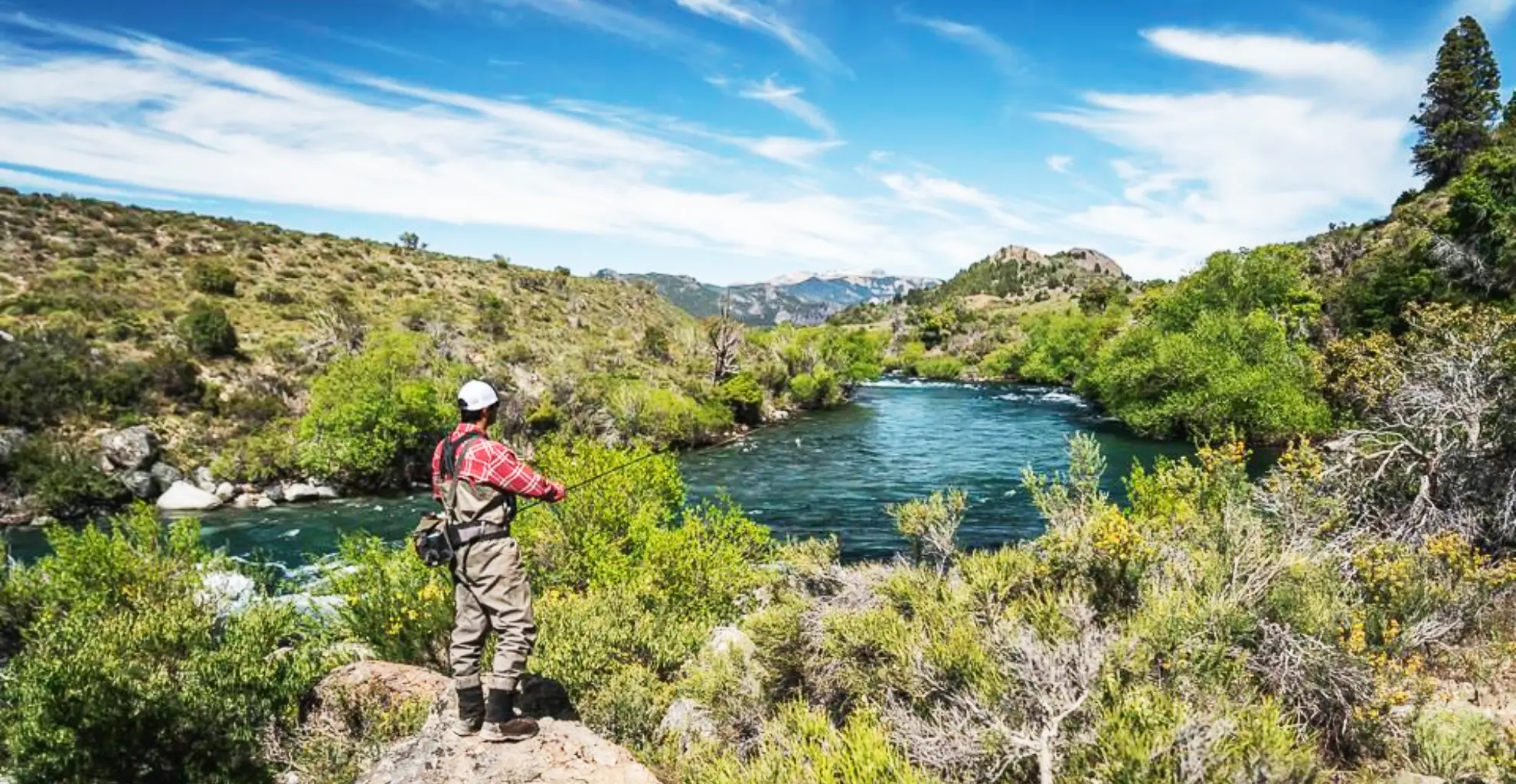
With its many channels, broad gravel riffles, cut banks, and deep pools, the Collón Curá offers an enormous range of water within a single float. Wadable pebble-bottom stretches sit alongside picturesque drifting runs and dark eddy lines that call for a well-placed streamer.
Fly Fishing on the Collón Curá
The Collón Curá is known for producing some of Patagonia’s hardest-fighting rainbows, typically running 15 to 23 inches with an occasional fish pushing 5 pounds, alongside legendary brown trout that can reach 30 inches. It is a remarkably prolific river, with 30 to 40 fish landed in a day being common for anglers who put in the time.
Spring (November – December)
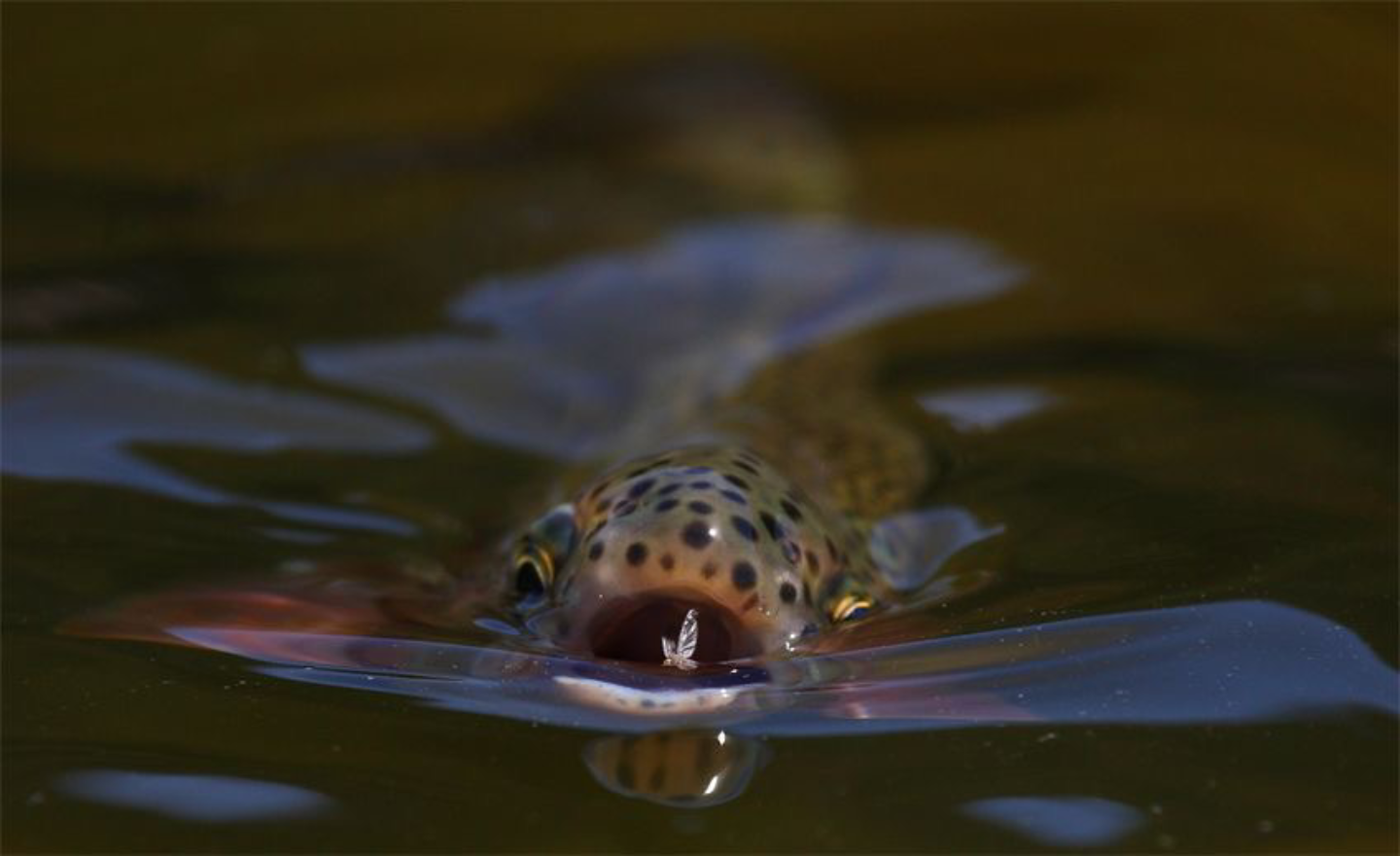
As the season opens, good hatches bring fish to the surface, and dry-fly and dry-dropper rigs produce consistently across the river’s riffles and runs. The abundance of holding water means nearly every technique finds success early in the season.
Summer (January – February)
Through the warmer months, the Collón Curá’s varied water types—riffles, long runs, slow channels, and backwaters—invite a full range of tactics, from dries and dry-droppers to streamers and sight-fishing for sipping trout in the slower stretches.
Autumn (March – May)
As fall approaches, hatches pick up again and the river’s biggest brown trout begin to stage and move, offering anglers their best shot at the Collón Curá’s most legendary fish. Streamer fishing through the deep eddies and undercut banks becomes especially productive as the season winds down.