
Malleo R.
Neuquén Province, Northern Patagonia, Argentina
November to April
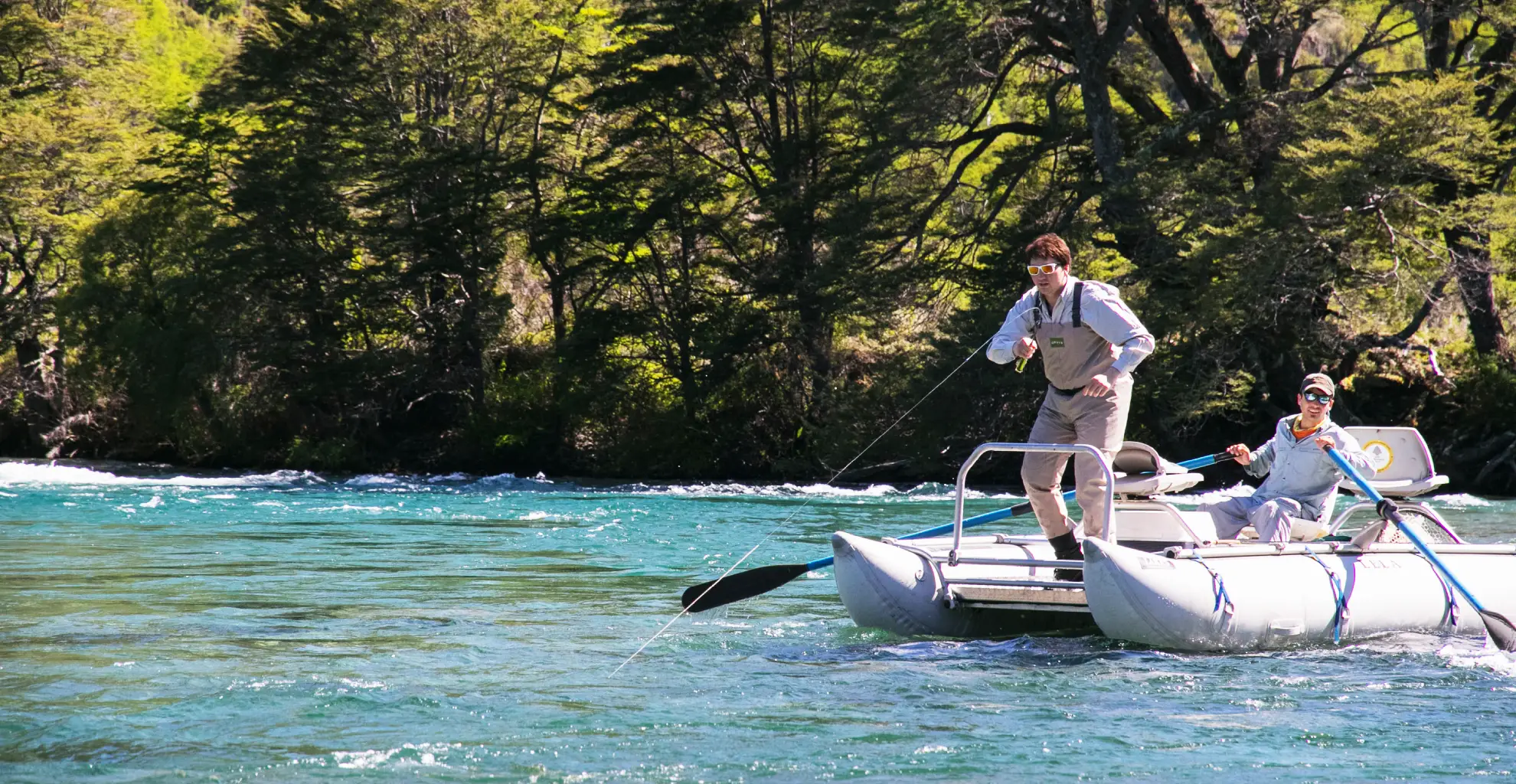
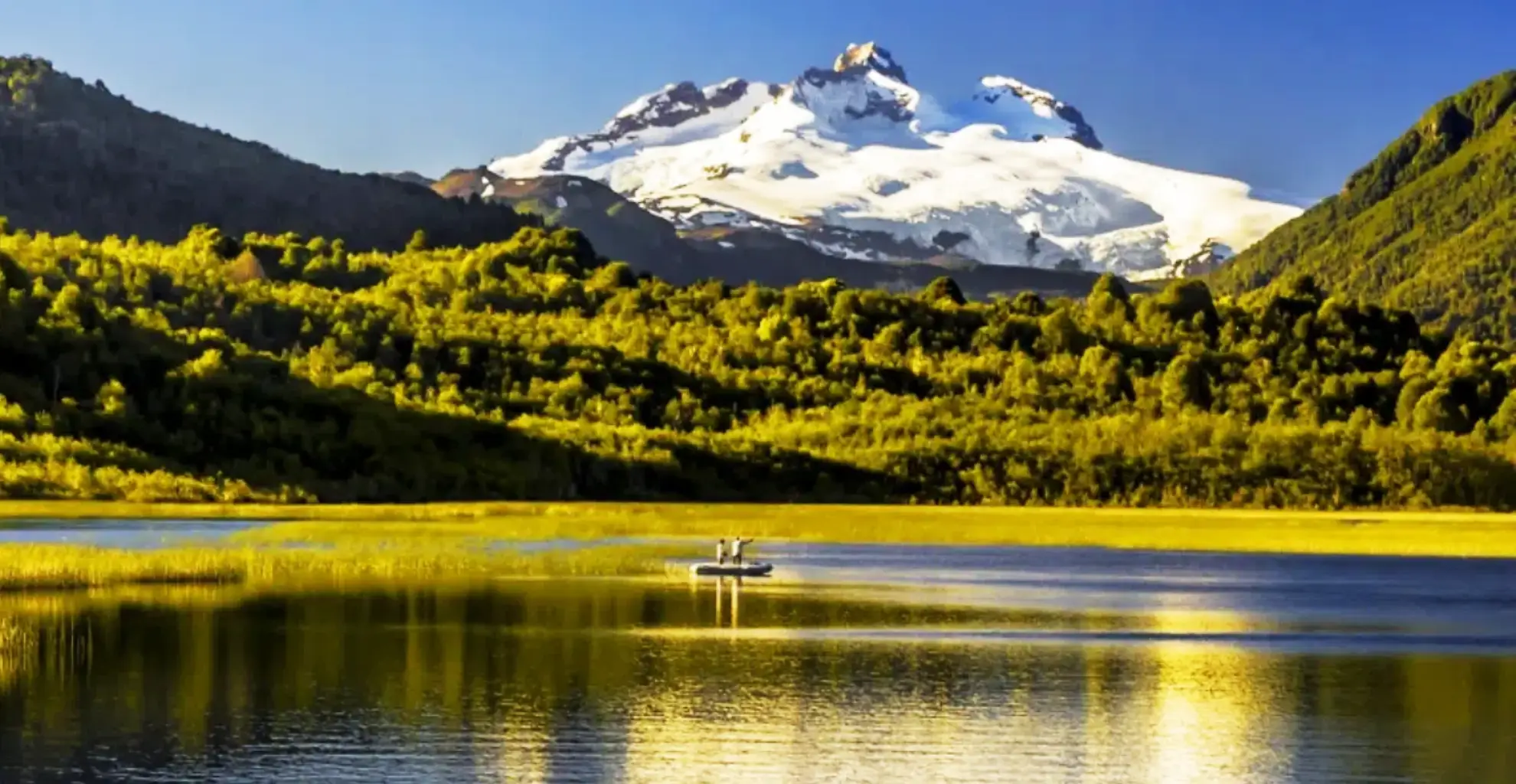
The Malleo River rises at *Lago Tromen, fed by snowmelt from the glaciated slopes of **Volcán Lanín, within Lanín National Park. From there it runs for roughly 32 miles before joining the *Aluminé River. Wade-only and never crowded, the Malleo is best known as one of the most reliable dry-fly fisheries in Argentina, thanks to hatches that occur with remarkable consistency throughout the season.
Landscape and Characteristics
The Malleo is a mid-size freestone river, and its character shifts dramatically along its course, dividing naturally into three sections:
- Upper Malleo – A cascading mountain stream running through boulder-strewn pocket water beneath the towering, often snow-capped Volcán Lanín. Native araucaria (“monkey puzzle”) forest lines the banks, giving this stretch a wild, primeval feel.
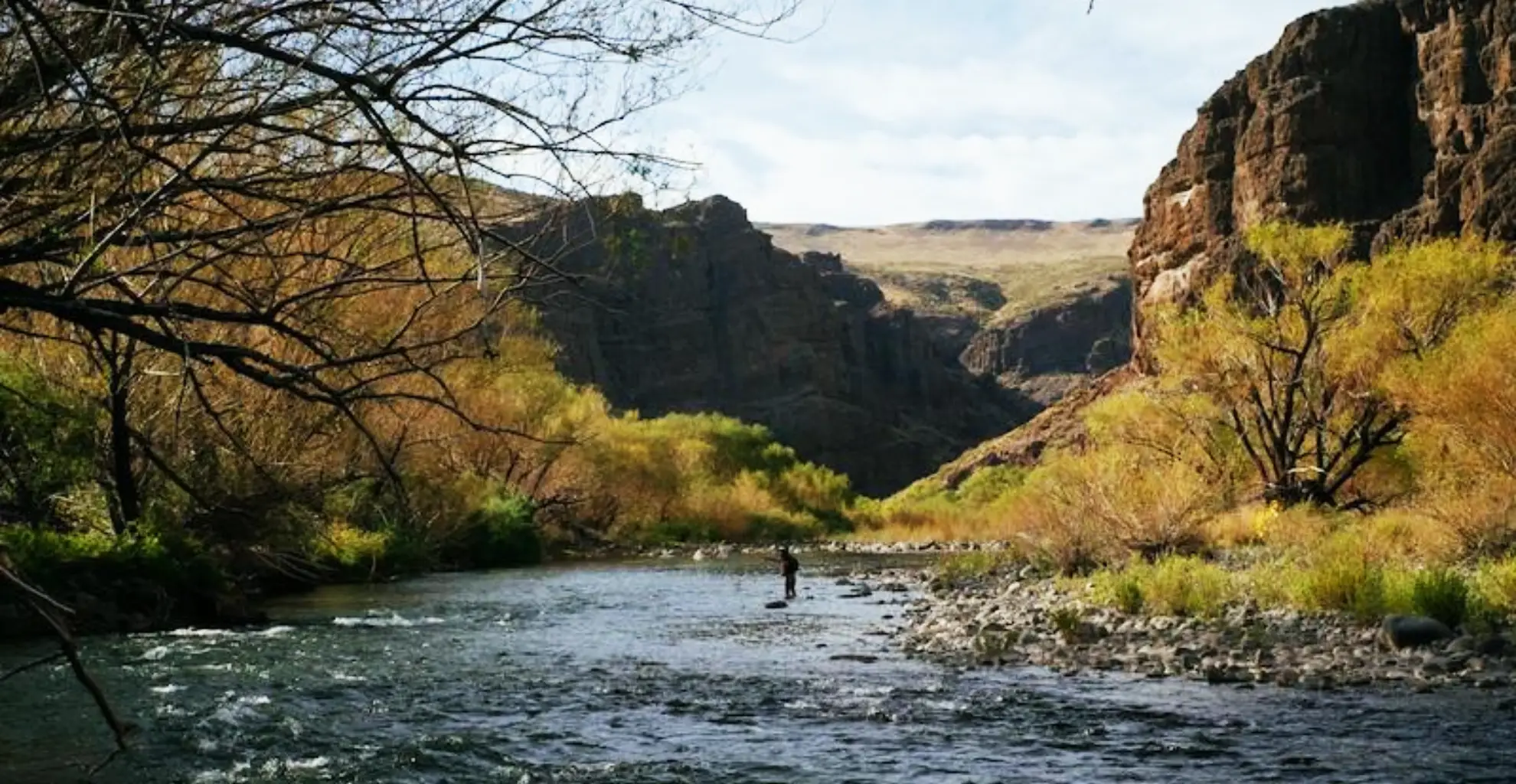
- Middle Malleo – A tighter canyon section framed by dense willow galleries, offering technical, more secluded fishing away from the road.
- Lower Malleo – The river opens into broad meadows and classic riffle-and-run water as it winds toward its confluence with the Aluminé, flowing through more open Patagonian steppe landscape.
Rainbow and brown trout dominate the river, typically running 15 to 17 inches, with some fish reaching 24 inches or more. On a good day with strong surface activity, anglers can land anywhere from half a dozen to several dozen fish.
Map of the Malleo River
Below you’ll find a map showcasing the most renowned stretches of the river. Explore freely and don’t hesitate to ask questions—we love sharing stories about this extraordinary water.
[mapa a insertar]
Fishing the Malleo River
November – Season Opening
Early season brings cooler water and the first steady activity of caddis and stoneflies, along with small terrestrials. Trout are eager and responsive to a well-presented dry fly, and the upper canyon water fishes especially well as flows settle in.
December / January – Prime Dry-Fly Season
This is the Malleo at its best. Consistent hatches keep fish looking up nearly all day, and on calm, clear afternoons the surface activity can be nonstop. The middle and lower sections, with their open meadows and willow-lined banks, offer classic sight-fishing to rising trout.
February – Steady and Technical
As water levels drop and clarity increases, fishing becomes more demanding — smaller flies and more precise presentations are rewarded, particularly in the lower, more open stretches.
March / April – Mayfly Finale
As autumn approaches, mayfly hatches take over from the summer’s caddis and terrestrial activity, closing out the season with some of the most technical and rewarding dry-fly fishing of the year.