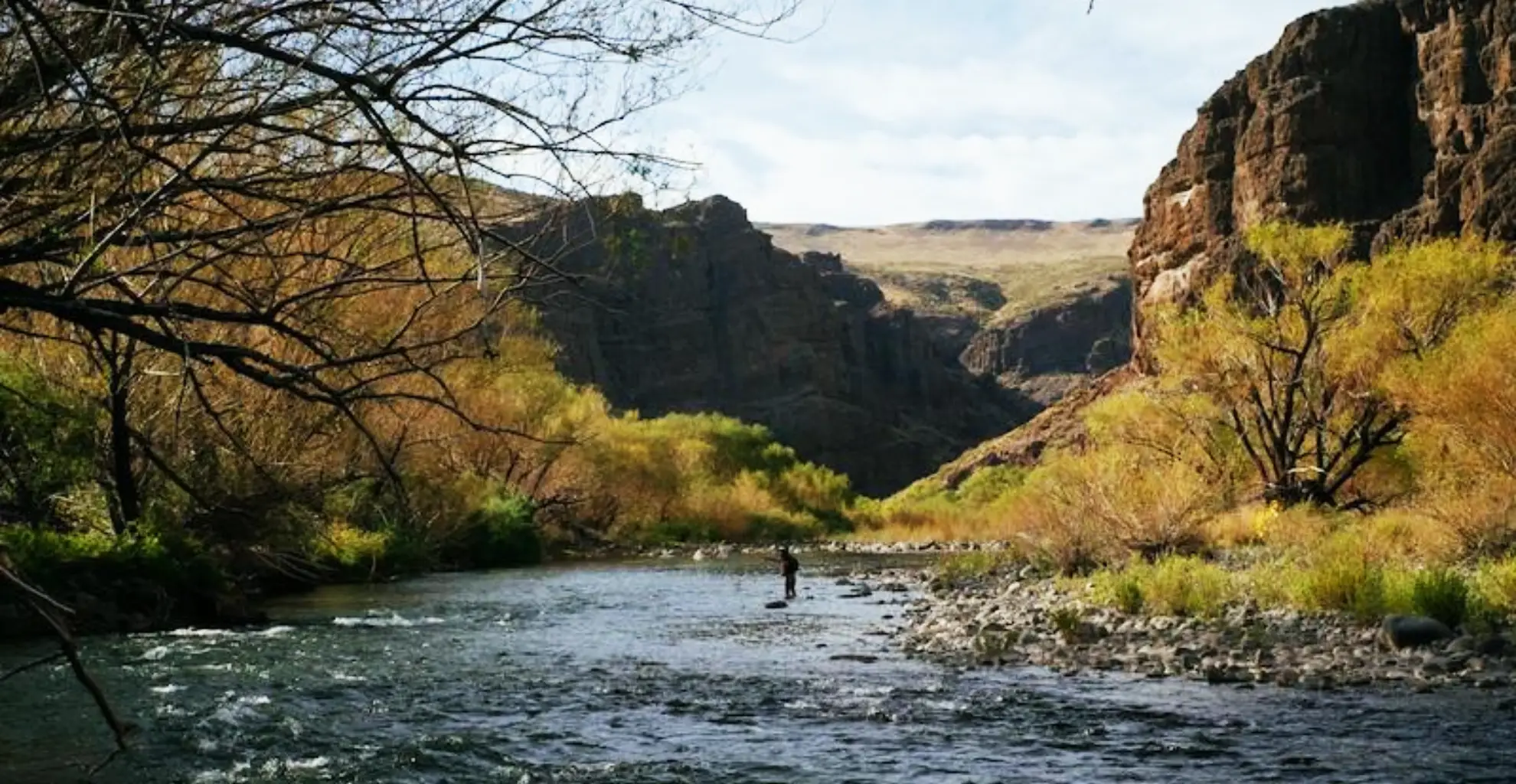
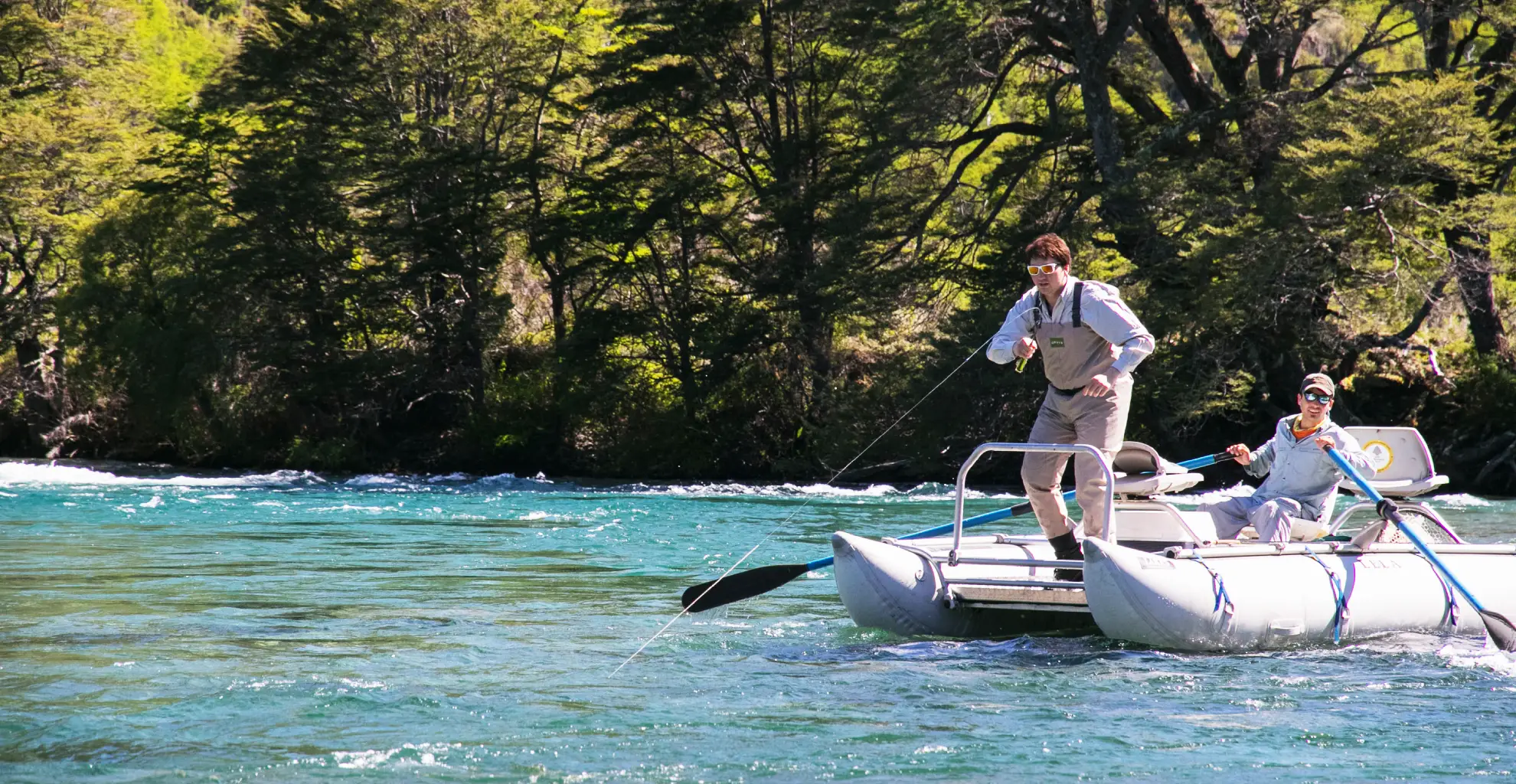
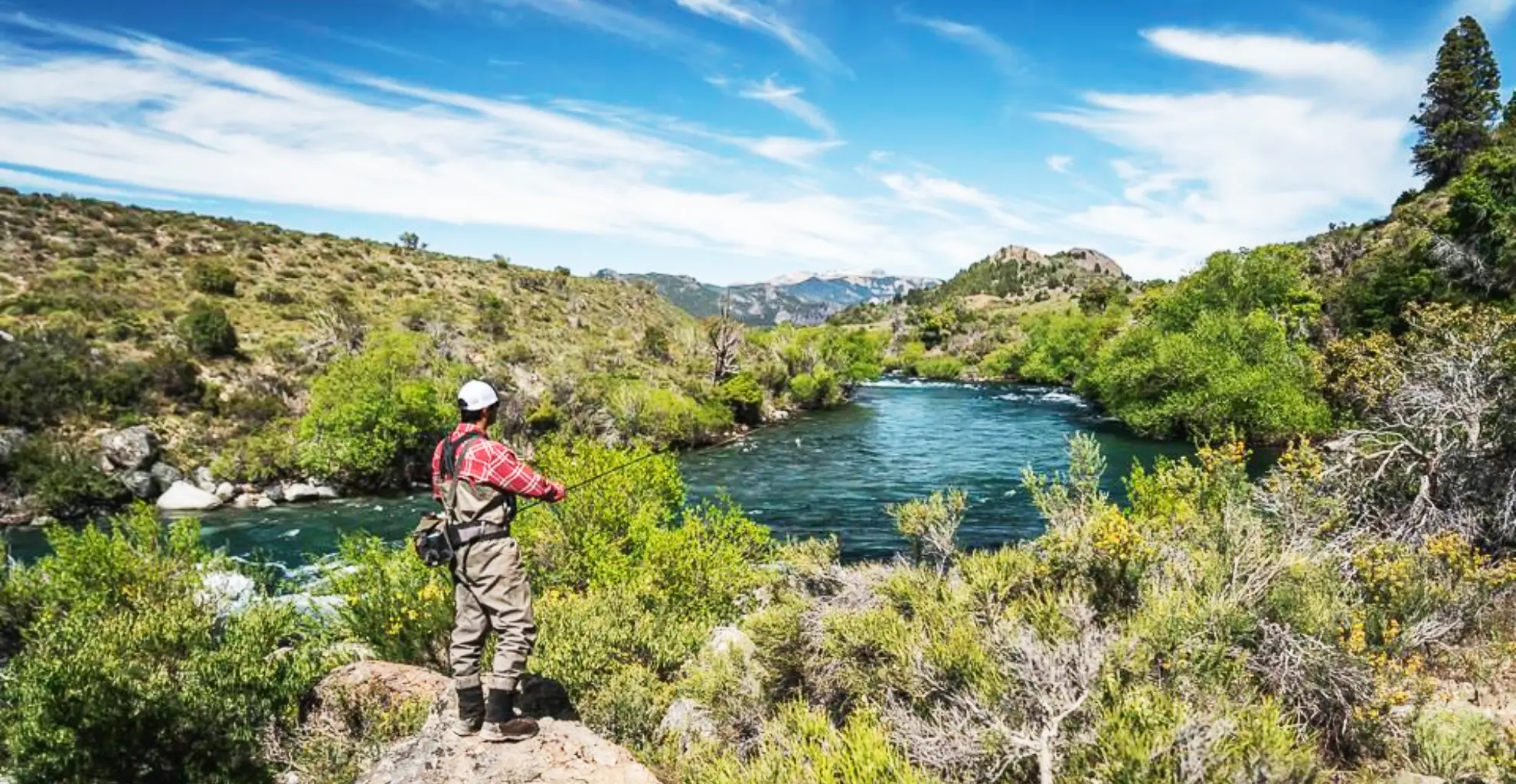
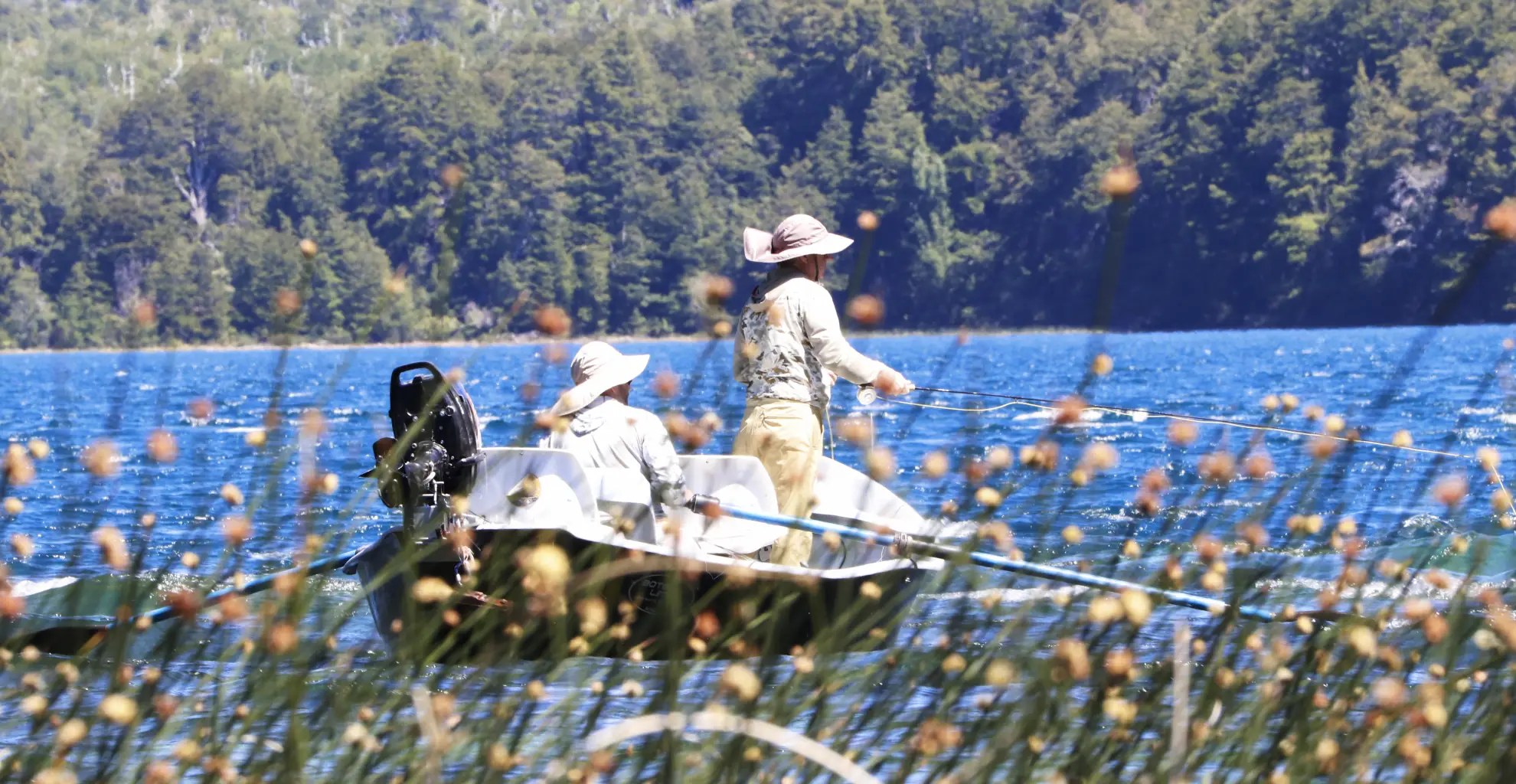
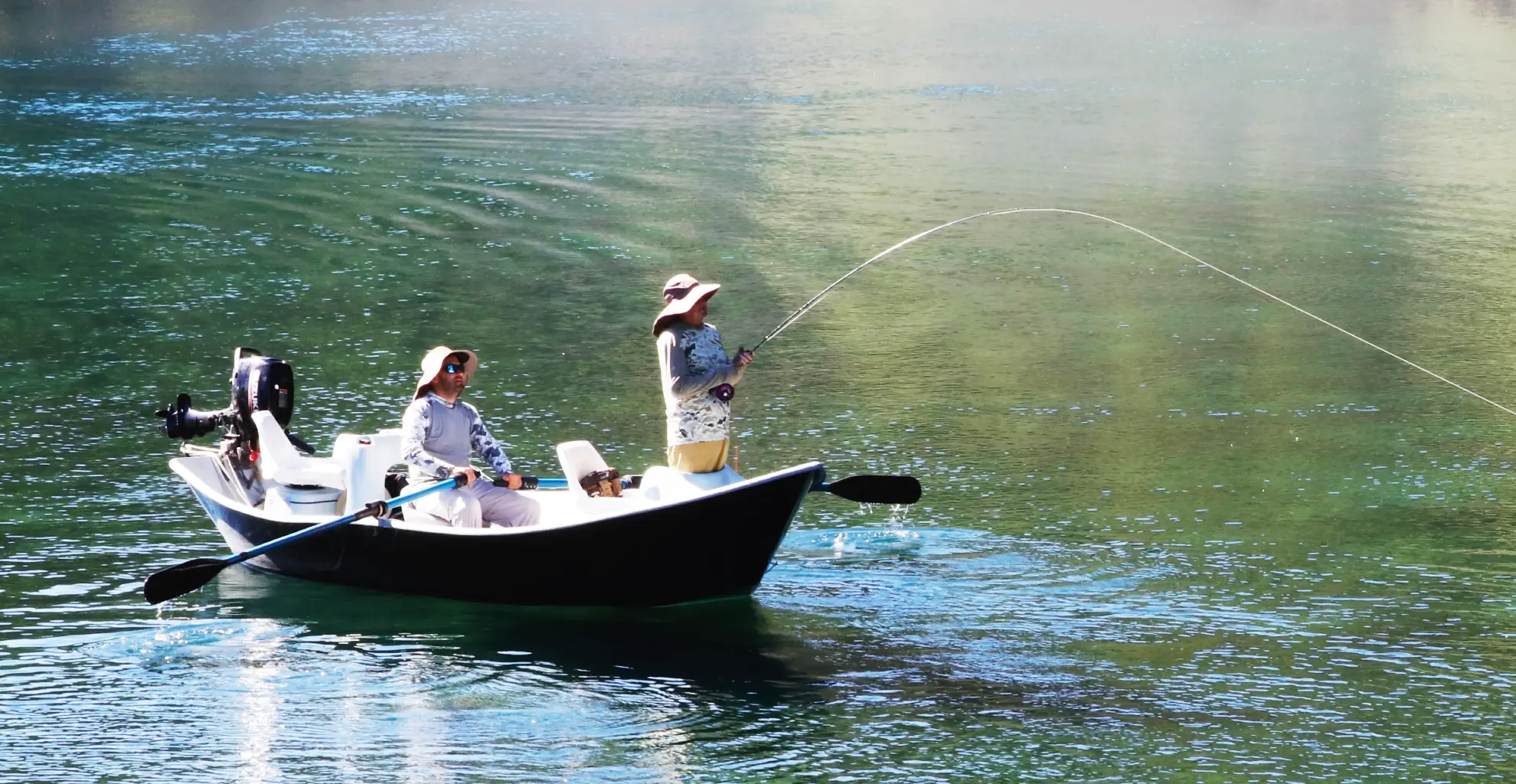
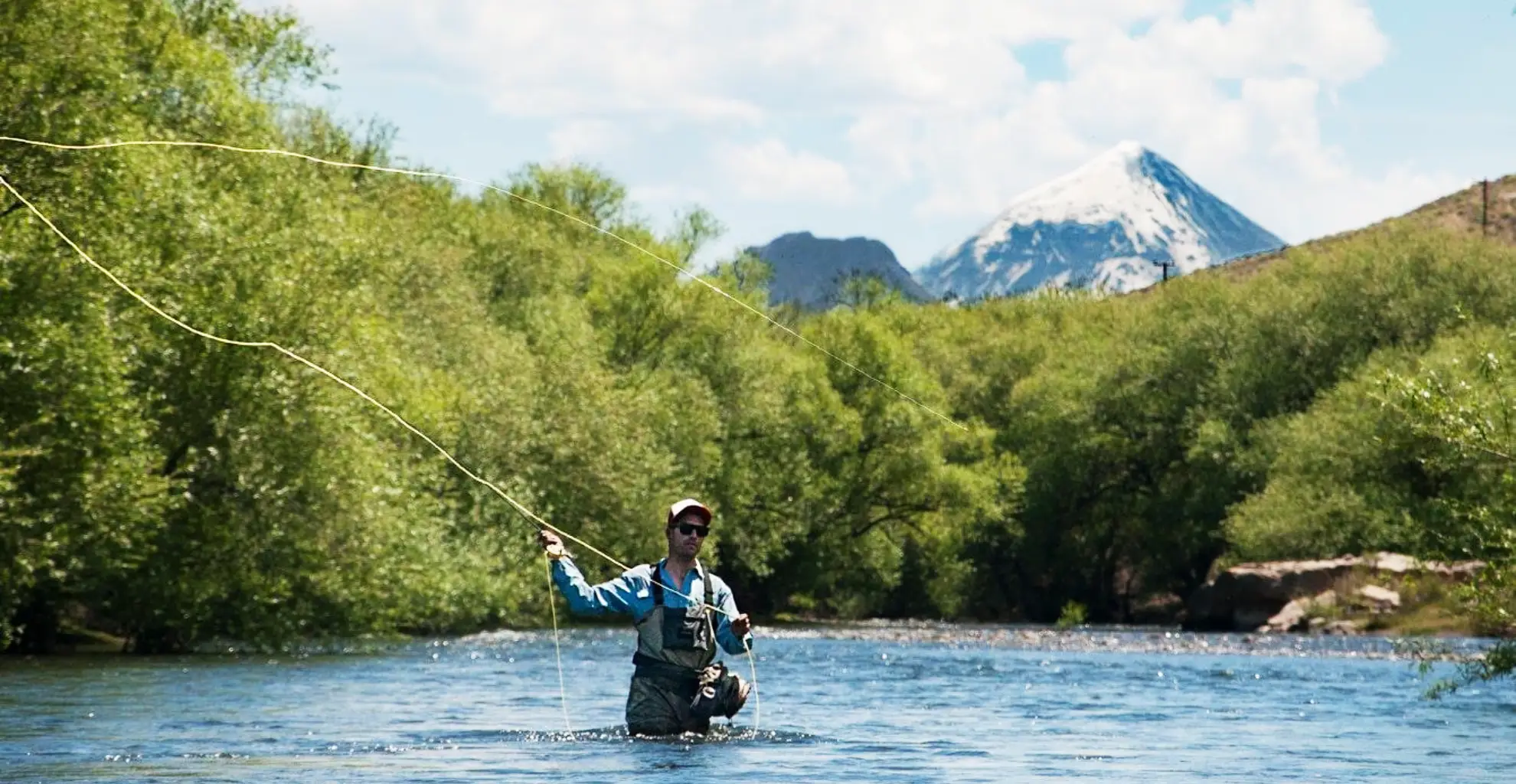
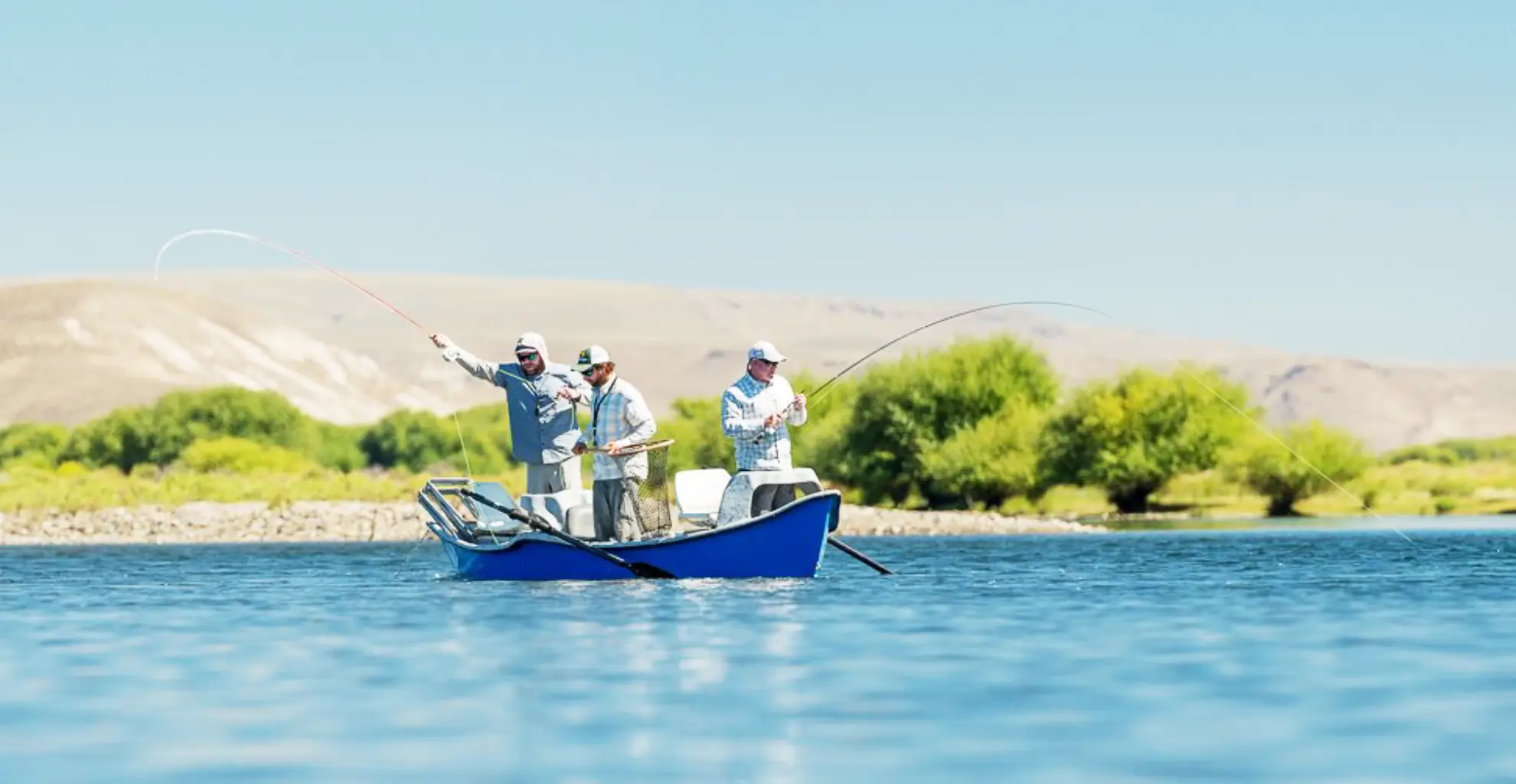
Fish a different stretch of the iconic Upper Limay River each day — a powerful, diverse fishery known for producing some of the hardest-fighting trout in Northern Patagonia. Wide runs, deep pools, and technical currents make it a rewarding day on the water for beginners and seasoned anglers alike.
This trip includes all fishing gear, a gourmet Patagonian lunch paired with Malbec wine, soft drinks, beer, and transfers.
Our All Inclusive package is Bariloche Fishing Trips at its most complete: we take care of absolutely everything, so all you have to do is fish. Built entirely around your preferences, trips run anywhere from 2 to 7 days and can combine stays at lodges, day trips, and camp expeditions on the Manso River, the Limay River, or the waters of southern Neuquén, together with stays at carefully selected hotels in Bariloche — a fully personalized itinerary, thought out down to the last detail. Just tell us what you’re looking for, and we’ll carefully put together a multi-day fishing program so you can experience fly fishing in Northern Patagonia at its purest.
Northern Patagonia (Nahuel Huapi Lake to Alicura Lake)
November 1st through May 31st
National fishing permit, Requires qualified guide
The Limay River begins at Nahuel Huapi Lake, forming the main Atlantic basin of Nahuel Huapi National Park. Flowing through the province of Río Negro, it serves as the natural border with Neuquén for much of its course. The Upper Limay stretches about 36 miles, from Nahuel Huapi Lake to the Alicurá Reservoir. From there, it continues downstream through four additional reservoirs before eventually reaching the Atlantic Ocean.
Landscape and Characteristics
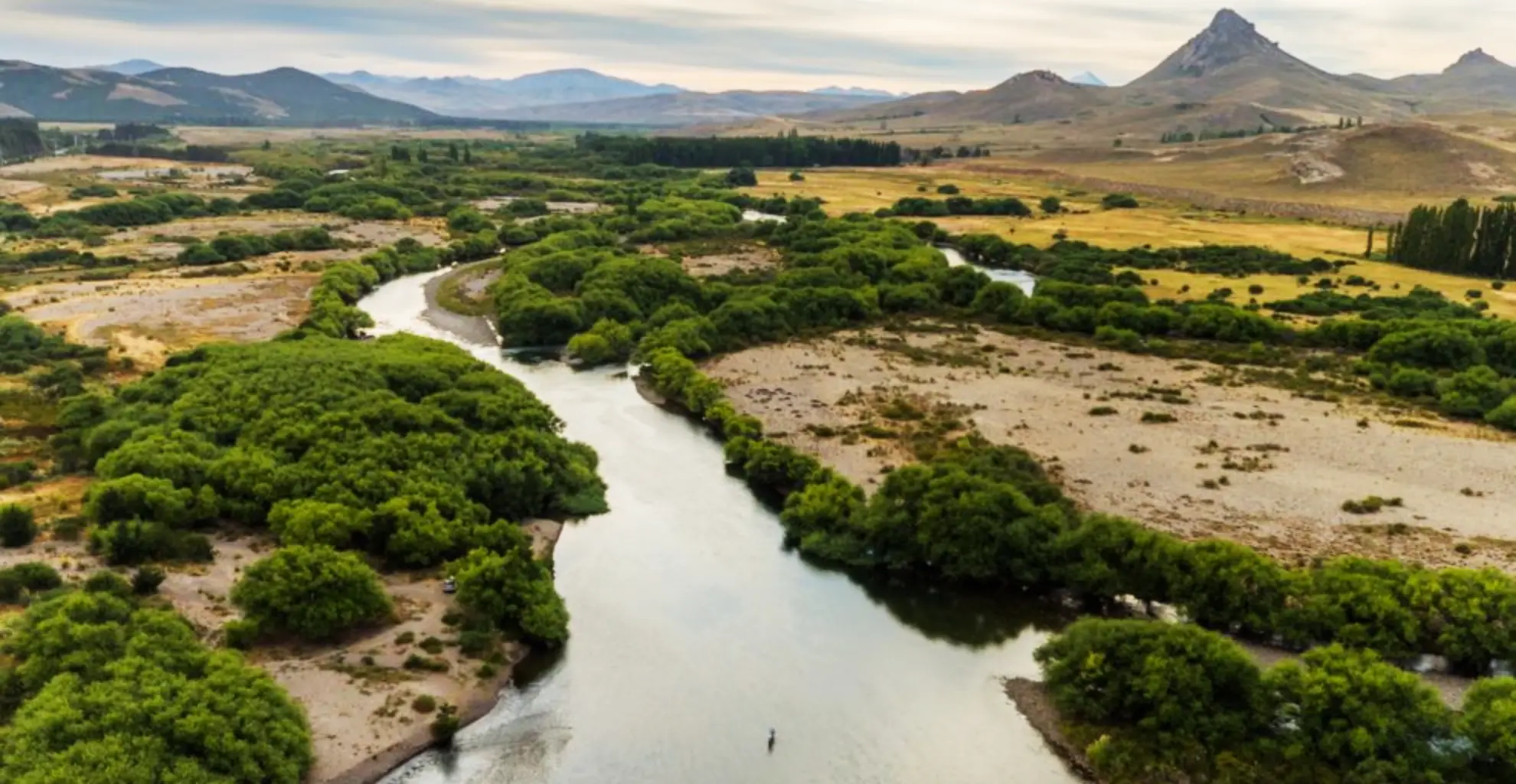
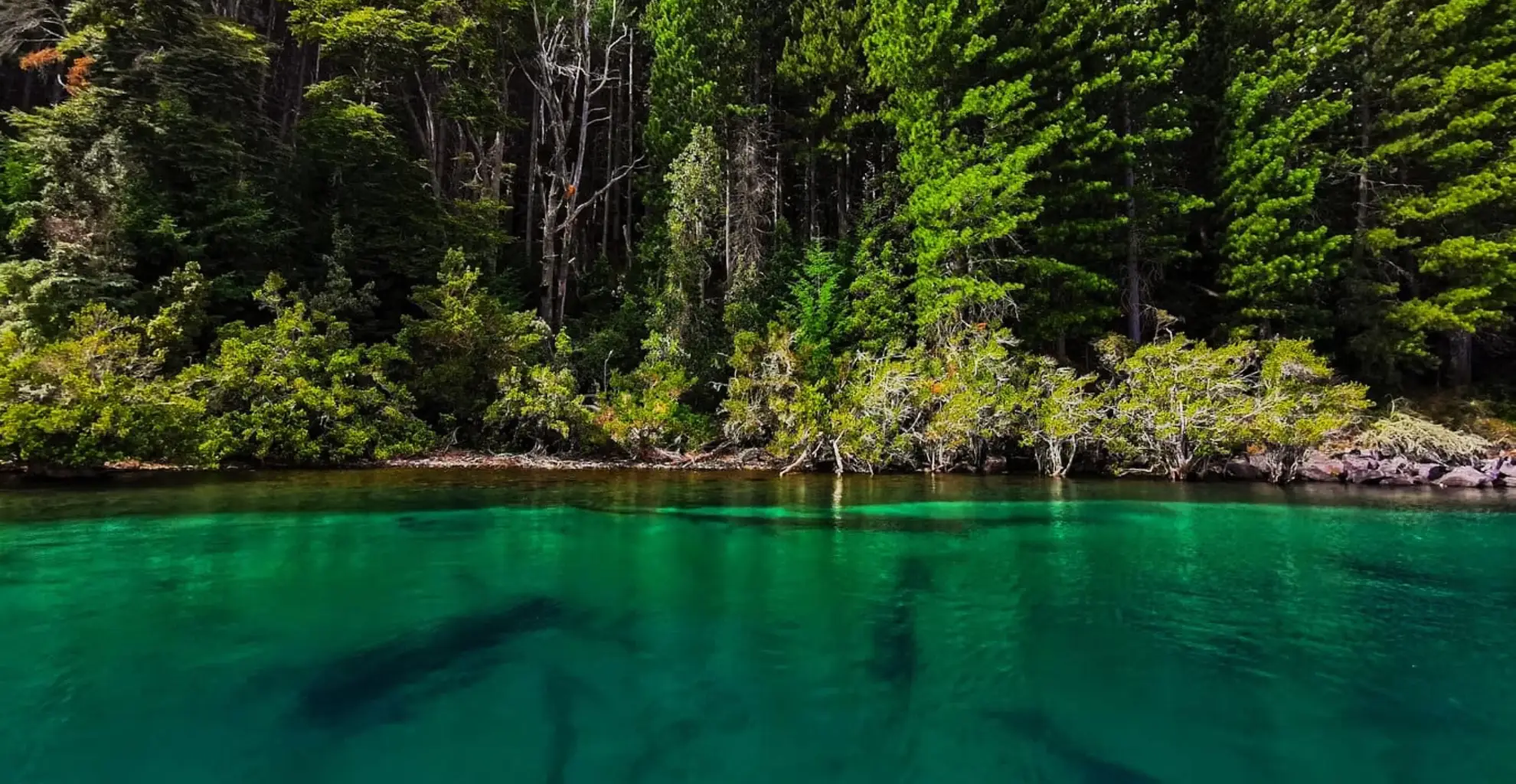
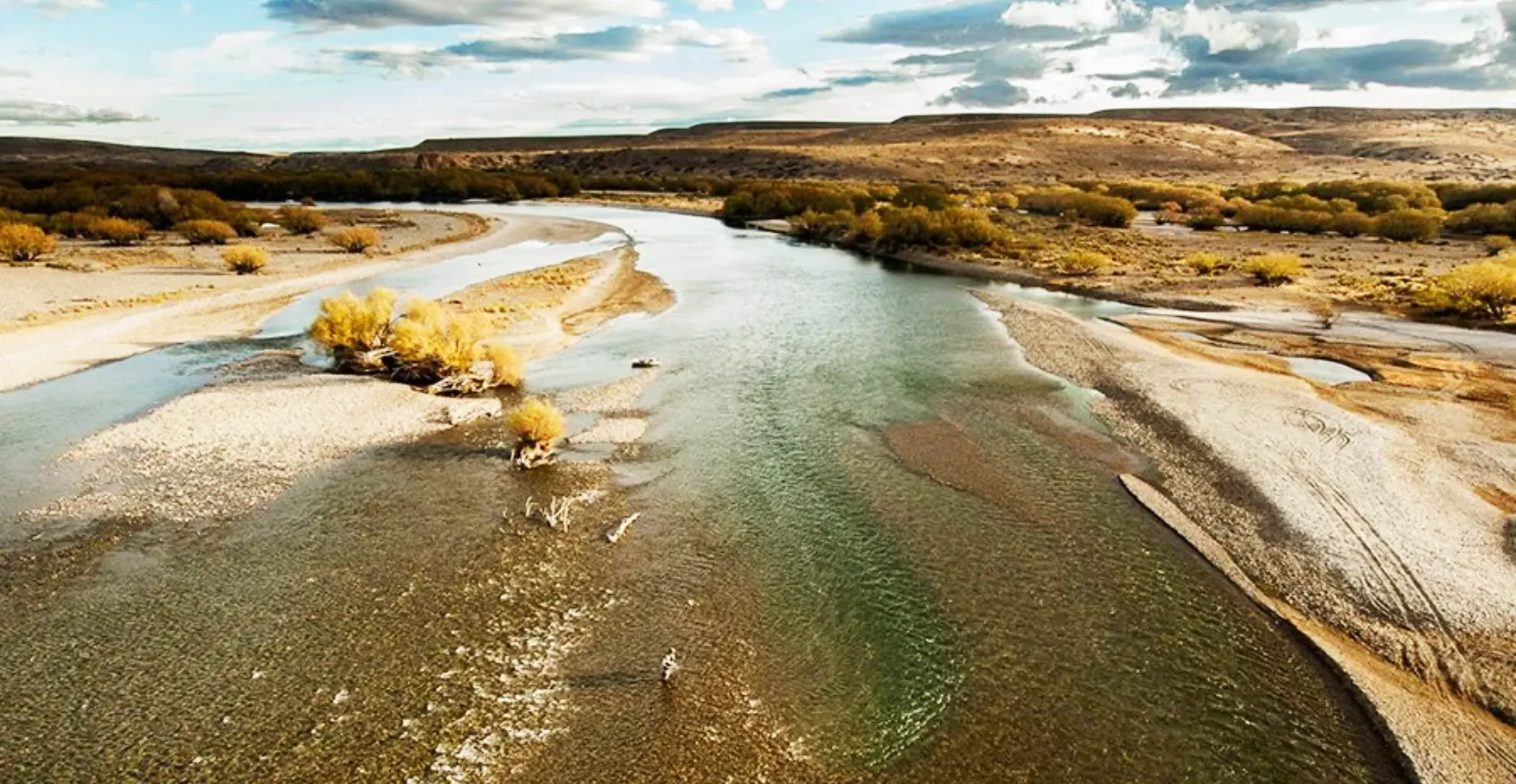
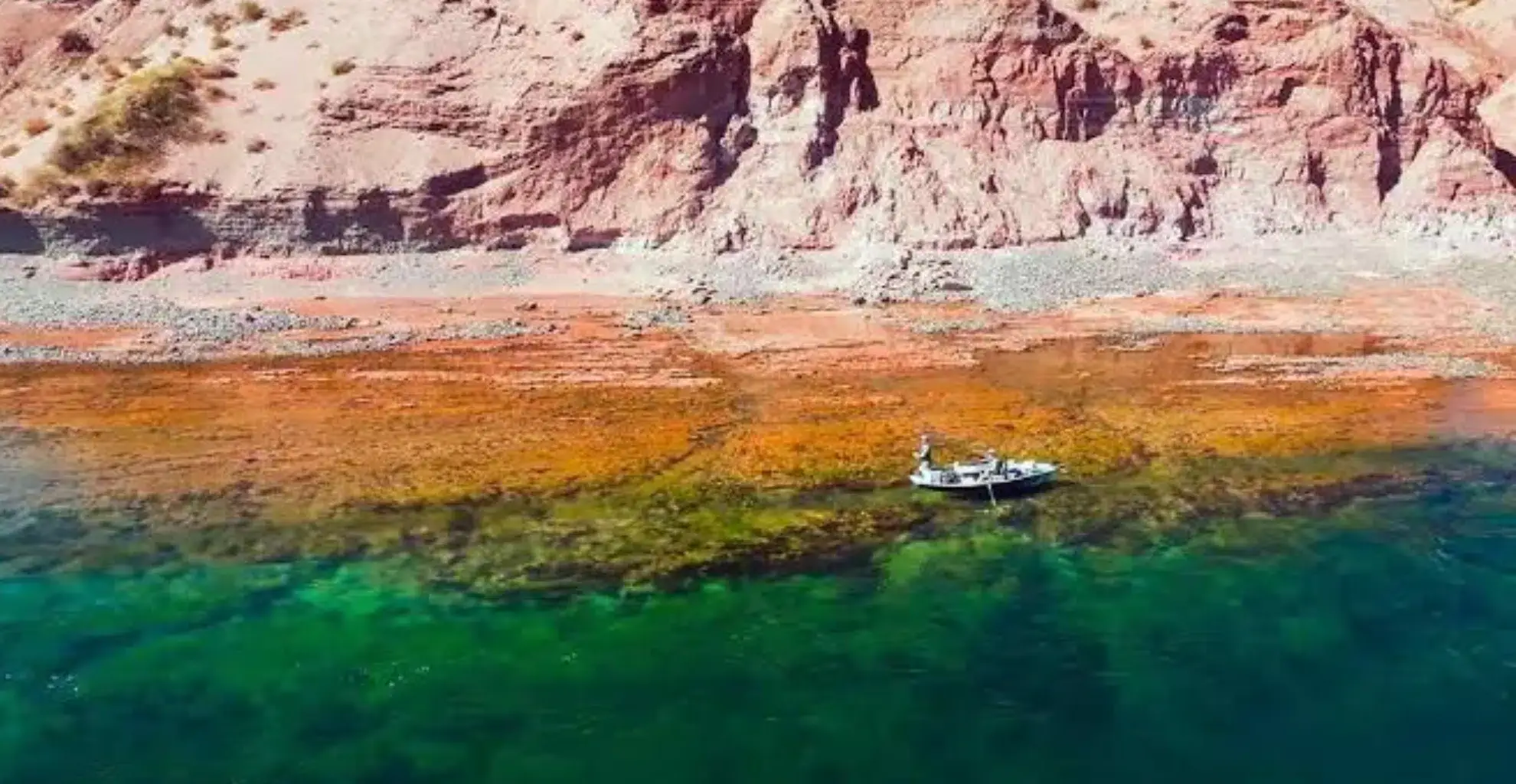
The Upper Limay lies at the transition between forest and steppe, creating a striking and diverse landscape. The name Limay means “clear water” in the language of the region’s original inhabitants, an apt description for its crystalline flows.
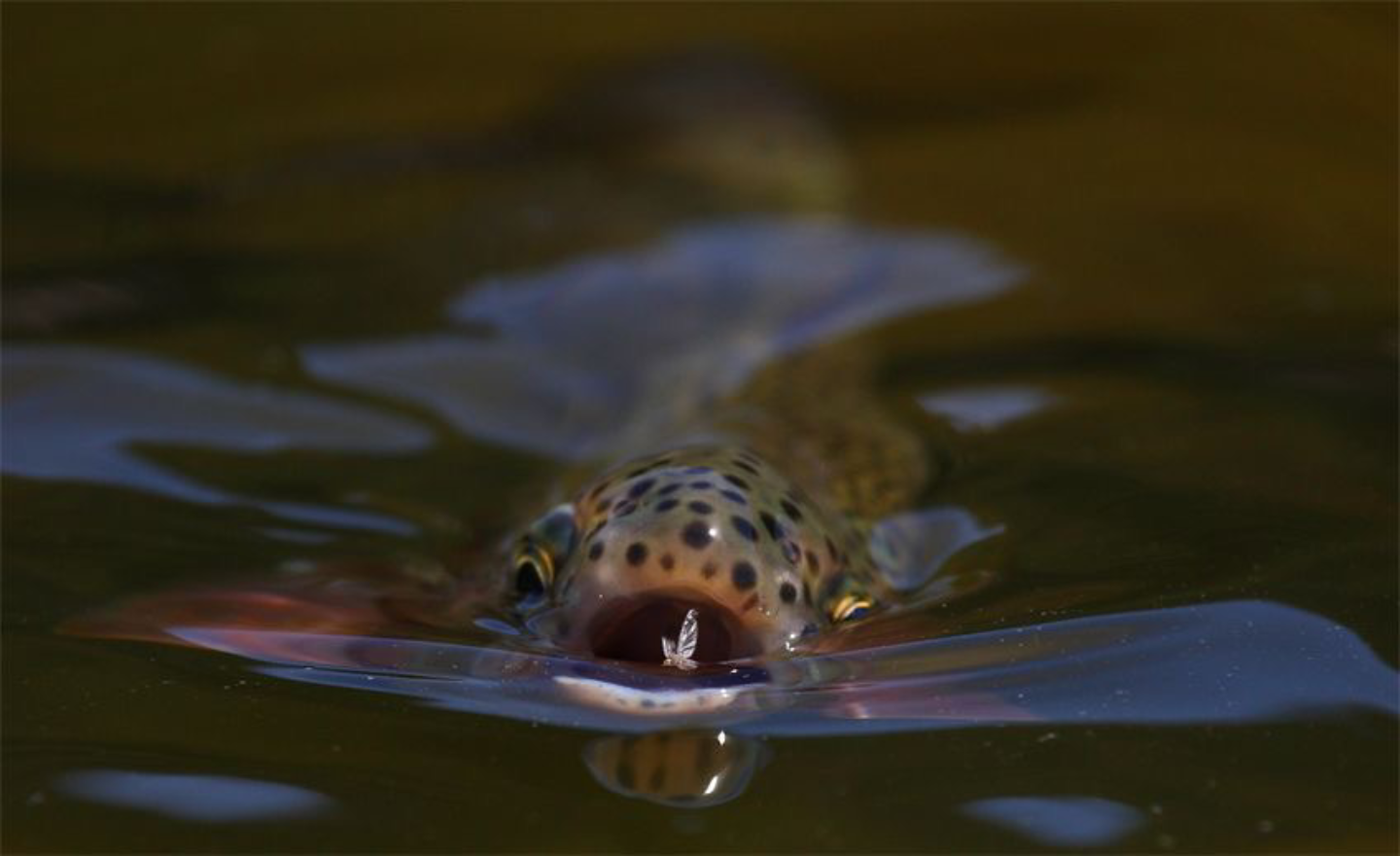
This is a large river, carrying anywhere between 2,000 and 10,000 cubic feet per second, depending on the season. Despite its size, the Limay maintains a relatively gentle gradient. Along its course, it splits into multiple channels, forming islands, riffles, long runs, and broad pools typical of a river of this scale. The banks alternate between lush vegetation and dramatic sand cliffs, offering abundant holding water for trout. With its remarkable clarity, anglers often witness trout moving through the water to intercept their fly.
Map of the Upper Limay
Below you’ll find a map highlighting the most renowned pools and runs along the Upper Limay. Feel free to explore and ask questions—we love to share the stories of our river.
Fly Fishing on the Upper Limay
The Upper Limay is a fly fisher’s playground, accommodating the full range of techniques—streamers, dry flies, nymphs, attractors—whether the goal is to fool selective trout or pursue a trophy brown that might rise only twice in a day. Both single- and two-handed rods find their place here, as do modern European nymphing methods.
Early Season (November – mid-December)
As the season opens, the river flows at its peak—8,000 to 10,000 cubic feet per second—with water coursing through nearly all of its branches. Trout are fresh from spawning and hungry, making this an exciting time to fish. Streamers along the banks often draw aggressive strikes from large rainbows and browns, while smaller side channels provide excellent conditions for delicate presentations with nymphs and dries. Euro-nymphing can be especially effective in these situations.
Midsummer (December – January)
By this stage, flows drop to around 4,000–6,000 cubic feet per second, revealing and accentuating the river’s structure. Pools and runs become more defined, and nearly every technique is productive. Large attractor dries, often paired with nymphs on a dropper, deliver steady action, while persistent streamer fishing continues to hold the promise of a trophy brown.
Late Season and Spawning (March – May)
In late March, as the season draws to a close, the brown trout spawning migration begins—joined by rainbows later in the run. These legendary fish are what put the Limay on the map: big, incredibly beautiful but also wary, and notoriously difficult to catch. Success requires patience, skill, and determination, but the reward can be extraordinary, with trout reaching well over 10 pounds.